
Stop Yard Slope Erosion in Days for KC Northland Homeowners
Stop Yard Slope Erosion in Days for KC Northland Homeowners
Stop soil loss first: redirect any concentrated water hitting the slope, cover exposed dirt with straw wattles or an erosion blanket, and get seed or plugs into the ground promptly. Do those three things and you halt most active yard erosion on a slope within days. If you’re seeing gullies deep enough to swallow a boot, or soil sliding away from a patio or foundation, stop reading and call a contractor before the next rain.
TL;DR:
- Stopping water flow at the top of the slope is crucial, as it prevents ongoing erosion that cannot be fixed by mulch alone.
- Slopes above 20% to 30% require structural solutions like retaining walls or terraces rather than plantings alone.
- Deep-rooted native grasses, shrubs, and groundcovers installed along the contour outperform turf grass in holding steep slopes.
- Small gullies and rills can be repaired in hours if caught early, but larger erosion features may need professional assessment and structural intervention.
- Homeowners should seek professional help if the slope keeps failing after revegetation or if erosion threatens structures like foundations or patios.
Table of Contents
- How Steep Is Your Slope, and How Urgent Is the Problem?
- What Stops Yard Slope Erosion the Fastest?
- What Should You Plant on a Hillside to Control Erosion?
- When Do You Need Terraces, Walls, or Drains Instead of Plants?
- How Do You Repair a Rill or Small Gully in Your Yard?
- How Long Does It Take a Slope to Stabilize?
- When Should You Call a Landscaping Professional?
- GC Signature Outdoors’ Perspective on Slope Stabilization
- Get a Professional Assessment for Your Sloped Yard
- Sources
- FAQ
How Steep Is Your Slope, and How Urgent Is the Problem?
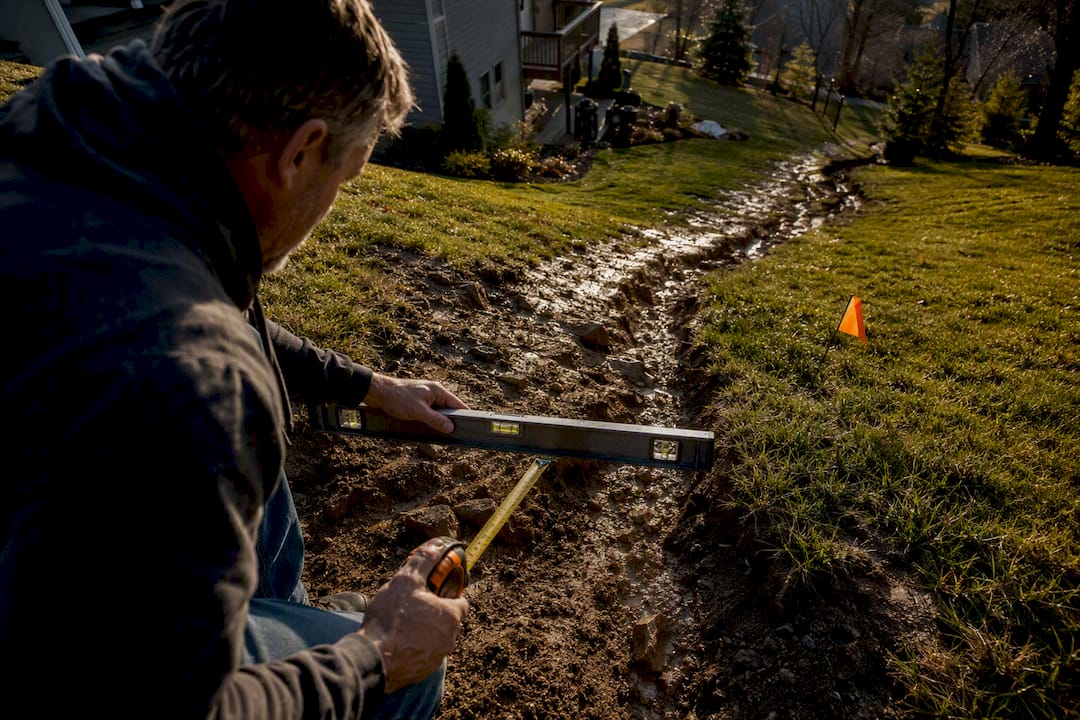
Before buying a single bag of mulch, figure out what you’re actually dealing with. Grab a level, a tape measure, and some patience, or just download a clinometer app on your phone.
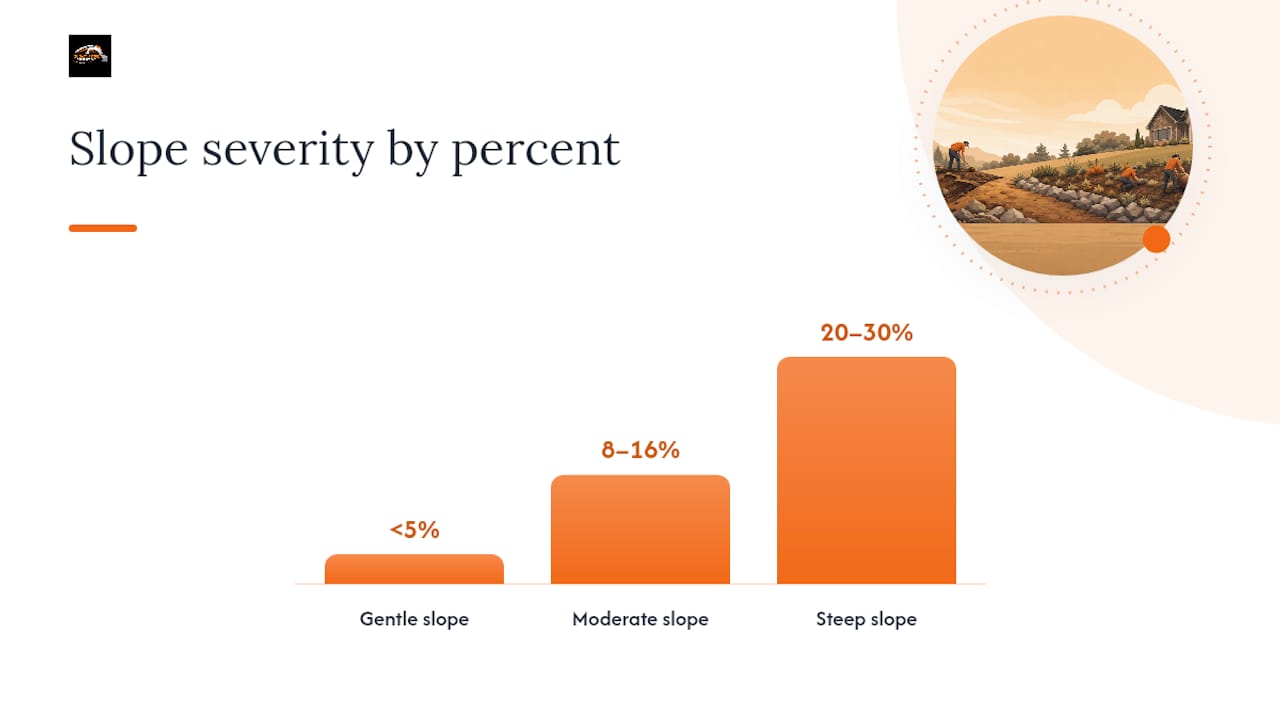
Measure rise over run: for every foot the slope drops (rise), measure how many feet it travels horizontally (run), then divide and multiply by 100 to get a percentage. A gentle slope under 5% rarely erodes on its own. Moderate slopes between roughly 8% and 16% erode steadily once vegetation thins out. Slopes above about 20–30% move water quickly, making erosion more severe, and standard turfgrass usually struggles to hold soil.
Next, name what you’re looking at. The distinction matters more than most homeowners realize:
- Rills are shallow surface grooves, generally less than a foot deep, and they’re a straightforward DIY reseed job.
- Gullies cut deeper and signal a real drainage failure upstream, often requiring reshaping or a contractor’s grading equipment.
- Sheet erosion shows up as thin soil loss across a broad area with no visible channels, usually the earliest warning sign.
Walk the slope after the next hard rain and trace where water concentrates. Downspouts dumping at the top of a hill, driveway runoff sheeting sideways, and compacted or bare patches near the crest are the usual culprits. Fixing those source points does more good than any amount of mulch spread lower down.
What Stops Yard Slope Erosion the Fastest?
Once you know the scope, work top to bottom. Water causes almost all erosion, and the fastest wins come from cutting off the flow before it reaches bare soil.
- Redirect concentrated water first. Extend downspouts past the slope’s edge, add a splash block or buried pipe, and route driveway runoff toward a stable drain rather than letting it sheet across dirt by following expert advice on gable roofing for your custom home to manage roof drainage effectively. Stopping the source at the top of the hill prevents far more damage than any downstream fix.
- Install straw wattles or compost socks along the contour. Place them at natural grade breaks, running perpendicular to water flow, and stake them into the soil every few feet so they don’t slide.
- Cover exposed dirt with a biodegradable erosion blanket or crimped mulch. On steep runs, anchor material with netting or a tackifier; on gentler grades, crimping mulch two to four inches into the soil keeps it from washing away.
- Build small check dams at grade breaks. A row of rock, a gravel-filled dip, or a compost sock set perpendicular to the flow slows water and traps sediment before it carves a channel.
Pro Tip: If you can only tackle one thing this weekend, fix the water source at the top of the slope. Everything below it will erode again if you skip that step, no matter how much mulch or blanket you put down.
What Should You Plant on a Hillside to Control Erosion?
Turf grass has shallow roots, usually just a few inches, and on anything steeper than moderate grade, it loses the fight against gravity and moving water almost every time. What actually holds a hillside together is root depth and density, not blade color.
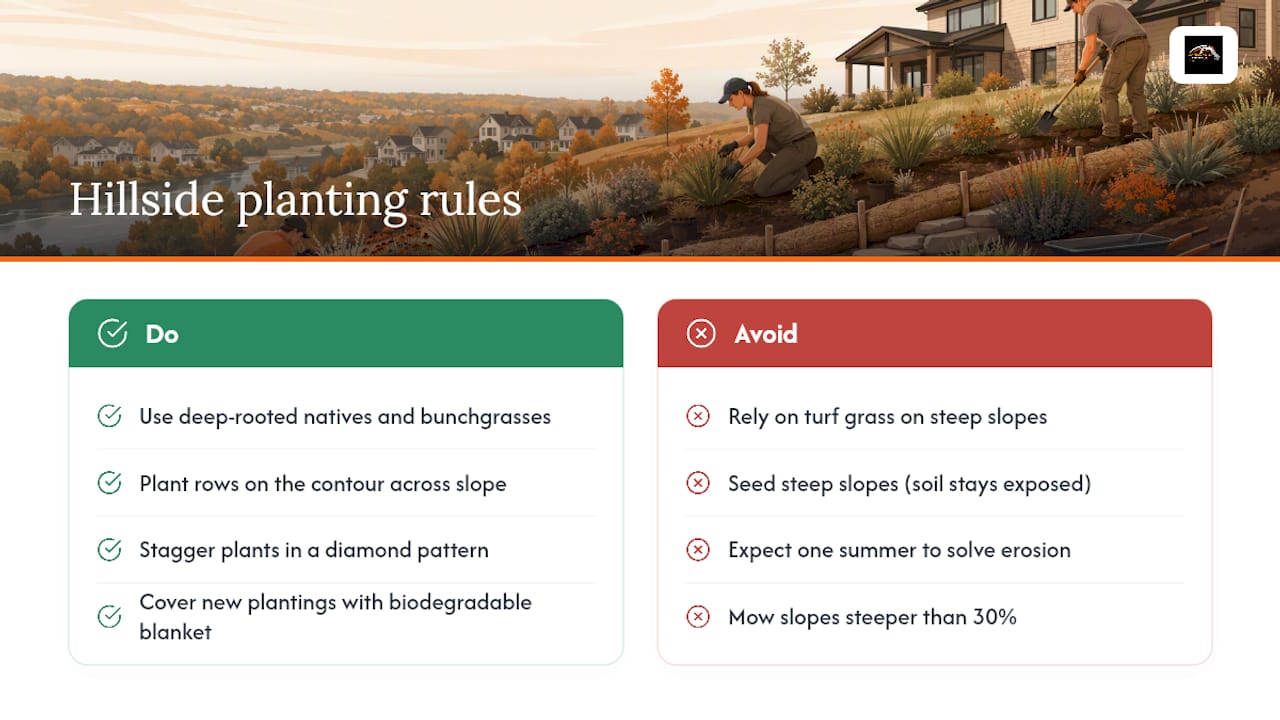
Favor deep-rooted native grasses, bunchgrasses, low shrubs, and spreading groundcovers over ornamental turf. Certain species, including deep-rooted grasses, shrubs, and select groundcovers, outperform shallow-rooted lawn grass on slopes because their roots reach further and knit the soil together across seasons.
Planting orientation matters almost as much as species choice. Set rows on the contour, running across the slope rather than up and down it, so each row breaks up water flow instead of channeling it. Stagger plants in a diamond pattern instead of straight lines for the same reason.
On method: seeding is cheapest but leaves soil exposed for weeks while germination happens, which is risky on anything moderate or steeper. Plugs and transplants establish faster and give you instant root anchoring, though at higher upfront cost. Sod works on gentle grades but rarely takes root reliably on a real hillside.
Whichever method you choose, cover the area with a biodegradable erosion blanket while roots develop. Most plantings need one to two full growing seasons before root mass meaningfully cuts runoff, so don’t expect a single summer to solve a steep slope. On grades too steep to mow safely, generally above 30%, choose plant communities that don’t require mowing at all, like tall grasses and low shrubs, and plan a safe access path for occasional maintenance. Check your local extension office or USDA hardiness zone resources before buying, since species that thrive in one region can struggle badly in another.
When Do You Need Terraces, Walls, or Drains Instead of Plants?
Plants and mulch handle a lot, but they have limits. Once a slope exceeds roughly 25% to 30%, sits close to a foundation or patio, or keeps failing after you’ve already tried revegetation, it’s time to think in terms of earthwork and structure instead of just planting.
- Terraces break a long slope into a series of flatter steps, each one slowing water instead of letting it run straight downhill. Each level should carry a slight backward slope toward the uphill side so water soaks in rather than spilling over the terrace edge.
- Retaining walls hold back soil on steeper cuts, but the wall material matters less than what’s behind it. A perforated drain pipe wrapped in gravel and filter fabric relieves the hydrostatic pressure that causes most wall failures. Skip the drainage and even a well-built wall eventually bows or cracks.
- Swales and dry creek beds redirect surface water along a shaped channel without the cost of a wall, useful where you need to move water rather than hold back soil.
- Rock weirs and check dams slow water in a defined channel and work well as a permanent upgrade from temporary wattles.
Permanence and cost scale together. A wattle lasts one season; a retaining wall lasts decades but costs more upfront and often needs a permit, especially above a certain height or near a property line. On a slope that’s already failing structurally, get an engineer or contractor involved before pouring concrete or stacking block, since a wall built without proper drainage behind it tends to fail within a few wet seasons.
How Do You Repair a Rill or Small Gully in Your Yard?
Small channels are fixable in an afternoon if you catch them early. Bigger ones take a weekend, but the steps stay the same.
- Clear loose debris and cut off the water source. Nothing else works until you stop the concentrated flow feeding the channel.
- Reshape the channel to a gentler grade. Fill in 6 to 8 inch compacted lifts rather than dumping loose soil all at once, and add small check steps if the channel is longer than a few feet.
- Topdress with compost or topsoil, then seed or plug it, and cover with a blanket or wattle to hold everything in place while roots take hold.
If the channel keeps cutting deeper after repair, if it’s undermining a patio or fence post, or if it comes back after you’ve already revegetated once, that’s your signal to call a professional rather than repeat the same fix a third time.
How Long Does It Take a Slope to Stabilize?
Give new plantings realistic time. The critical establishment window runs anywhere from a few months to two full growing seasons, depending on species and how much rain you get. Erosion blankets typically stay in place for that entire window, breaking down naturally once roots take over the job of holding soil.
- Water new plantings enough to establish roots, but avoid heavy daily watering that creates its own runoff down the slope.
- Walk the slope after every major storm and patch any new rill immediately, before it becomes a gully.
- Top off mulch or blanket material as it thins, and keep foot traffic off newly planted areas until roots are established.
When Should You Call a Landscaping Professional?
Some erosion problems are a weekend project. Others are a liability. Watch for gullies that keep widening instead of stabilizing, soil pulling away from a foundation, patio, or retaining wall, or a slope steeper than roughly 30% where standing water pools against a structure after every storm. Any of those means it’s time to bring in a professional rather than keep patching.
A contractor evaluating your site will look at soil composition, where water actually travels during a storm, and whether the fix needs engineered drainage solutions or a retaining structure rather than another round of seed and mulch. Before the visit, take photos of the problem area, measure the slope as best you can, and jot down recent storm events along with anything you’ve already tried. That homework saves the contractor a return visit and gets you a more accurate assessment on the first walk-through.
GC Signature Outdoors’ Perspective on Slope Stabilization
Working across the KC Northland area, from Smithville to Platte City to Kearney, we see the same pattern on almost every slope job: homeowners try to fix the symptom (bare, washing soil) before fixing the cause (uncontrolled water). The pathway that actually holds up is sequential. Assess the site, stop concentrated flows at the top, install drainage or a retaining structure where the grade demands it, then revegetate and check back after the next few storms. Our retaining wall and drainage projects almost always start with that same sequence, because skipping a step just moves the erosion downhill instead of solving it.
— GC Signature Outdoors LLC
Get a Professional Assessment for Your Sloped Yard
If your slope has moved past what wattles and mulch can handle, GC Signature Outdoors LLC gives Northland homeowners a direct path to a permanent fix instead of another round of temporary patches. We build retaining walls with proper drainage behind every course, design full landscape and planting plans suited to your specific grade, and keep the area healthy afterward through regular lawn care rather than handing you off once the install is done.

Before a site visit, take a few photos of the problem area and note when it worsens, usually after heavy rain. We’ll walk the slope, identify the water source, and recommend whether the fix is a drainage correction, a retaining wall, or a planting plan, sometimes a mix of all three. Browse our project portfolio for examples of completed retaining wall and drainage work, then reach out through Sgclandscape to schedule an assessment for your property.
Sources
For deeper guidance on plant selection and drainage design, consult your local extension office, USDA hardiness zone tools, and the Iowa State Extension slope gardening guide referenced throughout this article.
- Gardening on slopes and hillsides
- Stabilize steep slopes
- Erosion control for slopes, stream banks, and dunes
FAQ
How do you stop erosion on a sloped yard?
Redirect any concentrated water source, like downspouts or driveway runoff, away from the bare slope, then cover exposed soil with straw wattles or an erosion blanket while you establish deep-rooted plants along the contour.
How do you fill an erosion hole in a yard?
Clear loose debris, fill the hole in compacted 6 to 8 inch lifts rather than one loose dump, topdress with compost, and seed or plug it before covering with a blanket or wattle to hold everything until roots take hold.
What should you do if your yard slopes toward your house?
Grade or install a swale or French drain to carry water away from the foundation, and check that gutters and downspouts discharge well past the slope rather than at its base near the house.
What can you plant on a hillside to control erosion?
Deep-rooted native grasses, bunchgrasses, shrubs, and spreading groundcovers hold slopes far better than shallow-rooted turf; plant them on the contour and protect them with an erosion blanket during the first one to two growing seasons.
Recommended
Ready to get started in Kansas City's Northland?
GC Signature Outdoors serves Smithville, Platte City, Kearney, Liberty, and surrounding areas.