
Retaining Wall Failure: KC Northland Safety Guide
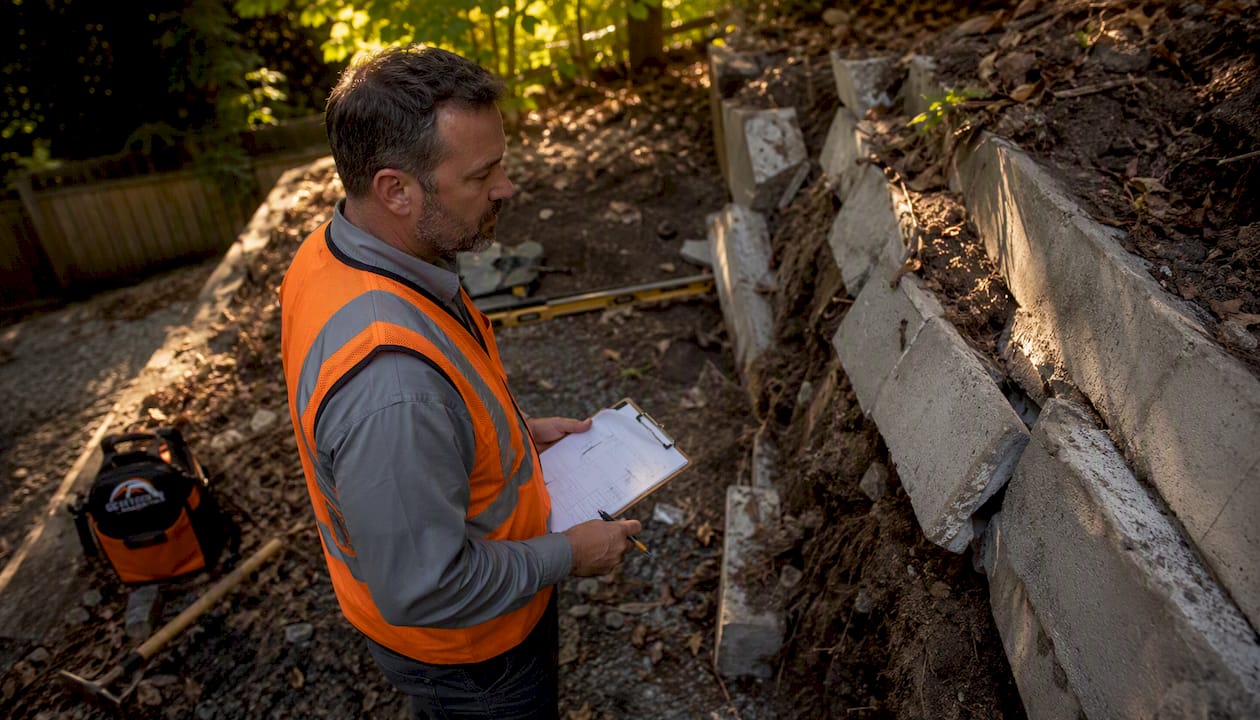
- Installed per sq ft (wall face)
- $20–$45
- Typical project total
- $4,000–$15,000
Retaining Wall Failure: KC Northland Safety Guide
TL;DR:
- Most retaining wall failures stem from drainage issues that cause hydrostatic pressure buildup behind the wall.
- Address signs of distress immediately by calling a qualified contractor and documenting visible cracks or movement.
Most residential retaining wall failures trace back to one root cause: drainage-driven hydrostatic pressure building up behind the wall until the structure can no longer resist it. Stop using the area near the wall right now, document what you see with dated photos, and call a qualified contractor before the next rain event.
Check for these warning signs today:
- Leaning or tilting at the top of the wall
- Bulging or a “belly” in the middle of the face
- Horizontal cracks running parallel to the ground (the most urgent sign)
- Gaps where the wall meets a sidewalk, driveway, or foundation
- Water pooling at the base or seeping through the face rather than through weep holes
- White mineral deposits (efflorescence) on the wall face
Saturated soil can exert two to three times the lateral pressure of dry, drained soil, significantly increasing the load on a retaining wall. That multiplier is why a wall that held for years can move suddenly after a single heavy rain.
Immediate safety steps:
- Keep vehicles, storage, and people away from the zone below and above the wall.
- Photograph every crack, gap, and wet spot with your phone’s timestamp on.
- Call a local contractor or licensed engineer if the wall is visibly moving or if rain is in the forecast.
GC Signature Outdoors LLC serves Smithville, Platte City, Kearney, and surrounding KC Northland communities and offers urgent site assessments when a wall is actively moving.
Table of Contents
- How long does assessment and repair actually take?
- What drives the cost of fixing a failing wall?
- How do you keep a retaining wall from failing again?
- When should you call a local contractor?
- GC Signature Outdoors LLC is ready to inspect your wall this week
- Key Takeaways
- FAQ
How long does assessment and repair actually take?
The timeline depends almost entirely on what the inspection uncovers. A drainage retrofit on a structurally sound wall can move from assessment to completion in one to two weeks. A partial rebuild with re-graded backfill typically runs two to four weeks once materials are on-site. A full engineered rebuild, which requires stamped drawings and possibly a permit, can take six to ten weeks from first inspection to finished wall.
Two factors stretch every timeline: active soil movement and permit requirements. Per IRC R404.4, walls over 48 inches or walls carrying a surcharge (driveway, slope, structure above) require a permit and a licensed engineer’s stamped design. If your wall meets either threshold, build that review period into your expectations from day one.
Failures are rarely caused by a single mistake. Engineers consistently find combinations of poor drainage, inadequate footings, and improper compaction working together, which means the inspection has to cover the whole system before a repair scope can be set.
What drives the cost of fixing a failing wall?
Wall height and linear footage are the two biggest price drivers. A taller wall holds more soil mass, requires deeper footings, and often needs geogrid reinforcement, all of which add labor and material. The condition of the existing drainage system matters just as much: replacing clay backfill with granular material and adding perforated pipe is far less expensive than a full structural rebuild, so a wall that is still plumb but has failed drainage costs considerably less to fix than one that has rotated.
Other factors that affect price: soil type (expansive clay costs more to manage than sandy fill), access for equipment, whether an engineer’s stamped design is required, and whether permits are needed. For a local cost breakdown specific to the KC Northland area, the retaining wall cost guide on the GC Signature Outdoors LLC site covers those details separately.
How do you keep a retaining wall from failing again?
Maintenance is mostly about managing water before it reaches the wall.
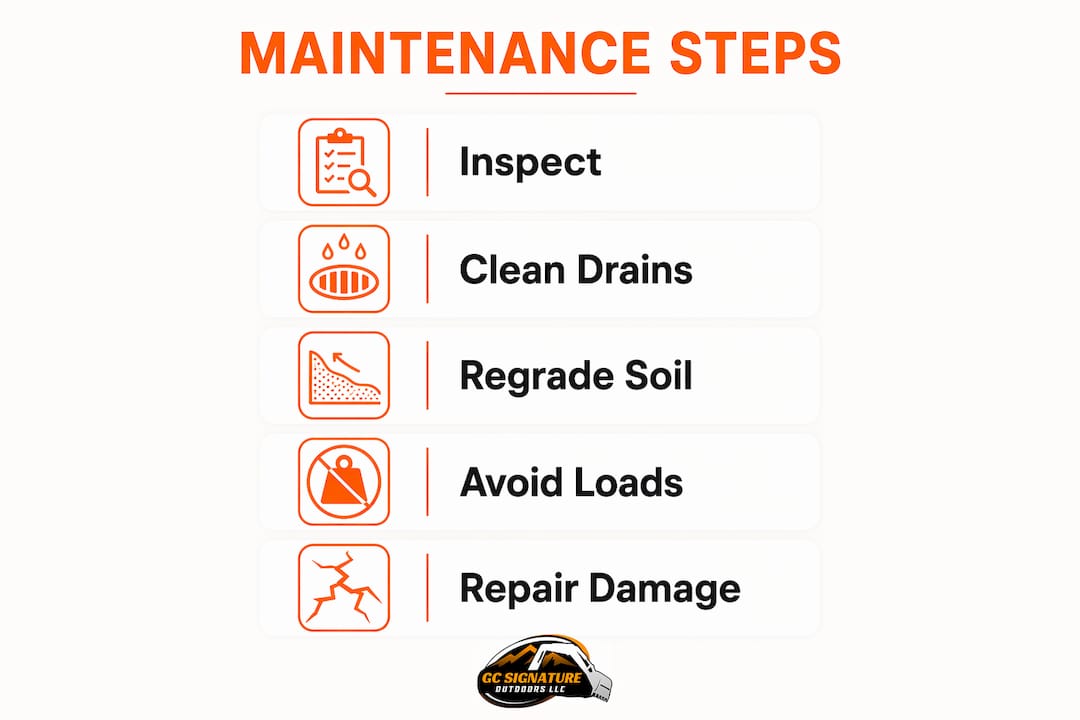
Regrade surface beds so they slope away from the wall face. Even a gentle grade change redirects runoff that would otherwise saturate the backfill. Downspout routing is equally important: a downspout discharging within a few feet of a wall dumps concentrated roof runoff directly into the soil the wall is holding.
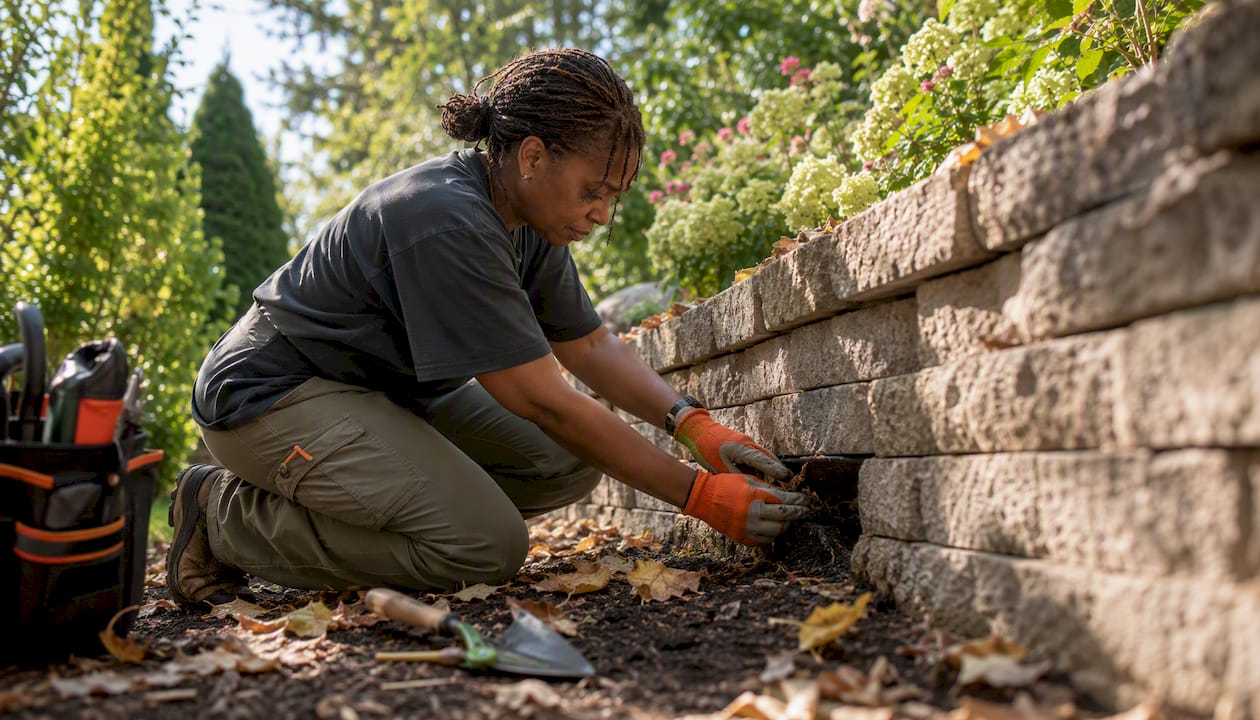
Check weep holes and drain outlets every spring and fall. Sediment, roots, and debris block them quickly. A clogged weep hole turns a functioning drainage system into a pressure vessel. If your wall has no visible weep holes, that is itself a red flag worth raising with a contractor.
Avoid adding new loads above the wall. New surface loads such as parking, sheds, or regrading can trigger failure long after the original installation, even on walls that have performed well for years. If you are planning a driveway extension or a new structure near the top of a wall, get a structural review first.
Pro Tip: The drainage stone behind your wall needs to be wrapped in non-woven geotextile filter fabric. Without it, fine soil particles migrate into the drain stone and clog the system within a few years, silently rebuilding the hydrostatic pressure the drainage was designed to prevent.
When should you call a local contractor?
Call a contractor the same day you notice horizontal cracking, active leaning, or movement that increases after rain. Those patterns precede sudden collapse. Efflorescence and minor surface cracks are lower urgency but still warrant a scheduled inspection within a few weeks, not next season.
A qualified contractor’s first visit should include a visual survey of the full wall face, a drainage and weep-hole check, measurement of tilt or displacement against a fixed reference, a review of the grade and soil conditions above the wall, and a clear recommendation on whether a licensed engineer needs to be involved.
Questions to ask on the first call:
- Are you licensed and insured for retaining wall construction in Missouri?
- Can you provide references or a portfolio of completed wall projects?
- For walls over 48 inches, do you work with a licensed engineer for stamped designs?
- What does your inspection process cover, and will I get a written assessment?
Red flags: a contractor who quotes a repair without visiting the site, one who cannot name the drainage system they plan to install, or one who dismisses horizontal cracking as cosmetic.
GC Signature Outdoors LLC is ready to inspect your wall this week
When a wall is showing active signs of distress, the last thing you need is a two-week wait for a callback.

GC Signature Outdoors LLC provides on-site retaining wall inspections for homeowners across the KC Northland area, including Smithville, Platte City, and Kearney. The inspection covers every element a professional assessment should: visual survey of the wall face, drainage and weep-hole condition, tilt measurement, grade and soil review above the wall, and a clear recommendation on whether engineering input is required before repair begins.
Repair options range from drainage retrofits and partial stabilization to full engineered rebuilds with compacted aggregate bases, perforated pipe drainage systems, geogrid reinforcement, and proper footings. For walls that require a permit or a stamped engineer’s design, GC Signature Outdoors LLC coordinates that process so you are not managing it alone.
Browse the completed project portfolio to see finished retaining wall work across the KC Northland area, then contact the team to schedule your site visit.
Key Takeaways
Retaining wall failure is almost always driven by hydrostatic pressure from poor drainage, and fixing it requires addressing the full system, not just the visible damage.
| Point | Details |
|---|---|
| Primary cause | Saturated soil exerts two to three times the lateral pressure of dry, drained soil. |
| Most urgent warning sign | Horizontal cracking indicates the wall is bending under load and requires immediate assessment. |
| Repair vs. rebuild triage | Check whether movement is active, drainage is functioning, and the foundation is intact before deciding. |
| Maintenance priority | Regrade surface beds, route downspouts away from the wall, and clear weep holes every spring and fall. |
| Local contractor | GC Signature Outdoors LLC serves Smithville, Platte City, and Kearney with on-site inspections and full rebuild capability. |
FAQ
What is the most common cause of retaining wall failure?
Hydrostatic pressure from water trapped behind the wall is the leading cause. Saturated soil can exert two to three times the lateral pressure of dry, drained soil, overwhelming walls that lack adequate drainage.
How do I know if my retaining wall needs to be rebuilt or just repaired?
If the wall is still plumb and the drainage system is the only failure, a retrofit is often enough. Active leaning, horizontal cracking, or a rotated footing typically means a full rebuild is the right call.
Do I need a permit to repair a retaining wall in Missouri?
Walls over 48 inches tall or walls carrying a surcharge such as a driveway or structure above generally require a permit and a licensed engineer’s stamped design under IRC R404.4. A qualified contractor can confirm what applies to your specific wall.
How quickly can a failing retaining wall collapse?
A wall showing progressive movement during wet weather can collapse suddenly in a single heavy rain event. Visible movement that worsens after rain is the pattern that precedes sudden failure, and it warrants same-day action.
What should a professional retaining wall inspection include?
A thorough inspection covers the full wall face, drainage and weep-hole condition, tilt measurement against a fixed reference, soil and grade review above the wall, and a recommendation on whether a licensed engineer is needed before repair begins.
Recommended
- Retaining Wall Cost in Kansas City: 2026 Pricing Guide | GC Signature Outdoors
- Retaining Wall Cost — KC Northland | GC Signature Outdoors
- Retaining Wall Builders in Platte City & Smithville, MO | GC Signature Outdoors
- Concrete Control Joints: Code Standards and Best Practices | GC Signature Outdoors
Ready to get started in Kansas City's Northland?
GC Signature Outdoors serves Smithville, Platte City, Kearney, Liberty, and surrounding areas.