
Retaining Wall Cost in Kansas City: 2026 Pricing Guide
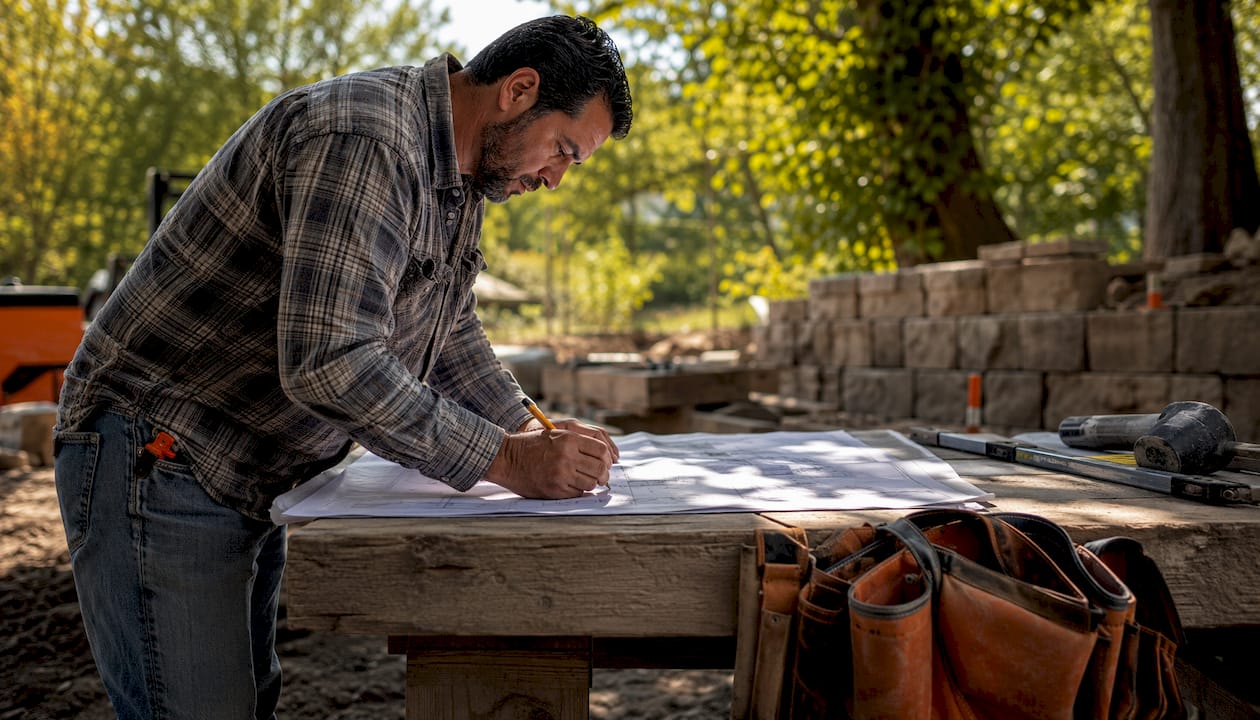
- Installed per sq ft (wall face)
- $20–$45
- Typical project total
- $4,000–$15,000
Retaining Wall Cost in Kansas City: 2026 Pricing Guide
Most Kansas City homeowners spend a mid-range amount to install a retaining wall, with the total depending heavily on wall height, material, and how much site prep the yard demands. Concrete and segmental block walls sit at the higher end of that range, while timber options come in lower but need replacement sooner. Permits, drainage systems, and landscaping restoration after the build add to the final bill and catch a lot of homeowners off guard.
Here’s a quick snapshot of what you’re looking at by material, based on installed cost per square foot in the Kansas City market:
| Material | Installed Cost (per sq ft) | Lifespan |
|---|---|---|
| Concrete | $19.54–$44.16 | 30–50 years |
| Concrete block / CMU | $12–$35 | 40–70 years |
| Segmental retaining block | $13–$44 | 50+ years |
| Timber / railroad tie | $4–$15 | 15–20 years |
For a standard 3 to 4 foot wall, linear foot pricing varies depending on height, drainage needs, and site access. Additional costs to budget for:
- Permit fees (triggered at 4 feet in most Kansas City jurisdictions)
- Engineering and design fees for taller or complex walls
- Drainage system installation (gravel backfill, perforated pipe, weep holes)
- Landscaping restoration after excavation
Table of Contents
- What factors drive retaining wall cost the most?
- Which Kansas City contractors build retaining walls?
- How do you choose the right retaining wall contractor?
- Why Kansas City’s soil and climate make drainage non-negotiable
- Sgclandscape builds retaining walls across the KC Northland
- FAQ
- Key Takeaways
What factors drive retaining wall cost the most?
Wall height is the single biggest cost driver, and the jump from 3 feet to 4 feet significantly increases costs. Walls over 4 feet typically require permits, engineered plans, deeper footings, and structural reinforcements. That combination can push per-square-foot costs well above what a shorter wall demands.
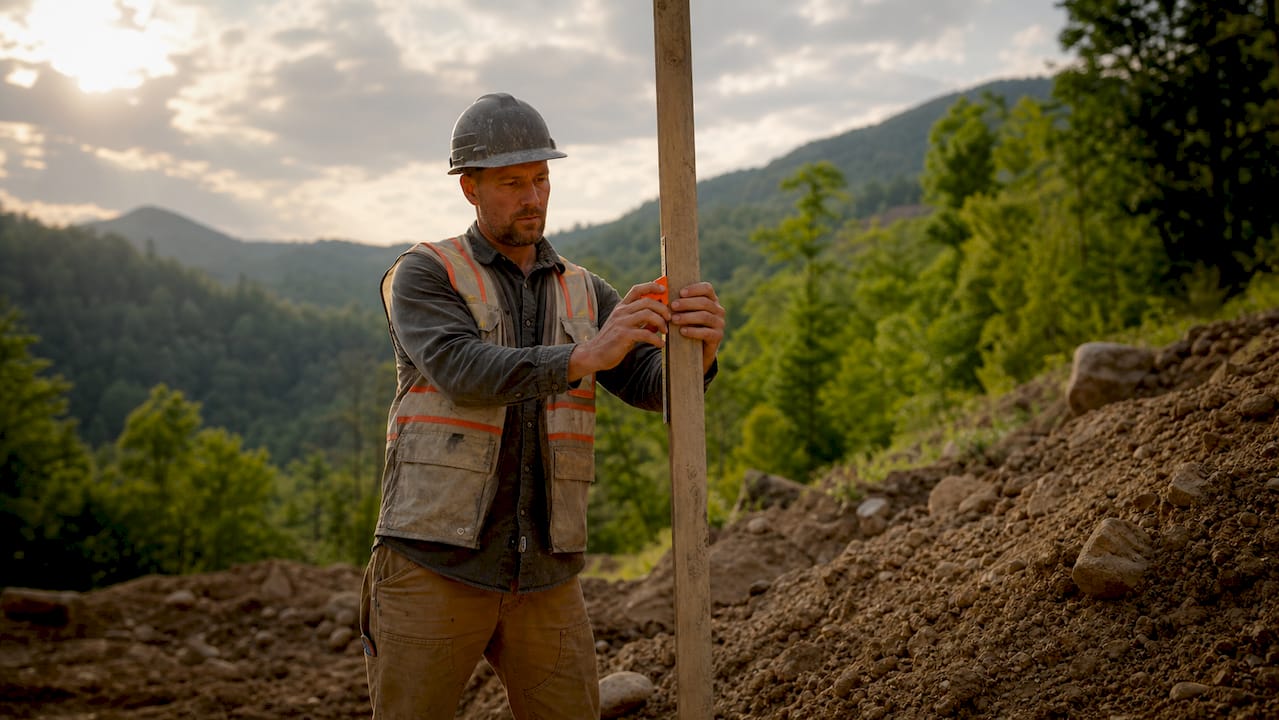
Material choice shapes both upfront cost and long-term value. Timber is the least expensive to install but carries a shorter lifespan before sections start rotting and need replacement. Segmental block and concrete block walls last several decades with minimal upkeep. Poured concrete sits in a similar durability range, though it costs more to form and pour.
Site conditions matter just as much as materials. Rocky ground, steep slopes, or limited equipment access all add excavation time and labor cost. Grading and soil removal alone can add meaningfully to a project budget before a single block is set.
- Soil type and drainage requirements
- Wall height relative to the 4-foot permit threshold
- Material selection and structural reinforcement needs
- Site access and excavation complexity
- Seasonal timing of the pour or installation
- Landscaping restoration after construction
Pro Tip: Schedule your retaining wall project for spring or early summer. Concrete work done outside the May through September window can require cold-weather provisions that add extra cost per square foot to your total.
Local labor rates in Kansas City reflect a mid-tier market. Homeowners buying a first property in the area can get a sense of typical project budgets by looking at Kansas City neighborhood pricing before committing to a build.
Which Kansas City contractors build retaining walls?
Eight established contractors serve the Kansas City metro with retaining wall installation. Here’s how they compare across the dimensions that matter most for your hiring decision:
| Contractor | Services | Experience | Reviews / Rating | Pricing Transparency | Specialization |
|---|---|---|---|---|---|
| Keller’s Landscaping | Hardscaping, drainage, patios, outdoor living | Since 1988 | Strong local reputation | Free estimates, financing available | Full-service landscape and hardscape |
| Kansas City Hardscapes | Retaining walls, pavers, outdoor kitchens, pools | — | Positive customer feedback | Free consultations | Custom outdoor living design |
| Plant Marks The Pot | Retaining walls, paver patios, landscape design | Not publicly listed | Positive | Not publicly listed | Bespoke landscape architecture |
| AAA Fast Construction LLC | Stone masonry, gravity walls, historic restoration | — | Strong | Free estimates, custom consults | Engineered stone retaining walls |
| Grego’s LLC | Retaining walls, erosion control, concrete, flatwork | Since 1970 | Established reputation | Competitive rates stated | Full-service retaining wall and erosion control |
| Land Escapes LLC | Retaining walls, hardscapes, irrigation, maintenance | Not publicly listed | Positive | Not publicly listed | Residential and commercial design-build |
| Horizontal Earthworks | Retaining walls, patios, outdoor living, landscaping | Not publicly listed | Positive | Not publicly listed | Commercial and residential outdoor construction |
| Outlook Hardscape | Retaining walls, patios, outdoor kitchens, driveways | 15+ years | Angie’s List A rating, Super Service Award since 2011 | Not publicly listed | ICPI-certified hardscape design |
A few notes worth knowing before you call:
- Grego’s LLC has operated since 1970 and focuses specifically on retaining wall design and erosion control, making them one of the most experienced specialists in the metro.
- Outlook Hardscape holds ICPI certification and has earned Angie’s List Super Service Awards every year since 2011, a track record that stands out for hardscape quality.
- AAA Fast Construction LLC specializes in engineered stone walls including gravity walls and double-sided stone mass walls, suited for complex or high-load applications.
- Keller’s Landscaping has served the Kansas City metro since 1988 and offers financing, which helps on larger projects.
How do you choose the right retaining wall contractor?
The contractor who built a neighbor’s patio may not be the right fit for a structural retaining wall. These projects involve soil engineering, drainage design, and in many cases, permit compliance. Here’s what to check before signing anything:
- Local soil and climate experience. Kansas City’s clay-heavy ground behaves differently than sandy or loam soils. Ask contractors specifically how they handle drainage in clay conditions.
- Transparent, itemized estimates. A good contractor breaks out materials, labor, drainage, and permit costs separately. Vague lump-sum quotes make it hard to compare bids fairly.
- Licensing and insurance. Verify both. A wall failure on an unlicensed build can leave you holding the liability.
- Customer reviews specific to retaining walls. General landscaping praise doesn’t tell you much. Look for reviews that mention wall construction, drainage, and how the project held up a year or two later.
- Warranties on labor and materials. Ask what’s covered and for how long.
- Project timeline. Most Kansas City retaining wall projects run 2–4 weeks from planning through completion, depending on size, permit approval, and weather. Contractors who can’t give you a rough schedule may be overextended.
Why Kansas City’s soil and climate make drainage non-negotiable
Kansas City sits on predominantly clay-rich soil, and that changes everything about how a retaining wall needs to be built. Clay expands when it absorbs water, pushing outward against whatever is holding it back. A wall without proper drainage behind it faces that pressure every time it rains, and over time, that stress causes bowing, cracking, or outright failure.
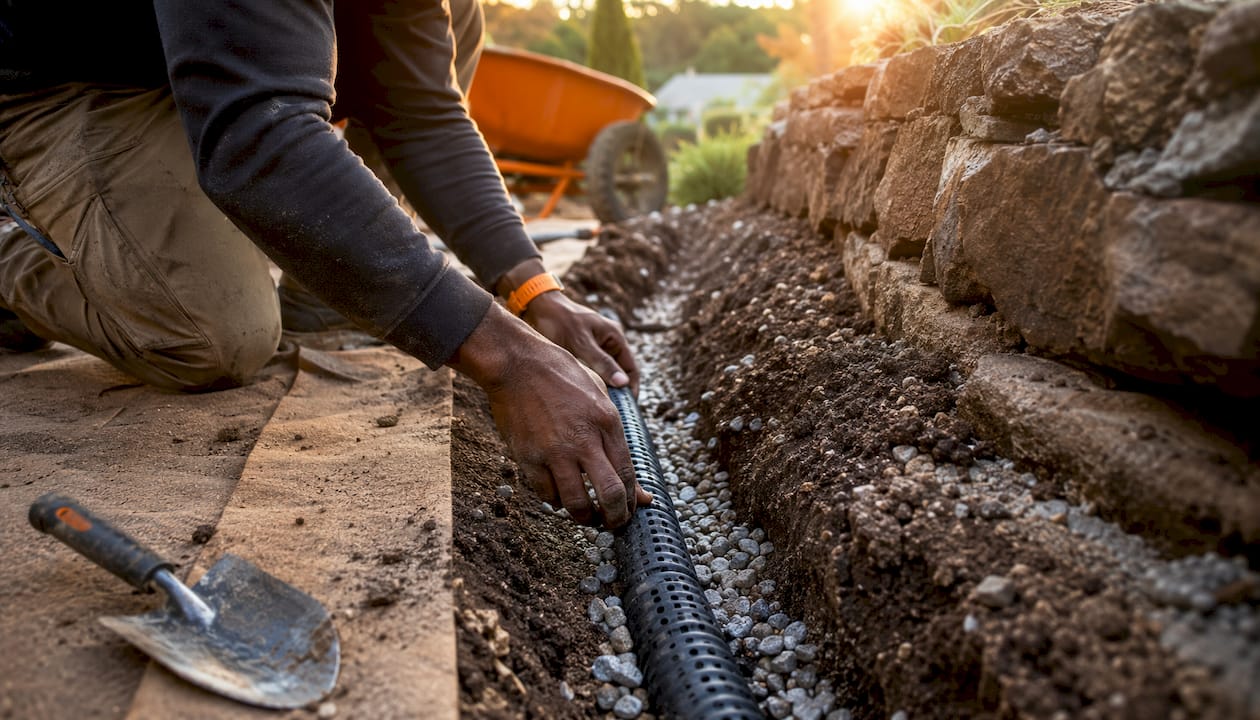
Proper drainage means gravel backfill directly behind the wall, perforated drain pipe at the base, and weep holes spaced through the wall face to let water escape. Skipping any one of those elements is the most common reason walls fail within a few years of installation.
Pro Tip: Ask your contractor to show you the drainage plan before work starts. If they can’t produce one, that’s a red flag. Proper gravel backfill and weep holes are not optional add-ons in Kansas City’s climate.
Kansas City’s freeze-thaw cycles add another layer of stress. Water that saturates backfill in fall freezes in winter, expanding and pushing against the wall face with significant force. That’s why hydrostatic pressure from frozen backfill is cited as the leading cause of wall failure in this climate. Walls built without drainage aggregate and weep holes are especially vulnerable.
On the regulatory side, most local jurisdictions measure wall height from the footing base, not finished grade. That means a wall that looks like 3.5 feet above ground may technically measure over 4 feet from the footing, triggering permit requirements. Confirm the measurement method with your local building department before finalizing your design.
Sgclandscape builds retaining walls across the KC Northland
If you’re in Smithville, Platte City, Kearney, or the surrounding KC Northland area, Sgclandscape handles retaining wall construction as part of a full landscape design and build service. You get one contractor for the wall, the drainage, the concrete work, and the surrounding landscape restoration, rather than coordinating three separate crews.

Sgclandscape uses professional-grade materials and brings the same crew back for every phase of your project. Their retaining wall construction services include site assessment, drainage planning, and full installation, with the option to pair the wall with paver patios, outdoor living spaces, or lawn restoration. Browse completed projects in the project gallery to see the quality of work before you reach out. Get a free estimate and find out what your specific yard and budget call for.
FAQ
How much does a 4-foot retaining wall cost?
For a standard 3 to 4 foot wall, expect installed costs to range from $4 to $44 per square foot depending on material and site conditions, with higher-end options like concrete and segmental block at the top of that range and timber at the bottom. Total project price will scale with wall length, height, drainage needs, and access complexity.
What is the 1/3 rule for retaining walls?
The 1/3 rule refers to the general guideline that a retaining wall should be buried at least one-third of its total height below grade to provide adequate stability and resist lateral soil pressure.
Does a 2-foot retaining wall need a footing?
A 2-foot wall generally does not require a formal engineered footing, but it still needs a compacted gravel base for stability. Local requirements vary, so confirm with your building department before starting.
How do permits affect retaining wall cost in Kansas City?
Most Kansas City jurisdictions require permits for walls at or above 4 feet, measured from the footing base rather than finished grade. Permit and engineering fees add to the base installation cost and should be budgeted separately.
Key Takeaways
Retaining wall cost in Kansas City is influenced by material choice and site conditions, with drainage design and wall height being key factors that often increase project costs.
| Point | Details |
|---|---|
| Installed cost range | Concrete is at the higher end of the cost spectrum, while timber offers a lower entry point. |
| Height triggers permit costs | Walls at or above 4 feet require permits and often engineered plans, raising total cost. |
| Drainage is the top failure cause | Hydrostatic pressure from clay soil and freeze-thaw cycles causes most wall failures without proper drainage. |
| Contractor selection criteria | Prioritize local soil experience, itemized estimates, licensing, and retaining wall-specific reviews. |
| Sgclandscape for KC Northland | Sgclandscape offers full retaining wall construction with drainage planning in Smithville, Platte City, and Kearney. |
Recommended
Ready to get started in Kansas City's Northland?
GC Signature Outdoors serves Smithville, Platte City, Kearney, Liberty, and surrounding areas.