
After 7 Days Above 50°F: KC Homeowners' Spring Yard Cleanup
After 7 Days Above 50°F: KC Homeowners’ Spring Yard Cleanup
Wait for daytime temperatures to hold at 50°F or warmer for seven straight days before you touch your yard in earnest. Once that threshold hits, pick up visible debris, rake gently, and hold off on heavy feeding or renovation work until soil and plants are actively growing. University extension research and the Xerces Society back this timing, and some local lawn care providers follow the same rule for properties in the KC Northland area.
TL;DR:
- The soil must be dry and crumble easily before soil work, and temperatures need to hit 50°F for seven days before starting yard cleanup activities.
- Light debris removal and gentle raking should be prioritized, avoiding aggressive dethatching or heavy feeding until plants are actively growing.
- Pruning should focus on dead, broken, or damaged branches, with shaping cuts delayed until after spring bloomers finish flowering.
- Mowing height should be set to three to four inches, never mow wet grass, and avoid scalping or heavy fertilization early in the season.
- Hiring professional crews can save time and ensure proper staging of cleanup, especially for larger properties or tight schedules.
Table of Contents
- Priority Spring Yard Cleanup Checklist
- Mowing, Fertilizing, and Overseeding: The Numbers That Matter
- Pruning and Bed Cleanup That Actually Helps Your Plants
- Tools, Safety, and the Soil Rule Most Homeowners Skip
- What to Compost, What to Toss, and When to Mulch
- A Field-Tested Take on Phasing Your Spring Cleanup
- Skip the Weekend Labor With a Local Spring Cleanup Crew
- Where This Guidance Comes From
- Sources
- FAQ
Priority Spring Yard Cleanup Checklist
Before you grab a rake, do two quick checks. First, has your area logged seven consecutive days above 50°F? Second, grab a handful of soil from a flower bed. If it crumbles apart, you’re clear to work it. If it forms a sticky ball, wait. Working saturated soil causes compaction that can take years to reverse.
Once both boxes are checked, work through this order:
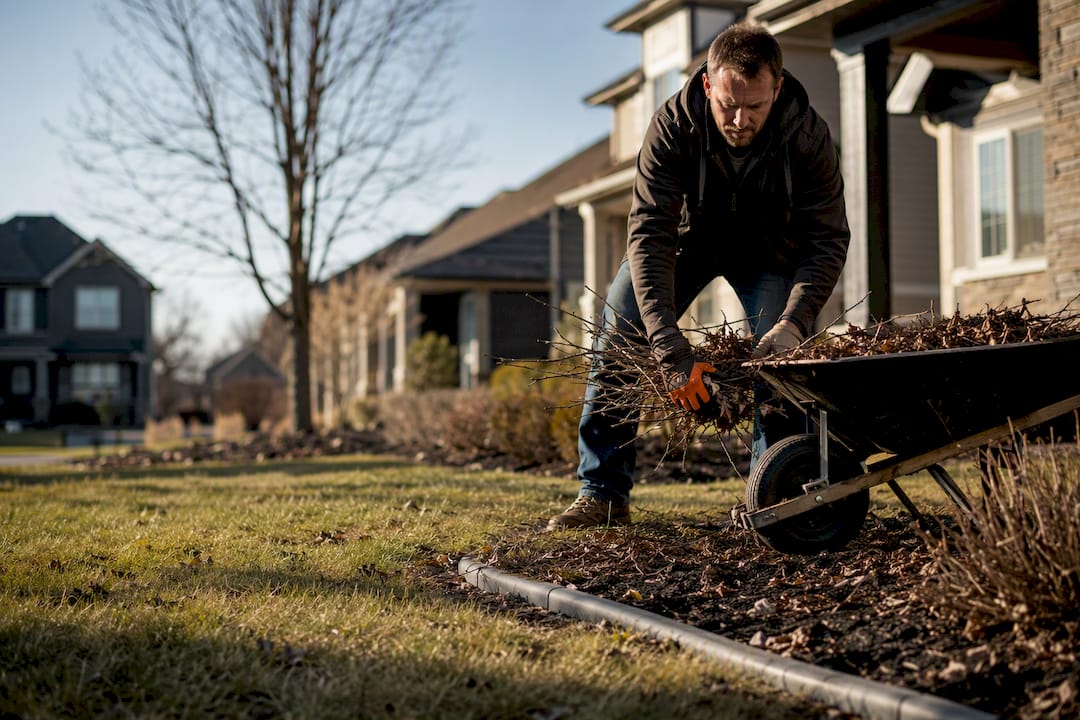
- Clear visible debris first. Pick up sticks, trash, and matted leaves from lawns, driveways, and walkways. This is the fastest way to make the yard look cared for again.
- Rake the lawn lightly. Skip aggressive dethatching. A gentle pass lifts matted grass without tearing up soft, still-recovering turf.
- Tidy planting beds, but not completely. Remove obviously diseased material, but leave some leaf litter and stems in less visible corners for overwintering insects.
- Prune dead or storm-damaged branches. Cut back anything broken or clearly dead. Save major shaping cuts for plants that have finished their spring bloom cycle.
- Prep the mower before the first cut. Sharpen the blade and set the deck height before you start the season, not after the first ragged mow.
- Edge beds and walkways. Clean edges make the whole yard read as maintained, even if beds aren’t fully planted yet.
- Start your compost and yard-waste routine. Sort what’s going to the compost pile from what needs to be bagged and hauled off.
Tackle this in one weekend if the yard is small, or phase it over two to three weekends if you’re managing a larger property. Public-facing areas, front lawn, driveway edges, entry beds, deserve the first pass. Backyard habitat corners and perennial beds tucked against a fence line can wait another week or two without anyone noticing.
Pro Tip: Photograph your yard before you start. It’s the easiest way to track progress across a multi-weekend cleanup and spot the spring landscaping ideas worth carrying into next year.
Mowing, Fertilizing, and Overseeding: The Numbers That Matter
Most mowing mistakes come from ignoring two simple rules. Set your deck to 3 to 4 inches for cool-season turf, and never cut more than a third of the blade length in a single pass. Scalping the lawn in April to “get it under control” does more damage than good, and it invites weeds into the bare patches you just created.
A few practical rules to keep in mind:
- Never mow wet grass. It tears instead of cuts and spreads disease between sections of the yard.
- Mow in the morning or early evening rather than the heat of midday, when turf stresses more easily.
- Hold off on heavy fertilizer applications early in the season. Extension guidance generally points to mid to late spring, once grass is actively growing, as the better window; feeding too early pushes leaf growth at the expense of root development.
- Save aeration and dethatching for late summer or early fall, when cooler soil temperatures favor recovery instead of weed establishment.
- If you’re overseeding tall fescue, timing and seed rate both matter. Spring overseeding is riskier than fall seeding because summer heat arrives before new grass has rooted deeply.
Check your mowing height and technique before the first cut of the season rather than adjusting mid-mow, and if overseeding is on your list this spring, know the seeding rate before you buy seed.
Pruning and Bed Cleanup That Actually Helps Your Plants
Look for branches that are cracked, blackened, or clearly snapped from winter ice and wind. Those come out now, regardless of species. Everything else, the shaping cuts, the size control, generally waits until after spring bloomers finish flowering.
Perennial beds need a lighter touch than most homeowners assume:
- Cut back ornamental grasses and dead perennial stalks once new growth starts pushing through at the base.
- Hand-clean around hosta crowns and other emerging perennials rather than raking over them, since a metal rake tine can shred new shoots you can’t see yet.
- Divide overgrown perennials once they show a few inches of new growth, not before.
- Leave low, spent stems and leaf litter in back corners of beds. Xerces Society research shows this debris shelters overwintering bees and other beneficial insects until temperatures stabilize.
- Bag and discard any visibly diseased foliage. Do not toss it in the compost pile, where fungal spores and overwintering pests can survive and spread right back into your garden next season.
Pro Tip: Cutting back tall ornamental grasses gets messy fast. Wrap a bungee cord around the base of the stalks before you cut, and the whole clump comes down in one bundle instead of scattering across the bed.
Tools, Safety, and the Soil Rule Most Homeowners Skip
A sharp mower blade, a clean pair of bypass pruners, a sturdy rake, and gloves cover most of what a spring cleanup demands. Wipe pruner blades with rubbing alcohol between plants, especially if you’re cutting anything that shows disease symptoms. That small habit stops you from spreading a fungal problem from one shrub to the next.
A few safety basics matter more than people expect:
- Wear gloves and eye protection when pruning, especially around thorny shrubs or overhead branches.
- Lift with your legs, not your back, when hauling bagged debris or wet mulch.
- Squeeze a handful of soil before doing any digging or bed work. If it crumbles rather than clumps, it’s dry enough to work without long-term compaction.
- Skip heavy equipment on wet lawns entirely. Wheel ruts from a mower or cart on saturated turf can outlast an entire growing season.
What to Compost, What to Toss, and When to Mulch
Healthy leaf litter, dead grass clippings, and non-diseased plant trimmings all belong in the compost pile. Anything showing mold, blight, or insect damage should go in the trash instead, not the compost bin, since most home compost setups don’t get hot enough to kill off pathogens.
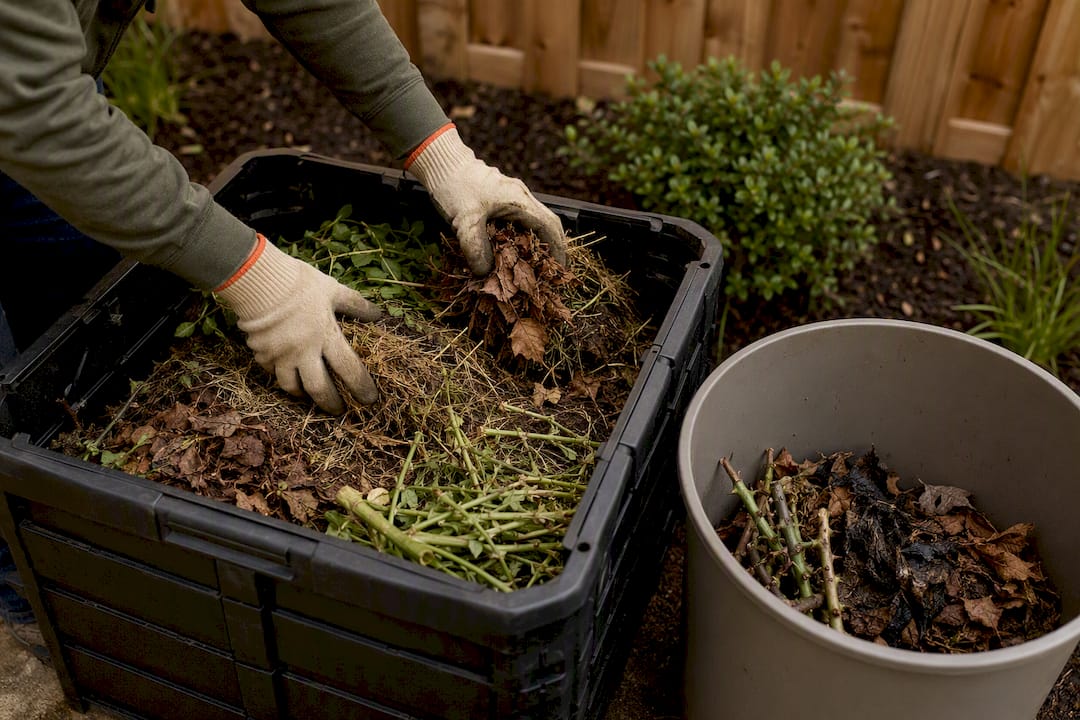
If you need to clear a bed before the ideal window, pile the debris loosely nearby for a few days rather than bagging it immediately. That gives any sheltering insects a chance to move on before you haul the material away. Hold off on fresh mulch until soil has warmed and perennials are visibly emerging. Mulching too early traps cold, damp soil right where new shoots are trying to break through.

A Field-Tested Take on Phasing Your Spring Cleanup
Large trees, storm-damaged limbs, and tight timelines are where DIY plans stall. Professional lawn care companies often stage spring cleanups in phases, debris first, pruning and bed work second, using professional-grade equipment that gets the job done reliably without guesswork or repeated weekends lost to it.
— GC Signature Outdoors LLC
Skip the Weekend Labor With a Local Spring Cleanup Crew
If you’d rather spend your Saturday doing anything other than hauling debris and second-guessing pruning cuts, local lawn care crews can be the alternative to tackling spring yard cleanup solo in Smithville, Platte City, Kearney, and the surrounding KC Northland area. These crews often handle debris removal, pruning, bed cleanup, and mulch refresh as one coordinated visit instead of a string of separate contractors, typically using professional-grade equipment and materials on a schedule you can actually count on.

Many professional lawn care jobs are backed by insurance and a commitment to quality, alleviating the need for you to manage every detail yourself. Explore the full spring and fall cleanup service or browse the complete lawn care service lineup to see what fits your yard. Ready to get on the schedule? Request a quote today and let a local crew handle the heavy lifting before the season gets away from you.
Where This Guidance Comes From
This checklist draws on published extension and conservation research rather than guesswork.
- University of Illinois Extension on lawn timing and fertilizing
- UMN Extension on mowing practices
- Colorado State Extension on soil compaction
- Iowa State Extension on spring garden task timing
Sources
- University of Illinois Extension guidance on lawn timing
- UMN Extension: mowing practices for healthy lawns
- Colorado State Extension: soil compaction resource
- Xerces Society: For pollinators’ sakes, don’t spring into garden cleanup too soon
FAQ
How Much Does a Spring Yard Cleanup Cost?
Pricing depends on yard size, debris volume, and how much pruning or bed work is involved. GC Signature Outdoors LLC’s spring and fall cleanup service doesn’t list a flat rate online, so current pricing is available by request through the site.
What Does Yard Spring Cleaning Consist Of?
A full spring cleanup covers debris removal, light raking, bed tidying, pruning of dead or damaged branches, mower prep, and a mulch refresh once soil has warmed. The order matters: visible debris comes off first, and heavy renovation work waits until conditions allow.
When Should I Start Spring Yard Cleanup?
Start once daytime temperatures hold at 50°F or above for seven consecutive days. Starting earlier risks disturbing pollinators still overwintering in leaf litter and stems, and working soil before it’s dry enough can cause compaction that lasts for seasons.
What Is the First Thing You Put on Your Lawn in the Spring?
The first real lawn task is a light raking pass to lift matted grass and clear debris, not fertilizer. Heavy feeding should wait until grass is actively growing, generally by mid to late spring in most climates, since early applications push leaf growth at the expense of root development.
Recommended
Ready to get started in Kansas City's Northland?
GC Signature Outdoors serves Smithville, Platte City, Kearney, Liberty, and surrounding areas.