
KC Northland: Overseed Tall Fescue with 3 to 4 Pounds per 1,000 Sq Ft
KC Northland: Overseed Tall Fescue with 3 to 4 Pounds per 1,000 Sq Ft
Overseed tall fescue in the fall, ideally between late August and mid-October, using 3 to 4 pounds of seed per 1,000 square feet after mowing short and aerating the lawn. Keep the top inch of soil consistently moist with light, frequent watering until seedlings take hold. Extension research from K-State and NC State backs this window as the surest path to thick, even turf, and it’s an approach used by local professionals on lawns across the KC Northland.
TL;DR:
- Overseeding tall fescue in late summer or early fall with 3 to 4 pounds per 1,000 square feet ensures optimal germination and growth, especially when soil is above 60°F.
- Proper lawn preparation, including mowing to 1 to 1.5 inches, aerating, and reducing thatch, significantly improves seed-to-soil contact and seedling establishment.
- Consistent watering of the top inch of soil for two to three weeks after planting is crucial, with adjustments made as roots develop to prevent drying out or overwatering.
- Using a two-direction spreader technique and lightly raking or rolling the seed promotes even coverage and strong stands.
- Skipping professional aeration or overseeding equipment can reduce success, as rental tools and DIY methods often fail to achieve the same seed contact and density.
Table of Contents
- Best Timing and Conditions for Overseeding Tall Fescue
- Prepare the Lawn Before You Spread a Single Seed
- Seed Selection and Overseeding Rates for Tall Fescue
- How to Apply Seed: Spreader Technique and Finish Work
- Watering Schedule for the First 6 to 8 Weeks
- Common Overseeding Problems and How to Fix Them
- What to Expect: Germination Through Spring
- What Professionals Do Differently on Overseeding Jobs
- Professional Overseeding and Aeration Services in the KC Northland
- Sources
- FAQ
Best Timing and Conditions for Overseeding Tall Fescue
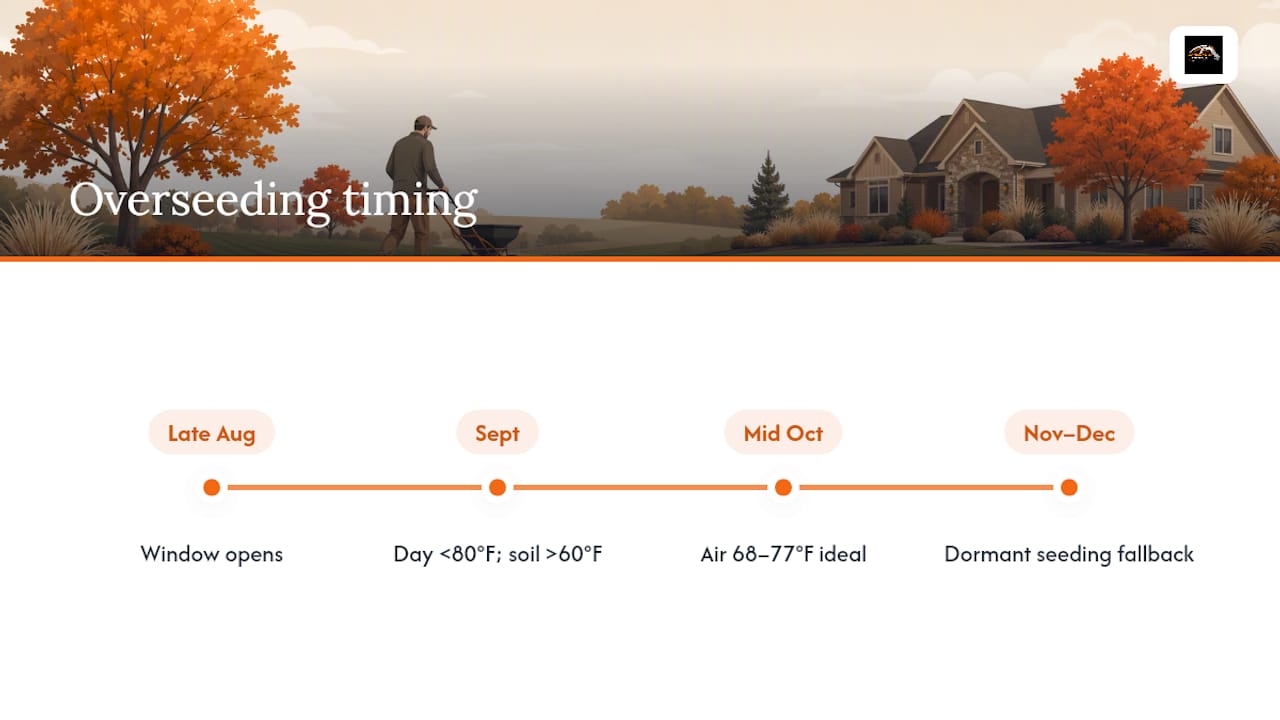
Fall is the window that matters most for tall fescue. Extension guidance from K-State and NC State points to late August through mid-October as the sweet spot, once daytime highs drop under roughly 80°F and soil temperatures hold above 60°F. Seeds germinate best when air temperatures sit between 68 and 77°F. Wait past mid-October and germination slows or stalls, leaving thin, patchy grass heading into winter.
Fall beats spring for a simple reason: less competition. Warm-season weeds like crabgrass are winding down, so fescue seedlings get to focus on building roots instead of fighting for sunlight and water. Spring seeding often means fighting weeds and summer heat stress before the grass has matured enough to handle it.
If you miss the fall window entirely, dormant seeding in late November or December is a fallback, not a first choice. Seed sits until spring conditions trigger germination, which means less predictable results.
Prepare the Lawn Before You Spread a Single Seed
Prep work decides whether your seed germinates or washes away. Skip it, and even premium seed struggles to make contact with soil.
Start by mowing the lawn to 1 to 1.5 inches and bagging the clippings. A shorter canopy lets seed reach the soil instead of getting hung up in existing grass blades, a detail UGA’s turf research points to as one of the biggest factors in uniform stands. Thatch over a quarter inch thick blocks seed just as effectively, so rake it out or plan to aerate through it.
Core aeration is the step most homeowners skip and shouldn’t. The holes it punches act like tiny reservoirs, holding seed and moisture in place while protecting it from drying out, according to NC State’s TurfFiles program. Verticutting and slit seeding go a step further by slicing grooves directly into the soil for seed-to-soil contact. Basic raking works in a pinch on smaller areas, but it’s the least reliable of the three.
- Mow to 1 to 1.5 inches and remove clippings before you do anything else.
- Reduce thatch to a quarter inch or less if it’s built up.
- Run aeration or slit-seeding equipment in two directions, roughly 90 degrees apart, for even coverage.
- Pre-wet dry, compacted soil a few days ahead so the aerator can actually penetrate.
Pro Tip: Rent a slit seeder for the weekend if your lawn is larger than about 5,000 square feet. It costs more than a hand spreader, but it cuts prep time roughly in half compared to aerating and broadcasting separately.
Seed Selection and Overseeding Rates for Tall Fescue
Buy a turf-type tall fescue blend, and check the label before you check the price. Look for low “other seed” content and, ideally, 0% listed weed seed. Cheap contractor mixes often bulk up with annual ryegrass or other fillers that die out or look mismatched by the following summer.
Rate matters just as much as quality. For overseeding an established lawn, K-State recommends 3 to 4 pounds per 1,000 square feet, which is roughly half the rate used for a brand-new lawn from bare dirt (about 6 to 8 pounds per 1,000 square feet). Existing grass already covers most of the ground, so overloading the seed rate just crowds seedlings and weakens the stand.
A few more things to keep in mind:
- Use seed blends that match your existing lawn species to maintain uniform turf appearance and growth.
- Use a starter fertilizer at seeding to promote root development, but avoid herbicides that could interfere with seed germination.
- Store leftover seed in a cool, dry spot. Tall fescue loses viability fast in heat and humidity.
How to Apply Seed: Spreader Technique and Finish Work
Getting seed down evenly is where a lot of DIY overseeding jobs go wrong. Here’s the sequence that actually works:
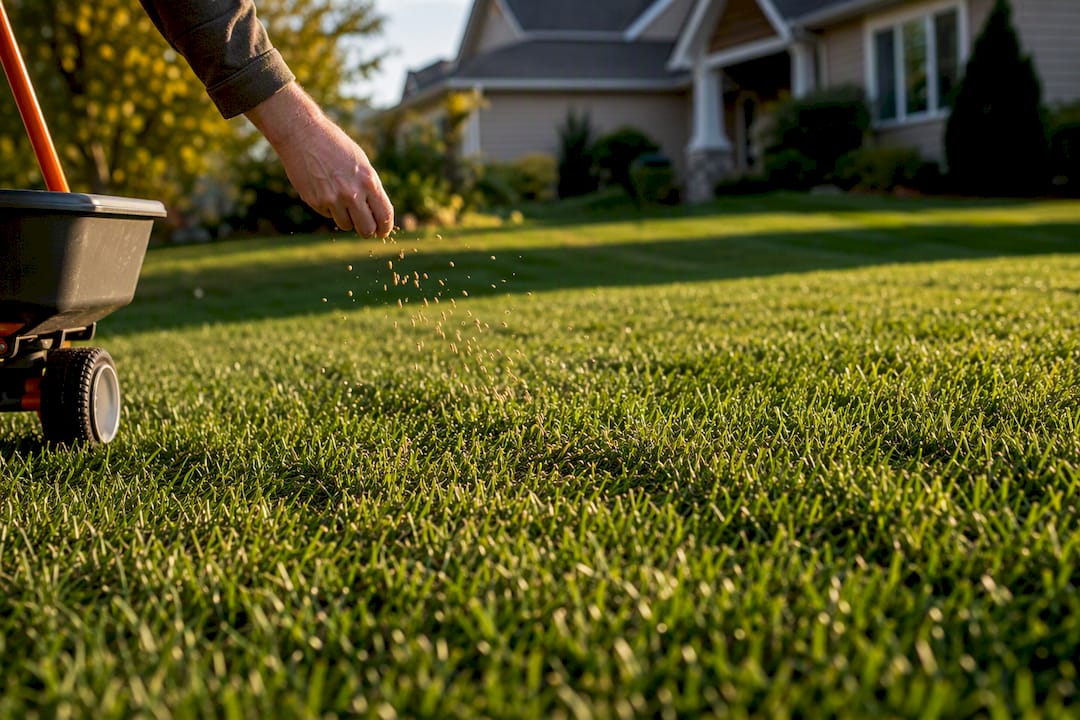
- Load a broadcast or drop spreader with half your total seed and walk the lawn in one direction, north to south, for example.
- Reload with the remaining half and walk the lawn again at a 90-degree angle to your first pass, which is the two-direction method extension agents recommend for even coverage.
- Lightly rake the seeded area or run a slit seeder over it, keeping seed no deeper than a quarter inch. Bury it deeper and it may never emerge.
- Hand-seed any bare spots you notice, then press or roll lightly with a lawn roller if you have one, which improves contact in low-traffic areas.
- Walk the perimeter and touch up thin edges near sidewalks and driveways, since spreaders tend to under-apply at the turnaround points.
Skipping the second direction pass is the most common mistake here. One pass alone tends to leave visible streaks once the grass fills in.
Watering Schedule for the First 6 to 8 Weeks
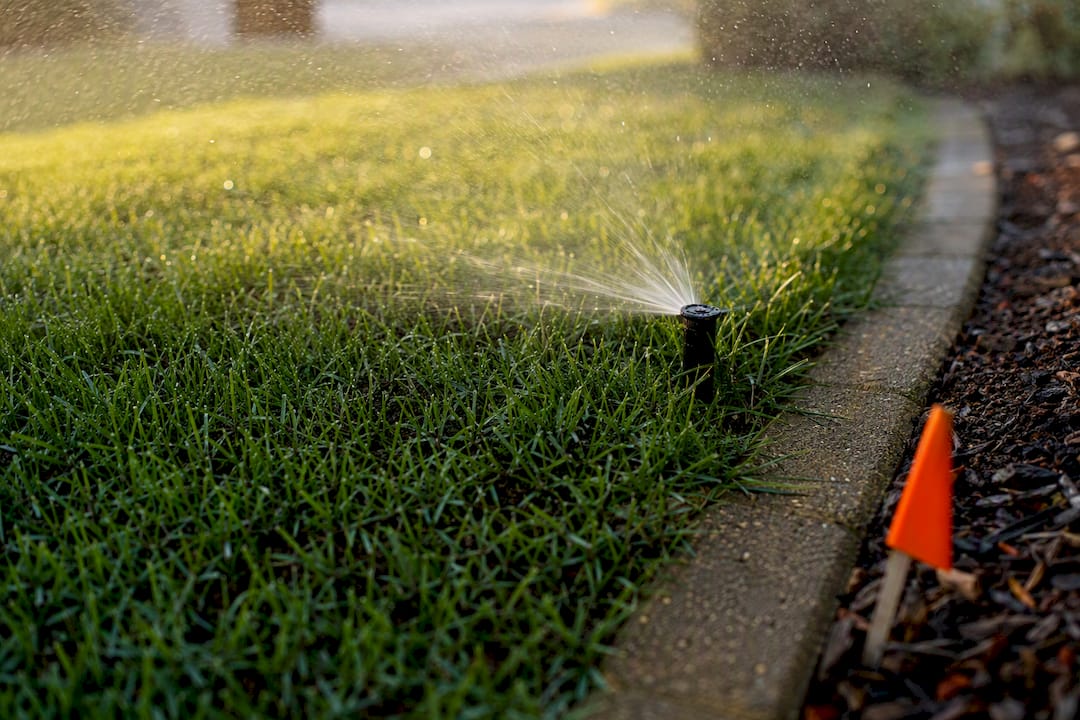
Moisture management is where most overseeding projects succeed or fail, more than seed brand or even timing. For the first two weeks, water lightly and often, aiming for two to three short bursts a day that keep the top inch of soil damp without pooling water.
Tall fescue typically germinates in 7 to 12 days under good conditions. Cooler soil or an inconsistent watering schedule can stretch that out to nearly 21 days, so don’t panic if you’re at day 14 with no grass yet. Just check that the soil hasn’t dried out.
Once seedlings reach about an inch tall, start stretching the interval between waterings and increasing the amount each time. This trains roots to grow deeper instead of staying shallow near the surface. By week six to eight, you should be down to a normal deep-watering schedule, roughly once or twice a week depending on rainfall.
- Days 1 to 14: light watering 2 to 3 times daily, focused on the top inch of soil.
- Weeks 3 to 4: reduce frequency, increase duration as roots develop.
- Weeks 6 to 8: transition to standard deep, infrequent watering.
Hold off on any herbicide application during this stretch. Even products labeled “weed and feed” can prevent new seed from germinating or kill young seedlings outright.
Common Overseeding Problems and How to Fix Them
Patchy germination almost always traces back to one of three causes: an inconsistent watering schedule, poor seed-to-soil contact, or thatch that never got cleared out. If half your lawn greened up and the other half didn’t, walk that section and check soil moisture first. Dry pockets under trees or near south-facing walls often need extra attention.
Pre-emergent herbicides are the other major trap. Applying one within about six weeks of seeding can block germination entirely. If broadleaf weeds are a real problem, treat them roughly a month before you seed, then wait until new grass has been mowed three times before reapplying anything.
- Thin, uneven stands: check watering consistency and thatch depth before blaming the seed.
- No germination after three weeks: dig a small test patch to see if seed is still viable or if it rotted from overwatering.
- Persistent bare patches year after year: get a soil test done, since compaction or pH imbalance often needs correcting before seed will ever take.
What to Expect: Germination Through Spring
- Days 7 to 21: seedlings emerge, timing depends on soil temperature and moisture consistency.
- Once seedlings reach about 3 inches tall, mow them down to roughly 2 inches for their first cut, using a sharp blade to avoid pulling young roots.
- Late fall (once temperatures cool further): apply a late-season fertilizer to build root reserves for winter.
- Early spring: watch for crabgrass and apply a pre-emergent before soil temperatures climb, timing it so it doesn’t overlap with any additional fall seeding.
- Mid to late spring: walk the lawn, reseed any thin spots that didn’t fill in, and resume normal mowing and foot traffic.
What Professionals Do Differently on Overseeding Jobs
Commercial-grade aerators and slit seeders penetrate compacted clay far better than rental units, and that difference shows up in stand density by the following spring. Crews also manage irrigation timing across an entire property rather than one zone at a time, which matters when weather shifts mid-project. For homeowners weighing DIY against hiring out, our fall aeration guide and Kansas City timing breakdown cover the details worth knowing either way.
— GC Signature Outdoors LLC
Professional Overseeding and Aeration Services in the KC Northland
If the mowing, aerating, seeding, and six weeks of watering above sound like more than you want to manage yourself, core aeration and overseeding are offered as a combined service for homeowners across Smithville, Platte City, and Kearney. You get the seed-to-soil contact of professional equipment and a starter fertilizer application timed to the same fall window covered here, without renting gear or guessing at your watering schedule.

These services typically include aeration, seed selection, and starter fertilizer applied in one visit, timed to the late August through mid-October window that benefits fescue overseeding. If you’d rather hand off the moisture management and equipment logistics entirely, request a free estimate through our lawn care services page or check the details on our aeration and overseeding service to see what’s included for your property size.
Sources
- Getting Your Tall Fescue Lawn Ready for Fall - Lincoln County Center | N.C. Cooperative Extension
- Lawn Seeding in the Fall | K-State
- September and October are perfect for seeding tall fescue lawns - UGA Field Report
- Time for fall seeding of tall fescue - TurfFiles | NC State Extension
FAQ
Can You Put Down Too Much Fescue Seed?
Yes. Overseeding above the recommended 3 to 4 pounds per 1,000 square feet crowds seedlings, which weakens root development and can actually thin out the stand instead of thickening it.
How Short Should You Cut Fescue Before Overseeding?
Mow down to 1 to 1.5 inches and bag the clippings so seed reaches bare soil instead of getting caught in taller grass blades.
How Long Does It Take Tall Fescue to Sprout When Overseeding?
Expect germination in 7 to 12 days under good conditions, though cooler soil or inconsistent watering can push that out closer to 21 days.
When Is the Best Time to Reseed Tall Fescue?
Late August through mid-October is the ideal window, once soil temperatures stay above 60°F and daytime highs drop under about 80°F, according to extension guidance from K-State and NC State.
Recommended
Ready to get started in Kansas City's Northland?
GC Signature Outdoors serves Smithville, Platte City, Kearney, Liberty, and surrounding areas.