
Mow 8–10 a.m. or 4–6:30 p.m. to Protect Your Lawn for Homeowners
Mow 8–10 a.m. or 4–6:30 p.m. to Protect Your Lawn for Homeowners
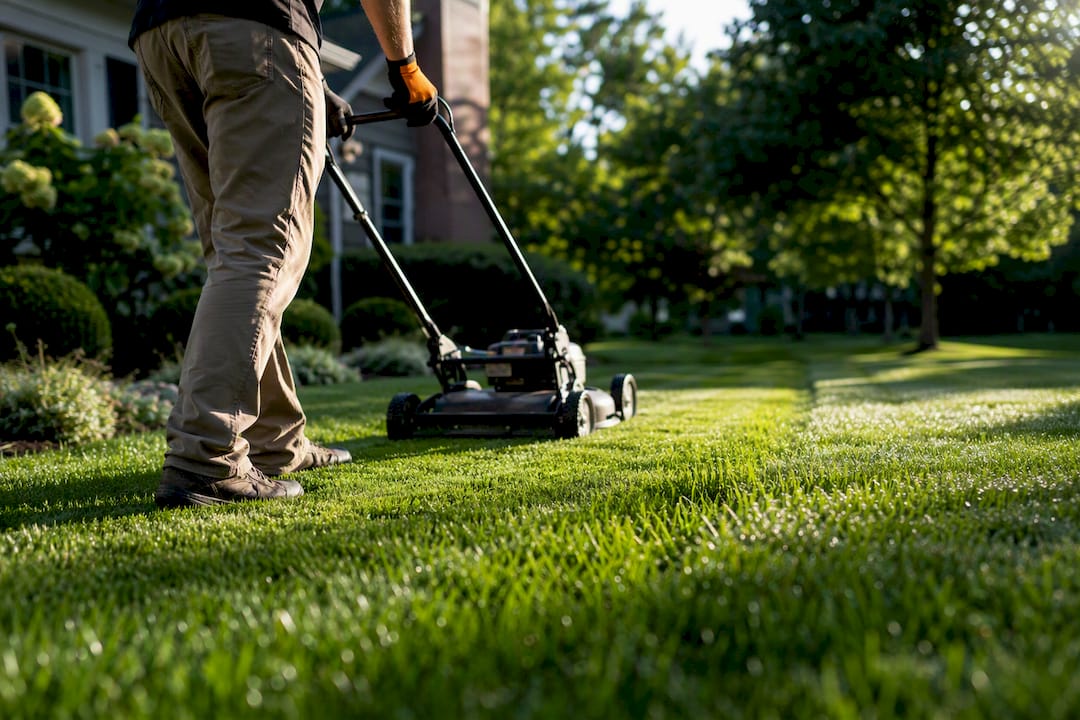
Mid-morning, once the dew has dried, and late afternoon or early evening, before humidity rebuilds, are the two best windows to mow a lawn. Both avoid the two biggest stressors on turf: wet grass blades and peak heat. Mowing outside these windows, especially in the heat of midday, tears grass instead of cutting it clean and leaves the lawn more open to disease.
TL;DR:
- Mowing in mid-morning or late afternoon works best to avoid dew and peak heat, but climate and daily schedule influence the optimal choice.
- Wet grass and temperatures above 90°F significantly increase risks of turf damage, disease, and mower wear, so mow only during dry, cooler periods.
- The one-third height rule depends on growth rate rather than the calendar, requiring more frequent mowing during rapid growth phases like spring or after fertilization.
- Maintaining sharp blades and proper cutting height tailored to grass type reduces stress and enhances lawn recovery, regardless of timing.
- Scheduling regular mowing that adapts to weather, growth, and season, preferably by professionals, helps prevent turf stress and supports overall lawn health.
Table of Contents
- When Is the Best Time to Mow: Morning vs. Evening
- Why You Should Avoid Mowing Wet Grass or Midday Heat
- How Often to Mow: the One-Third Rule Explained
- Mower Prep That Makes Any Mowing Time Work Better
- Adjusting Mowing Time for Seasons and Grass Type
- A Homeowner’s Mowing Checklist From GC Signature Outdoors
- How We Schedule Mowing to Protect Client Lawns
- Let GC Signature Outdoors Handle the Timing for You
- Sources
- FAQ
When Is the Best Time to Mow: Morning vs. Evening
Choosing between the two good windows comes down to your climate, the season, and honestly, your schedule. Neither one is universally “correct.” Each solves a different problem.
Mid-morning, roughly 8 to 10 a.m. in most regions, works because the sun has had time to burn off overnight dew but the temperature hasn’t spiked yet. Wet grass clumps in the mower deck, clogs the discharge chute, and leaves matted clippings that can smother the lawn underneath. By mid-morning, that moisture problem is gone, and you’re mowing before the heat sets in.
Late afternoon or early evening, generally between 4 and 6:30 p.m., is the other reliable window. University extension specialists recommend this range specifically because it lets grass recover overnight without sitting under midday sun stress. The air has cooled from its afternoon peak, but dew hasn’t formed yet.
A few practical notes on picking between them:
- Humid climates: Dew can linger past 10 a.m. some mornings, so late afternoon is often the safer bet.
- Dry, arid regions: Morning mowing works well most of the year since dew evaporates fast and afternoons run hotter.
- Especially hot days (above 90°F): Skip both extremes and lean toward the earliest part of the mid-morning window or the tail end of the evening window, whichever is cooler that day.
- Weekday schedules: If you can only mow after work, evening is your default, just watch for storm clouds that bring evening dew early.
Whichever window you pick, consistency matters more than precision. Mowing at roughly the same time of day, week to week, keeps the grass’s stress response predictable instead of compounding.
Why You Should Avoid Mowing Wet Grass or Midday Heat
Two conditions turn an ordinary mow into a lawn health setback: wet turf and scorching heat.
Wet grass causes a cascade of small problems that add up. Clippings clump instead of scattering, which can smother patches of turf and invite fungal disease. Mowing on saturated soil also dulls blades faster and risks compaction, particularly with heavier equipment. Compacted soil restricts root growth and water absorption for weeks after the fact.
Riding mowers are the bigger culprit here. Their weight, concentrated on narrower tires, pushes soil particles together and can damage root hairs on contact, exactly the kind of injury a lawn can’t shake off overnight.
Heat is the other danger zone. Extension guidance is specific on this point: skip mowing once temperatures climb above roughly 90°F, especially if the soil has dried out. Cutting grass under heat stress compounds the damage, since the plant is already struggling to retain moisture.
Quick rules to keep in your back pocket:
- Skip mowing within a few hours of rain or heavy dew.
- Hold off once air temps pass 90°F, even if it’s your regular mowing day.
- If you must mow wet turf occasionally, plan on aerating later to reverse any compaction.
- Watch for standing water or soft, spongy soil, both are signs to wait another day.
How Often to Mow: the One-Third Rule Explained
The one-third rule is the backbone of any smart mowing schedule: never remove more than one-third of the grass blade’s length in a single cut. If you keep your lawn at a 3-inch cutting height, that means mowing again before the grass reaches about 4.5 inches, not after it’s shot up to 6 or 7.
Growth rate, not the calendar, should set your mowing schedule. Here’s how that plays out in practice:
- Spring flush: Cool temperatures plus rain often push growth fast enough to require mowing every 4 to 5 days.
- Midsummer lull: Warm-season grasses may slow down, stretching intervals to 7 to 10 days.
- Post-fertilizer surge: A recent feeding can double growth speed for a couple of weeks, so check height more often than usual.
- Dry spells: Grass growth nearly stops, and mowing can often wait two weeks or more without hurting anything.
If a lawn gets away from you and grows well past that one-third threshold, don’t chase it back down in one pass.
Pro Tip: Bring an overgrown lawn back down gradually over two or three mowings, a few days apart, instead of scalping it in one cut. One dramatic drop shocks the plant and can trigger a stress response that takes weeks to recover from.
Mower Prep That Makes Any Mowing Time Work Better
Timing only gets you part of the way to a healthy lawn. Equipment condition and cutting technique carry at least as much weight, and extension research backs that up directly: dull blades and improper heights cause more cumulative damage than a slightly off mowing time ever will.
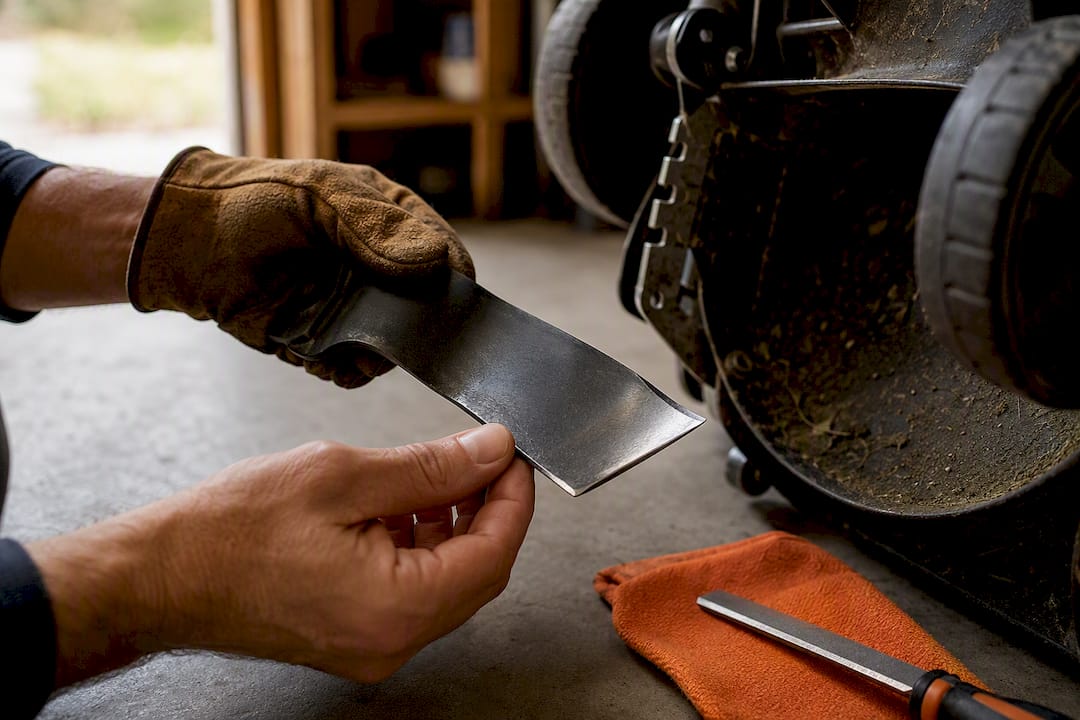
Start with the blade. A sharpening cadence of four to six times per season is the standard recommendation, because dull blades shred grass tips rather than slicing them clean, leaving frayed, brown edges that are slower to heal and easier for disease to exploit.
Cutting height depends on your grass type, but a general guide holds up well:
- Cool-season lawns (fescue, bluegrass): 3 to 3.5 inches
- Warm-season lawns (Bermuda, zoysia): 1.5 to 2.5 inches
- Shaded areas of either type: err toward the taller end to help the grass compete for light
Pro Tip: Mulching clippings back into the lawn returns nitrogen to the soil for free, as long as you’re not leaving visible clumps behind. If clippings mat down after a wet mow, bag that one round and go back to mulching once things dry out.
Adjusting Mowing Time for Seasons and Grass Type
Time-of-day advice doesn’t change much across the calendar, but frequency and caution do.
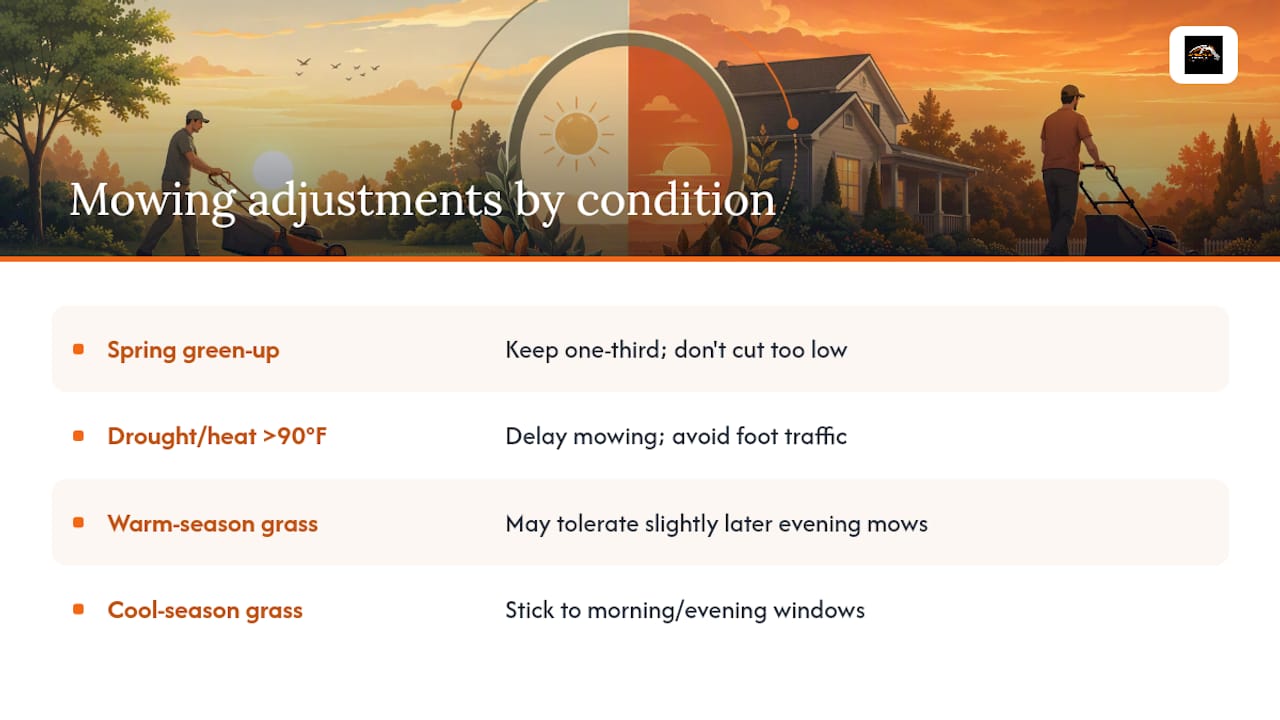
Spring green-up often tempts homeowners to mow too short, too early. Grass is rebuilding root reserves after winter, so cutting low during that flush weakens it right when it needs strength. Stick to the one-third rule even as growth accelerates.
Drought and heat waves call for the opposite adjustment: less traffic, not more caution about timing alone. If the lawn is dry and stressed, hold off on mowing until temperatures drop below that 90°F threshold, and skip foot traffic on the lawn otherwise when you can.
Grass species matters too. Warm-season grasses like Bermuda and zoysia grow fastest in the hottest months and can often tolerate a slightly later evening mow. Cool-season grasses like fescue slow down in summer heat and do better with strict adherence to the morning or evening windows, since they’re already under more stress from the temperature alone.
A Homeowner’s Mowing Checklist From GC Signature Outdoors
Planning your mowing window doesn’t have to be complicated. A short pre-mow check catches most of the mistakes that damage turf.
- Touch the grass. If it’s wet from dew or rain, wait, don’t mow.
- Check the forecast. Skip mowing if the temperature is already climbing past 90°F.
- Measure blade height. If it’s crept past one-third over your target height, mow soon.
- Inspect the mower blade. If clippings look torn rather than cleanly cut, it’s time to sharpen.
Homeowners short on time, or dealing with a lawn that’s already stressed from wet mowing, often find it easier to bring in help rather than guess at timing every week. If you want the deeper technical case against mowing wet grass, we cover it in detail here. For everyone else, a consistent professional schedule solves the timing question permanently.
How We Schedule Mowing to Protect Client Lawns
Scheduling dozens of lawns across a week means we can’t chase the perfect hour on every single property, but we build routes around the same principles this article covers. Morning routes get priority on lawns that tend to hold dew longer, while afternoon slots go to yards that dry out fast and run hotter by midday.
Weather moves the whole plan. A wet forecast pushes routes later in the day or to the next one entirely, since mowing on saturated soil creates more problems than it solves. Blade sharpness gets checked constantly, because a fleet running dull blades does more damage across a week than a slightly imperfect mowing hour ever could. Timing and technique work together, not separately.
— GC Signature Outdoors LLC
Let GC Signature Outdoors Handle the Timing for You
Getting the timing right every single week, tracking dew, heat, and growth rate on top of everything else on your plate, is a lot to manage alone. We build that judgment into every mowing visit for homeowners using professional-grade equipment and blades kept sharp on a regular rotation.

Our weekly mowing service follows the one-third rule automatically, adjusts cutting height to your grass type, and skips wet or scorching days without you having to call and ask. It’s the kind of consistency that’s hard to replicate on your own schedule, especially during spring green-up when growth rates shift week to week. If your lawn could use a reset or a second opinion on its current health, request a quote through our lawn care services page and we’ll walk you through what a season of dependable, well-timed mowing actually looks like.
Sources
- Extension specialist weighs in on best time of day to mow lawns - UGA Today
- Mowing, Dethatching, Aerifying and Rolling Turf - Purdue Extension (AY-8-W)
- Mowing turf through the rain - MSU Extension
- Lawn Mowing | Ohioline (Ohio State Univ.)
FAQ
What is the one-third rule of mowing?
The one-third rule means never cutting off more than one-third of the grass blade’s height in a single mow. At a 3-inch cutting height, that means mowing again before the grass reaches 4.5 inches, rather than letting it grow much taller first.
Is it better to mow a lawn in the morning or evening?
Both work well, but for different reasons. Mid-morning after dew dries and late afternoon or early evening before temperatures peak are the two recommended windows, and the better choice depends on your local humidity and how hot your afternoons run.
When should you not mow the lawn?
Skip mowing when grass is wet from dew or rain, when soil is saturated, or when temperatures climb above roughly 90°F. Mowing under any of these conditions increases the risk of turf disease, mower damage, or soil compaction.
How often should I mow during spring green-up?
Fast spring growth often pushes mowing intervals down to every four or five days. Stick to the one-third rule rather than a fixed weekly habit, since growth rate during green-up can outpace a standard schedule.
Does mowing time affect grass disease risk?
Yes. Mowing wet grass spreads clippings unevenly and creates the damp, matted conditions fungal diseases thrive in, while mowing during peak heat stresses the plant right when it’s least able to recover.
Recommended
Ready to get started in Kansas City's Northland?
GC Signature Outdoors serves Smithville, Platte City, Kearney, Liberty, and surrounding areas.