
The Right Lawn Watering Schedule for a Healthy Yard
The Right Lawn Watering Schedule for a Healthy Yard
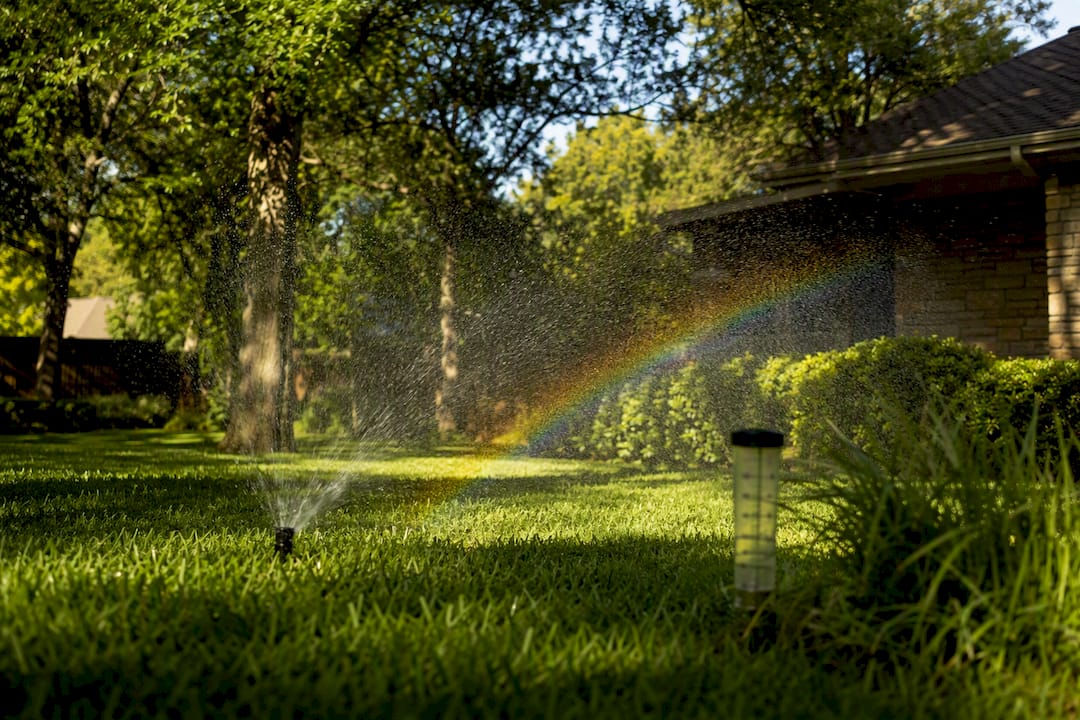
For most established lawns, aim for 1 to 1.5 inches of water per week, delivered in 1 to 3 deep sessions rather than daily light sprinkling. That number already includes rainfall, so check what fell before you turn on the hose or system.
Two things to do today:
- Set a rain gauge (or a straight-sided can) in your yard and check it weekly.
- Run a five-minute catch-can test on one zone to see how fast your system actually applies water.
Quick do’s and don’ts:
- Do water early morning, before 9 AM.
- Do water deeply and less often to build stronger roots.
- Don’t run sprinklers daily for a few minutes. It trains roots to stay shallow.
- Don’t water on a fixed schedule regardless of rain.
Key Takeaways
A healthy lawn needs 1 to 1.5 inches of water per week, applied in 1 to 3 deep sessions rather than daily light watering, and adjusted by season, grass type, and soil.
| Point | Details |
|---|---|
| Weekly target | Aim for 1 to 1.5 inches total per week, counting rainfall toward that number. |
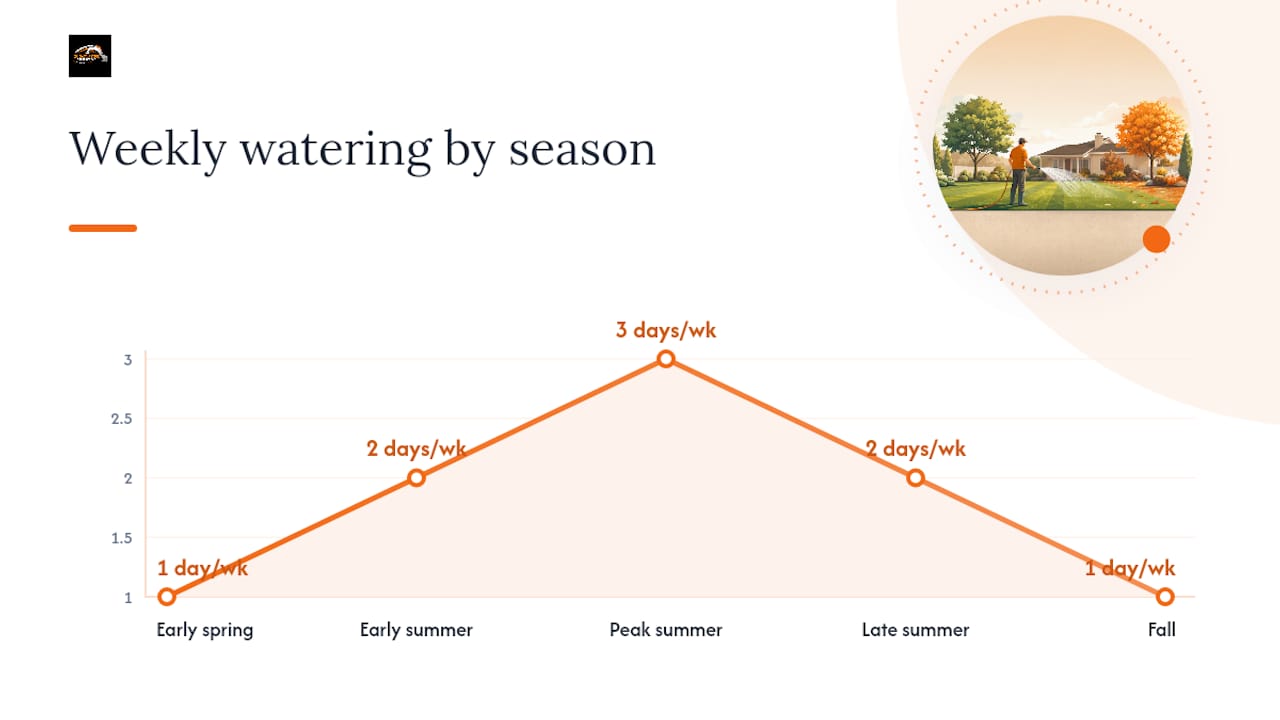
| Seasonal frequency | Follow the 1-2-3-2-1 pattern, watering more often as summer heat peaks and less in spring and fall. |
| Measure, don’t guess | Run a catch-can test to find your system’s real precipitation rate before setting runtimes. |
| Water early, water deep | Irrigate between 5 and 9 AM and split long runs into cycle-and-soak sessions on clay soil. |
| Get a professional audit | GC Signature Outdoors LLC offers irrigation audits and seasonal scheduling for KC Northland homeowners dealing with uneven coverage or runoff. |
Table of Contents
- How Much Water Does a Lawn Need Per Week?
- How Often Should You Water Your Lawn Each Season?
- How Long Should You Run Each Sprinkler Zone?
- What Time of Day Is Best for Watering Grass?
- Does Soil Type Change How You Should Water?
- How Do You Adjust Watering for Rain or Hot Weather?
- When Should You Call a Professional for an Irrigation Audit?
- Get Your Watering Schedule Set Up the Right Way
- Sources
- FAQ
How Much Water Does a Lawn Need Per Week?
The “1 to 1.5 inches per week” figure is the standard baseline most turf specialists at Kansas State University recommend for lawns actively growing in warm weather, and it’s meant to be a total, not an extra layer on top of whatever the sky provides. Rain counts. If your area gets half an inch of rain on Tuesday, you only need to make up the other half to hit your weekly target.
Weather changes that target through something called evapotranspiration, or ET. It’s just a fancy way of describing how fast water leaves the soil and the grass blades combined. Hot, windy, dry weeks push ET up; cool, humid weeks bring it down.
Here’s the math in practice: say your target is 1.25 inches this week and your rain gauge shows 0.4 inches fell Monday night. You need to apply another 0.85 inches through irrigation, split across your watering days.
Pro Tip: Keep a cheap rain gauge stuck in the ground near your sprinkler zone and jot the reading down every Sunday. Six weeks of data will tell you more about your lawn’s real needs than any app.
How Often Should You Water Your Lawn Each Season?
A practical way to schedule irrigation without a calculator is the 1-2-3-2-1 method, which ties watering days to temperature swings across the season:
- 1 day/week in early spring, when temperatures are still mild.
- 2 days/week in early summer as heat builds.
- 3 days/week during the hottest stretch of summer.
- 2 days/week as temperatures ease in late summer.
- 1 day/week heading into fall.
Grass type matters too. Cool-season grasses like Kentucky bluegrass or tall fescue typically need irrigation about 2 to 3 times a week in summer, while warm-season grasses such as Bermuda or zoysia often go 4 to 10 days between waterings, thanks to deeper root systems and better heat tolerance.
Whatever the season, resist the urge to water more often “just in case.” Frequent shallow watering trains roots to stay near the surface and raises disease risk in humid weather. Newly seeded or sodded lawns are the exception. They need light, frequent watering, sometimes twice a day, until roots establish.
How Long Should You Run Each Sprinkler Zone?
Guessing at runtimes wastes water and stresses your lawn either way. The catch-can test, sometimes called the tuna-can test, gives you real numbers.
- Place 5 to 6 straight-sided cans (tuna cans work) evenly around one zone.
- Run that zone for exactly 15 minutes.
- Measure the water depth in each can with a ruler and average the results.
- Multiply that average by 4 to get your zone’s precipitation rate in inches per hour.
Once you know the rate, the math is simple. Spray heads typically apply 1 to 2 inches per hour, meaning 30 to 40 minutes delivers about an inch. Rotor heads apply water more slowly, around 0.4 to 0.8 inches per hour, so expect 45 to 60 minutes per inch.
If your soil is dense or sloped, don’t run that full time in one shot:
- Split the total runtime into 2 to 3 shorter cycles.
- Space each cycle 30 to 60 minutes apart to let water soak in.
- Watch for water pooling or running into the street. That’s your cue to shorten cycles further.
Pro Tip: Test every zone separately. Head type, spacing, and even water pressure can vary from one part of the yard to another, so one zone’s runtime rarely applies to the next.
What Time of Day Is Best for Watering Grass?
Early morning, roughly 5 to 9 AM, is the best window. Wind is usually calm then, so water lands where it’s supposed to instead of drifting. Cooler temperatures mean less evaporation, and the grass has all day to dry out before evening, cutting down on fungal disease.
Before you set a schedule, check your city or utility’s watering rules. Many municipalities restrict irrigation to specific days, often based on odd or even addresses, and ban watering during midday hours in summer. A quick call to your water utility or a look at their website will tell you what’s allowed.
Pro Tip: If your system has a rain sensor, make sure it’s wired in and working. It’s a cheap way to automatically skip a cycle after a storm instead of relying on memory.
Does Soil Type Change How You Should Water?
Soil texture changes everything about how water moves through your yard. Sandy soil drains fast and holds little water, so it needs shorter, more frequent sessions. Clay holds water longer but absorbs it slowly, which means long runs often turn into runoff before the water ever reaches the roots. Loam sits in between and is the most forgiving to work with.
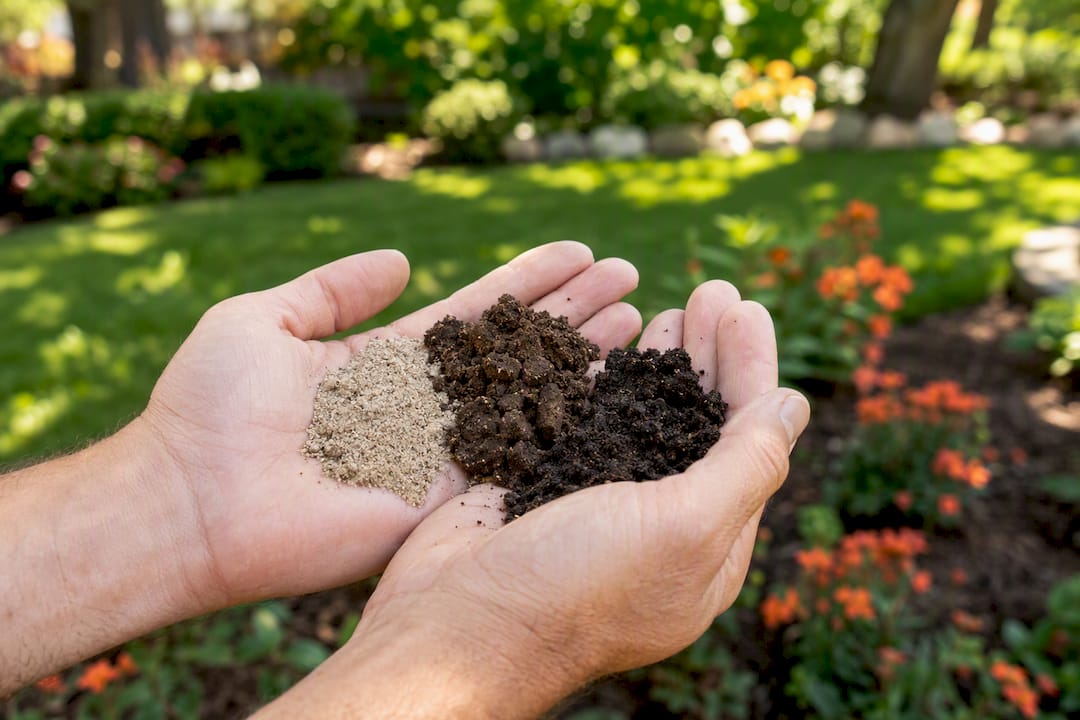
Root depth matters just as much. Shallow, frequent watering keeps roots shallow, while less frequent, deeper watering pushes roots down, where they can pull moisture during dry stretches.
Cycle-and-soak scheduling solves the clay problem directly: divide a zone’s total runtime into 2 to 3 shorter starts, each separated by a 30 to 60 minute soak period, so water has time to infiltrate instead of sheeting off.
Pro Tip: Pull a small soil plug with a trowel after a few weeks of a new schedule. If roots are still shallow, water less often but longer per session.
How Do You Adjust Watering for Rain or Hot Weather?
Sprinkler schedules shouldn’t run on autopilot all season. A few manual habits go a long way:
- Skip the next scheduled run if you’ve had measurable rainfall.
- Cut your weekly total during stretches of cool, cloudy weather.
- Bump watering up slightly during heat waves, if local restrictions allow it.
If you’d rather not track this by hand, ET-based or smart controllers adjust automatically using local weather data, and they’re worth the investment for larger properties or anyone managing multiple zones. Even without one, checking a local weekly watering guide or watering index gives you a solid benchmark for how much your area needs that week.
When Should You Call a Professional for an Irrigation Audit?
Some watering problems aren’t fixable with a schedule tweak. If you’re seeing dry patches next to soggy ones, water running into the driveway, or a system with more zones than you can track, it’s worth bringing in a pro.
A professional irrigation audit typically covers:
- Precipitation-rate measurement for every zone, not just a sample.
- Sprinkler head adjustment or replacement for even coverage.
- Controller reprogramming based on your soil, grass type, and sun exposure.
- Cycle-and-soak setup built into the controller itself.
GC Signature Outdoors LLC handles this kind of audit and seasonal scheduling for homeowners across the KC Northland area, folding it into broader lawn care service plans rather than treating irrigation as a separate guessing game.
Practitioner note: what a local crew notices that homeowners miss
Constant moisture, not lack of it, is usually what triggers disease and thinning in Northland lawns during humid stretches. We regularly see cool-season lawns that looked dead after a dry spell green back up within two weeks of one properly timed deep watering, once dormancy breaks.
Pro Tip: Rerun your catch-can test once a quarter. Nozzles wear and pressure drifts, so a runtime that was accurate in spring can be off by summer.
Get Your Watering Schedule Set Up the Right Way
Figuring out precipitation rates, cycle-and-soak timing, and seasonal adjustments on your own takes real trial and error, usually a summer or two of trial and error before your lawn looks the way you want. GC Signature Outdoors LLC skips that learning curve for you: a proper irrigation audit measures your system’s actual output zone by zone and builds a schedule around your soil, grass type, and local weather, not a generic setting left over from installation.

Homeowners in Smithville, Platte City, Kearney, and the rest of the KC Northland area already count on us for weekly mowing and seasonal cleanups, so an irrigation audit slots right into service you’re already receiving rather than adding another contractor to track down. If your lawn has dry patches, runoff, or a controller you’ve never touched since it was installed, visit our lawn care services page to schedule an audit and get a season-specific watering plan set up correctly the first time.
Sources
Check these for local specifics before locking in your schedule:
- Irrigating | K-State | Kansas State University
- Landscape water requirement calculators | UC ANR
- Create the Ultimate Water-Wise Yard and Stay Under Your Allotment - Little Thompson Water District
- Turf Irrigation and Water Requirements (NMSU extension)
FAQ
How many minutes should I water my lawn per zone?
It depends on your sprinkler type and precipitation rate. Spray heads typically need 30 to 40 minutes to apply an inch, while rotor heads need 45 to 60 minutes. A catch-can test gives you your system’s exact numbers.
What month should you start watering your lawn?
Start once your grass breaks winter dormancy and temperatures consistently stay above growing thresholds, typically early spring for cool-season grasses. The 1-2-3-2-1 schedule starts at 1 day per week during this period.
Is 30 minutes too long to water a lawn?
Not necessarily. It depends on your sprinkler head’s precipitation rate and soil type. On clay soil, 30 minutes straight can cause runoff, so splitting it into two 15-minute cycles with a soak break usually works better.
What is the 1-2-3-2-1 lawn watering technique?
It’s a seasonal schedule that adjusts watering days to temperature: 1 day per week in early spring, 2 in early summer, 3 during peak summer heat, back to 2 in late summer, and 1 in fall.
Can a professional set up my watering schedule for me?
Yes. GC Signature Outdoors LLC performs irrigation audits that measure your system’s actual precipitation rate and program your controller around your specific soil, grass type, and local climate.
Recommended
Ready to get started in Kansas City's Northland?
GC Signature Outdoors serves Smithville, Platte City, Kearney, Liberty, and surrounding areas.