
Should You Mow Wet Grass? Here's the Real Answer
- Per visit (standard residential)
- $45–$85
- Small yard (≤5,000 sq ft), weekly
- $45
- Small yard (≤5,000 sq ft), every 2 weeks
- $66
Should You Mow Wet Grass? Here’s the Real Answer
You can mow wet grass, but you usually should not. Wait until the soil firms up, unless the lawn has grown so tall that skipping another week does more harm than a careful, adjusted mow would.
Before you pull the starter cord, run three checks:
- Shoe test: walk your usual mowing path. If your footprints stay pressed into the turf instead of springing back, the soil is too saturated.
- Standing water check: any puddles, shine, or squish in low spots means wait, full stop.
- One-third math: estimate how much blade height you’d need to cut. If it’s more than a third of the current height, that alone is a reason to hold off or split the job into two passes.
The risks that drive this advice: torn grass blades, a clogged mower deck, compacted soil, and a real chance of slipping on wet slopes.
Key Takeaways
Soil firmness, not blade wetness, determines whether it’s safe to mow, and waiting too long on an overgrown lawn can cause more damage than a careful wet mow.
| Point | Details |
|---|---|
| Run the shoe test first | Check for lingering footprints in multiple spots, including shaded areas and low points, before mowing. |
| Respect the one-third rule | Never cut more than a third of the blade height in one pass, especially on stressed, damp turf. |
| Use the double-mow method | Cut high, let clippings dry, then mow again at a lower height when grass is tall and wet. |
| Clean equipment after every wet mow | Clear the deck and chute, dry the blades, and sharpen regularly to prevent rust and disease spread. |
| Let a professional handle unpredictable weather | GC Signature Outdoors LLC adjusts mowing height and timing weekly based on real soil conditions. |
Table of Contents
- Why Mowing Wet Grass Can Backfire
- How Long Should You Wait After Rain to Mow?
- How to Mow Wet Grass Without Wrecking Your Lawn
- Cleaning Up After You Mow a Wet Lawn
- When Professionals Choose to Mow a Damp Lawn
- What Homeowners Get Wrong About Wet Mowing
- Let GC Signature Outdoors LLC Handle the Judgment Calls
- Sources
- FAQ
Why Mowing Wet Grass Can Backfire
A wet lawn punishes both the turf and the machine. When blades are damp, a mower’s cutting edge tends to tear rather than slice cleanly, leaving jagged, whitish tips that stress the plant and open it up to disease. That’s the opposite of the clean cut a sharp blade produces on dry grass.
Here’s what typically goes wrong, in order of how often homeowners run into it:
- Uneven cutting and torn blades. Wet grass bends under the deck instead of standing up to meet it, so the mower misses spots and shreds others.
- Clumping and disease risk. Wet clippings stick together instead of scattering, and those damp clumps can smother grass underneath and create the exact conditions fungal pathogens like brown patch or dollar spot favor, according to University of Maryland Extension.
- Mower strain and clogging. Wet clippings pack into the deck and discharge chute, forcing the engine to work harder and dulling blades faster than a dry cut would.
- Soil compaction. The weight of a mower rolling over saturated ground presses soil particles together, reducing pore space that roots need for oxygen and water movement.
- Safety hazards. Wet grass and mud make footing unpredictable, and a corded electric mower near standing water is a genuine electrical risk.
MSU Extension’s guidance on mowing through rainy stretches points to the same trio of problems: compaction, disease spread through wet equipment and clippings, and mechanical wear. None of these risks are hypothetical. They’re the reason lawn care crews plan mowing days around the forecast, not just the calendar.
How Long Should You Wait After Rain to Mow?
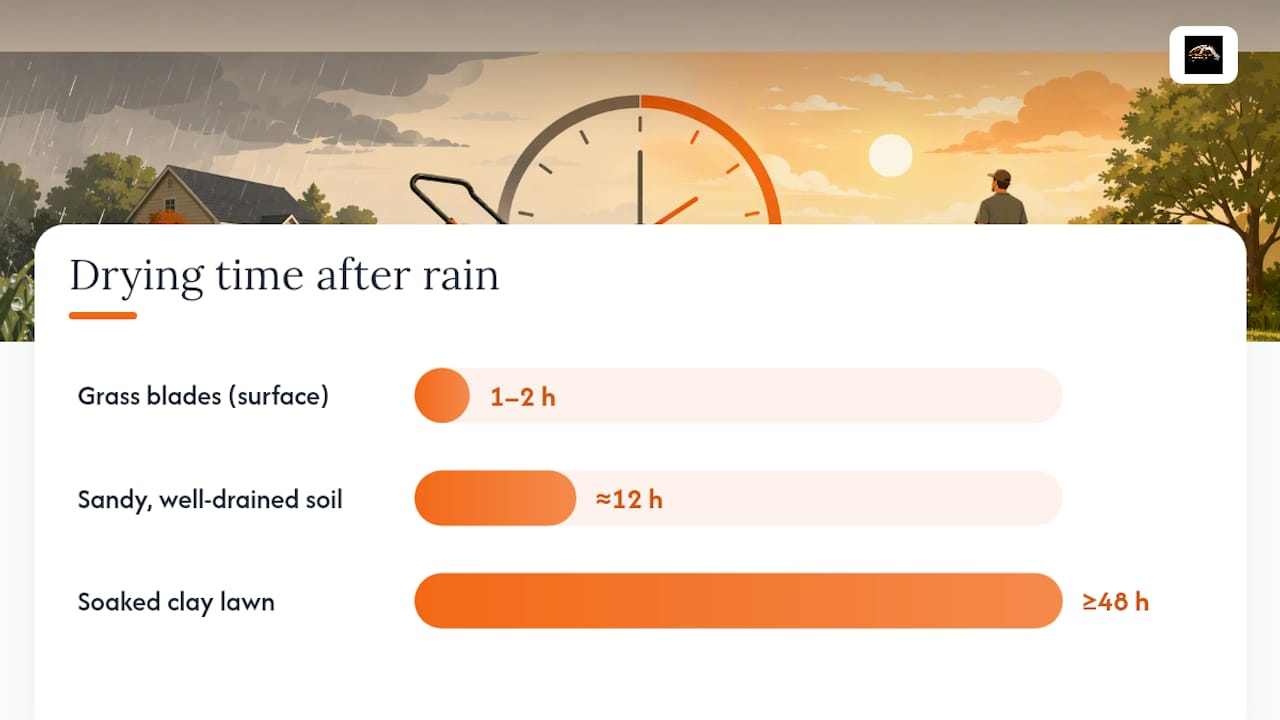
Forget counting hours. Extension agronomists focus on soil firmness, not a fixed waiting period, because drying time swings wildly depending on your yard.
Grass blades dry fast, often within an hour or two of direct sun. Soil is the slower variable. A quick summer shower on well-drained, sandy soil might clear in half a day. A soaked clay lawn after a multi-day system can stay spongy for 48 hours or more.
Run the footprint test in more than one spot:
- Walk your driveway-side lawn, then the shaded area under trees, then the low spot near the downspout. These three zones almost never dry at the same rate.
- If your foot leaves a lasting indentation anywhere on the planned mowing path, treat the whole route as not ready.
- Slopes deserve extra caution. Wet, sloped turf is where mower traction fails and where a slip turns into a real injury.
UMass Extension’s research on compaction and cultivation backs the shoe test as a practical stand-in for measuring actual soil moisture, since most homeowners don’t have a soil probe handy.
Pro Tip: Test the spot right where your downspout empties separately from the rest of the yard. It’s almost always the last patch to firm up, and it’s the one homeowners forget to check before firing up the mower.
How to Mow Wet Grass Without Wrecking Your Lawn
Sometimes waiting isn’t realistic—if you’re considering alternatives, check out this artificial grass advice and inspiration for options that perform well in persistently wet climates. Vacation schedules, a stretch of daily rain, or a lawn that’s shot up past six inches can force the issue. If you’re mowing damp turf, follow these steps in order.
- Raise the deck first. Set the mower to its highest cutting height and respect the one-third rule, never removing more than a third of the blade length in one pass. Scalping stressed, wet turf invites disease on top of the mechanical damage you’re already risking.
- Use the double-mow technique for tall grass. Cut high first, let the clippings sit and dry for an hour or two, then mow a second time at a lower setting. Ohio State University Extension’s factsheet on mowing tall or wet turf recommends this exact two-pass approach to avoid bogging down the mower and to keep the final cut even.
- Slow down and vary your line. Wet grass and mud reward patience. Take slower, steadier passes, skip sharp turns that dig up sod, and alternate your mowing direction between passes so you’re not grinding the same wheel tracks into soft ground.
- Sharpen the blade beforehand. A dull blade tears wet grass instead of cutting it. Sharpening before a wet mow matters more than it does on a dry day, since torn wet blades are especially prone to disease entry points.
- Choose bagging over mulching when clippings are heavy. If clumps are thick enough to smother grass, bag them instead of relying on the mulching setting; light, well-dispersed clippings can still be mulched.
Push mowers generally handle damp turf better than riding mowers, since less weight means less compaction and better traction on slick grass. Electric models need extra caution around wet conditions given the shock risk near standing water; gas mowers avoid that specific hazard but clog more easily in heavy, wet clippings.
Pro Tip: If your mower bogs down or the engine strains audibly, stop and raise the deck another notch. Forcing a mower through matted wet grass is how belts and blades get damaged.
Cleaning Up After You Mow a Wet Lawn
The job isn’t done when the mower shuts off. Wet clippings left in clumps will smother the grass beneath them within a day or two, so rake or blow them apart across the lawn, or bag them if they’re too thick to spread thin.
Clean the equipment before you put it away:
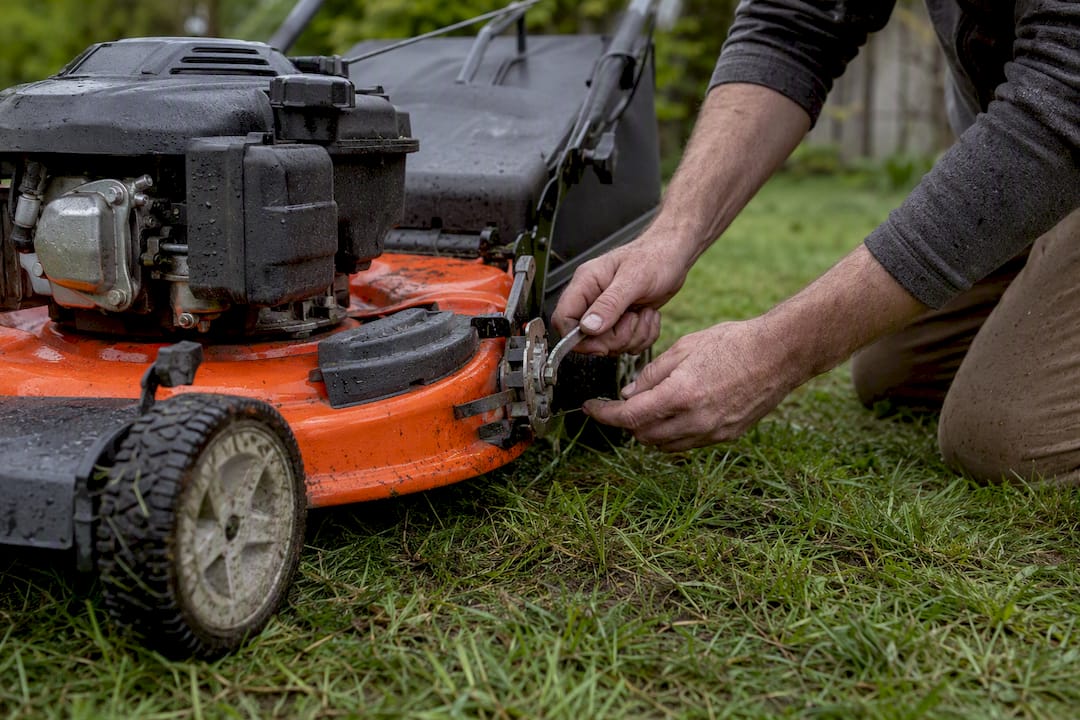
- Scrape wet grass out of the discharge chute and the underside of the deck. Caked clippings there hold moisture against metal and speed up rust.
- Wipe blades dry, and inspect for nicks or dullness while you’re at it. Wet mowing accelerates blade wear, so a quick sharpen now saves a rougher cut next time.
- Spray a light coat of lubricant on exposed metal parts if you mowed in consistently damp conditions over several days.
University of Maryland Extension notes that cleaning your deck after a wet mow cuts down on the chance you’re spreading fungal spores from one section of lawn, or one yard, to the next. That’s a bigger deal than most homeowners realize, since disease-carrying debris hangs onto equipment far longer than people expect.
When Professionals Choose to Mow a Damp Lawn
GC Signature Outdoors LLC runs weekly mowing routes and seasonal cleanups across the KC Northland area, and rain doesn’t cancel a schedule the way it might for a DIY weekend mow. The team makes the call on damp lawns using the same logic covered above, just with more at stake if it’s wrong across dozens of properties.
The exception that matters most in practice: an overgrown lawn left too long in a wet stretch often ends up worse off than a careful, raised-deck mow performed while it’s still damp. Excess height traps moisture against the crown of the grass and invites the same fungal problems a wet mow supposedly risks. When a lawn crosses that threshold, waiting stops being the safer choice.
When a client’s yard has gone two weeks without a dry mowing window and the grass is pushing past recommended height, holding off entirely can trap moisture at the crown and invite disease faster than a careful, high-deck mow would. That’s the judgment call that separates routine caution from reflexive caution.
For lawns that get compacted or stressed from wet-season mowing, aeration and overseeding is the standard recovery step professionals turn to once the ground dries out.
What Homeowners Get Wrong About Wet Mowing
Most advice on this topic treats “never mow wet grass” as an absolute rule, and that’s where it goes off track. The soil condition matters far more than whether the blades are damp. A lawn with dew on it but firm, well-drained soil underneath is a completely different situation from a lawn sitting on saturated clay two days after a storm, even if both look equally “wet” from the porch.
The bigger blind spot is length. Homeowners who dutifully wait out every rainy week without adjusting their mowing schedule often end up with turf that’s grown well past the one-third rule by the time it’s dry enough to cut. At that point, they’re forced into a scalping cut that does more damage than a cautious wet mow would have.
Prioritize the shoe test over the calendar, keep blades sharp year-round so you’re never mowing wet grass with a dull edge, and treat an overgrown lawn as its own emergency, separate from the wet-soil question. Get those three things right and you’ll avoid the two most common wet-mowing mistakes homeowners make.
Let GC Signature Outdoors LLC Handle the Judgment Calls
Weather-dependent decisions like these are exactly why weekly mowing with GC Signature Outdoors LLC beats juggling a mower schedule around your own work calendar. Our crews track soil conditions across every property we service in the KC Northland area, so your lawn gets cut at the right height, at the right time, without you having to run a shoe test before every storm front rolls through.

That means no scalped lawns from a rushed catch-up mow, no guesswork about whether last night’s rain cleared out, and no risking your own mower on saturated ground. If persistent rain or heavy shade keeps parts of your yard wet longer than the rest, our weekly lawn care service adjusts deck height and mowing frequency property by property. Homeowners dealing with compacted or stressed turf from a rough wet season can also ask about our aeration and overseeding program to get the lawn back to full health. Reach out for a quote and skip the seasonal guesswork entirely.
Sources
- Mowing turf through the rain - MSU Extension
- Mowing your lawn - University of Illinois Extension
- Diseases of home lawns - University of Maryland Extension
- OSU double-mow guidance (HYG-5816)
- Compaction and cultivation - UMass Extension
FAQ
Is It a Bad Idea to Mow a Wet Lawn?
Generally yes, since wet grass tears instead of cutting cleanly and wet soil compacts under the mower’s weight, but a careful, high-deck mow is reasonable if the lawn has grown dangerously overgrown.
How Long After Rain Should You Wait to Mow?
There’s no fixed number of hours. Wait until the soil passes the footprint test rather than counting hours, since drying time depends heavily on soil type, drainage, and shade.
Why Do Landscaping Crews Sometimes Mow Wet Grass?
Professional crews like GC Signature Outdoors LLC mow damp lawns when an overgrown lawn poses a bigger risk than a cautious wet mow, using a raised deck and the double-mow technique to limit damage.
Does Grass Need to Be Completely Dry Before Mowing?
The grass blades themselves drying isn’t the deciding factor; soil firmness is. Dew-covered grass over firm, well-drained soil is often fine to mow, while dry-looking grass over saturated soil is not.
What Happens if You Mow Wet Grass With a Dull Blade?
A dull blade tears wet grass rather than slicing it, leaving ragged edges that lose moisture faster and become easier entry points for fungal disease.
Recommended
Ready to get started in Kansas City's Northland?
GC Signature Outdoors serves Smithville, Platte City, Kearney, Liberty, and surrounding areas.