
85% Vapor Uptake: KC Northland Lawns Need Seed to Soil Contact
85% Vapor Uptake: KC Northland Lawns Need Seed to Soil Contact
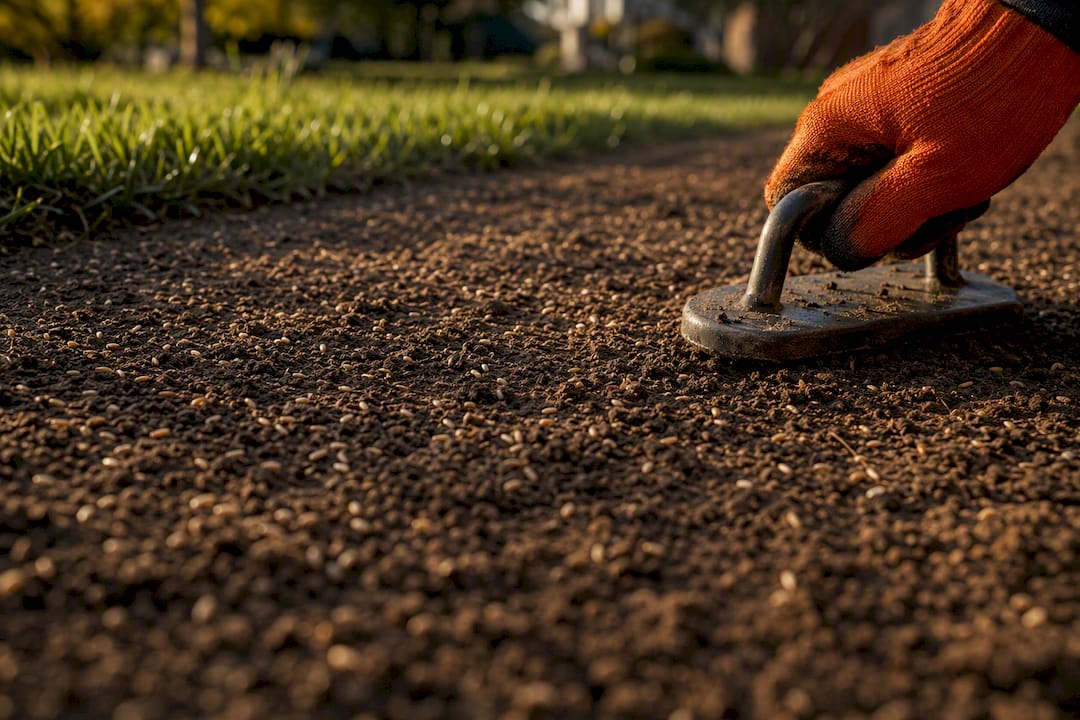
Seed-to-soil contact means the seed sits directly against soil particles, close enough to draw in moisture instead of drying out in an air pocket. The fastest way to get there is running a slit seeder or core aerator over the area, then lightly rolling or raking so seed settles against bare soil. This combination is standard in extension-backed overseeding protocols and holds up under USDA-ARS research on how seeds actually absorb water.
TL;DR:
- Seed-to-soil contact relies more on proximity and moisture transfer through vapor than on pressed-in seed, with vapor sometimes supplying over 85% of water during germination.
- Proper timing involves seeding when the soil is moist like a wrung-out sponge and avoiding dry or waterlogged conditions, especially during fall when soil retains warmth.
- Mechanical steps such as core aeration, slit seeding, and light rolling or raking significantly improve seed contact and uniform germination, especially on heavy clay or compacted soil.
- Signs of poor contact include bare patches, leaning seedlings, and crusted soil, which can be remedied by spot slit seeding, gentle watering, and avoiding excessive rolling.
- Prioritizing seed proximity to moist, loose soil over brute force helps prevent patchiness, and professional services can optimize the process for difficult soil types and larger lawns.
Table of Contents
- What Is Seed-To-Soil Contact, Scientifically?
- Why Does Good Contact Speed Up Germination?
- How Can You Improve Seed-To-Soil Contact?
- When Is the Best Time to Seed for Good Contact?
- Signs of Poor Contact and How to Fix Them
- Quick Action Checklist for Seeding Day
- Why Trust Local, Hands-On Lawn Experience?
- The Real Priority Behind Seed-To-Soil Contact
- Let the Pros Handle Aeration and Overseeding
- Sources
- FAQ
What Is Seed-To-Soil Contact, Scientifically?
Seed-to-soil contact is the physical connection between a seed’s surface and surrounding soil particles, tight enough that moisture moves into the seed instead of evaporating around it. That sounds simple, but the science behind it has a twist most gardeners never hear about.
Water reaches a seed two ways: through direct liquid contact with wet soil, or through water vapor moving through the air pockets between soil particles. Research from USDA-ARS found that vapor can supply the majority of the water a seed absorbs, sometimes 85% or more under typical moisture conditions. That changes how you should think about “contact.” Perfect, seed-crushed-into-dirt pressure isn’t the goal. Proximity is.
Seeds do not need to be pressed hard against wet soil to imbibe water efficiently. In many conditions, vapor transport through the soil pore space accounts for most of the water absorbed during germination.
For small grass and vegetable seeds especially, staying within a few millimeters of moist soil matters more than forcing them into compacted layers.
Why Does Good Contact Speed Up Germination?
Seeds surrounded by loose, gappy soil dry out fast and germinate unevenly, if they germinate at all. Good contact changes the timeline and the odds.
When seed rests against firm, moist soil, germination happens faster and more uniformly across a lawn or garden bed. Seedlings emerge together instead of in scattered clumps over three separate weeks. There’s also less loss to wind scatter and birds, since seed pressed into soil is harder to blow or peck away than seed sitting loose on the surface.
Air pockets, thatch, clods, and leftover debris are the usual culprits behind poor contact. They create tiny caves where a seed can sit bone dry even in a well watered yard. Small seeds like fine fescue, bentgrass, and most vegetable seeds are far more sensitive to this than larger seeds like corn or beans, which carry enough internal moisture reserve to survive a rougher start. If you’re overseeding with fine turf seed, the margin for error on contact is thin.
How Can You Improve Seed-To-Soil Contact?
Getting seed to sit against soil, not on top of thatch or in a crusted-over gap, comes down to a handful of mechanical and low-tech moves. Here’s the sequence that works, in order:
- Core aerate first. Run a core aerator over the lawn 3 to 4 times to punch 20 to 40 holes per square foot. Those holes create exposed soil channels where seed can settle instead of resting on the surface.
- Or use a slit seeder. A slit seeder cuts thin grooves into the soil and drops seed directly into them in one pass, which is why rental yards see heavy demand for these every fall. A vertical mower does something similar by slicing through thatch first.
- Spread seed in two passes. Use a drop spreader rather than a broadcast spreader for better control, and sow half your seed walking one direction, then the rest walking at right angles. That crosshatch pattern is the difference between even coverage and streaky bare patches.
- Firm the seed down. A light raking followed by a light rolling with a water-fillable roller, mostly empty for weight control, presses seed into the loosened soil without burying it.
- Mulch sparingly, if at all. Apply a thin straw layer only if erosion or drying wind is a real risk, and stop while roughly 10% of the soil is still visible.
No aerator on hand? Homeowners have used everything from the back of a rake to an ATV tire rolled slowly over freshly seeded ground to dimple the surface and press seed down. It’s not elegant, but it works.
Pro Tip: Don’t chase a perfectly smooth, packed surface. Professional crews firm the seedbed just enough that seed won’t wash or blow away, then judge success by how evenly it emerges, not by how hard the ground feels underfoot.
When Is the Best Time to Seed for Good Contact?
Timing and moisture do as much work as any machine. Soil that’s too dry can’t imbibe seed properly no matter how well it’s pressed in, and soil that’s soggy compacts under equipment and squeezes out the air pockets seeds need to breathe.
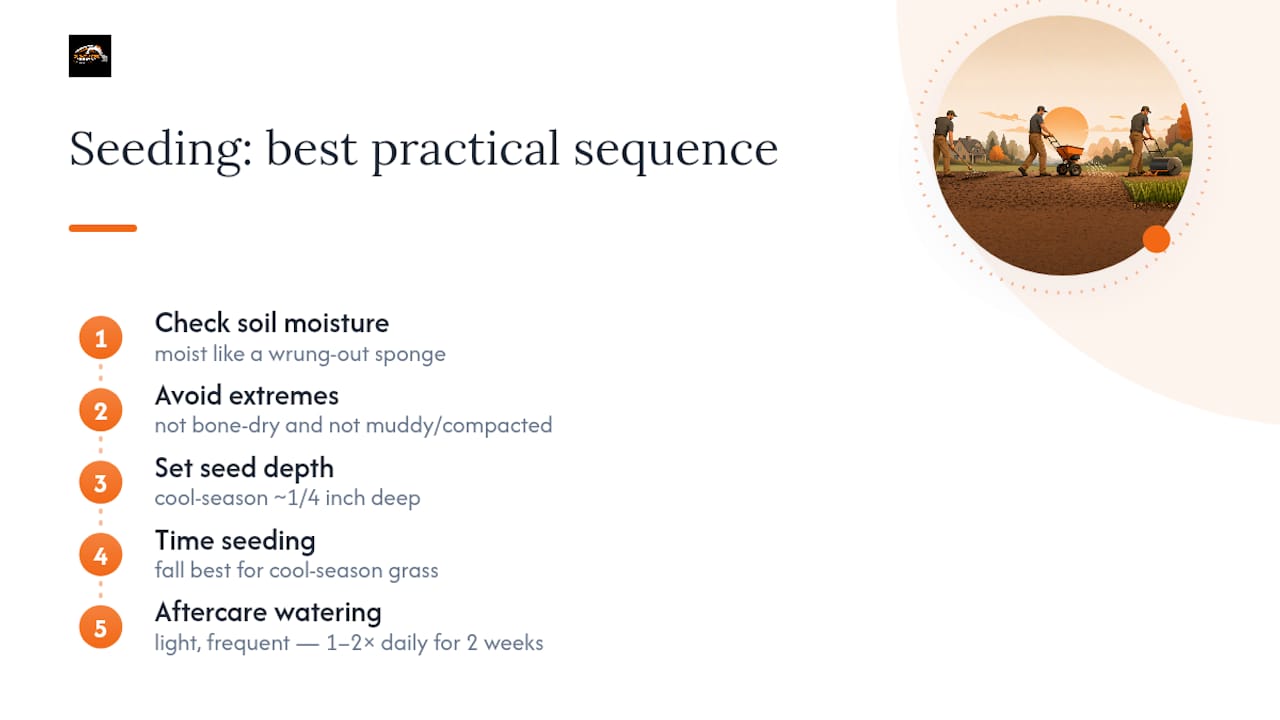
The scientific term for this is matric potential, which describes how tightly soil holds onto water. Soil with the right matric potential and enough hydraulic conductivity moves water into a seed steadily without waterlogging it. Practically, that means seeding into soil that’s moist like a wrung-out sponge, not bone dry or muddy.
Depth matters too. Most cool-season lawn seed wants to sit around a quarter inch deep; garden seed varies by species but the rule of thumb is roughly twice the seed’s own diameter. Fall is generally the best time for cool-season grass, both for overseeding an existing lawn and starting fresh, because soil stays warm while air cools and evaporation slows. Once seeded, plan on light, frequent watering, often once or twice daily for the first two weeks, to keep the surface from drying out between vapor and liquid uptake cycles.
Signs of Poor Contact and How to Fix Them
Bare patches in an otherwise green lawn, seedlings that lean or tip over easily, and a hard crusted surface where nothing has emerged are the three clearest signs contact failed somewhere.
- Bare or thin patches usually mean seed sat on thatch or debris instead of soil. Spot slit seed those areas rather than reseeding the whole yard.
- Tilted or wobbly seedlings often signal loose, unfired soil around the root zone. A light raking and a gentle watering can help settle them.
- Crusted, cracked soil surface points to drying out too fast after seeding. Increase watering frequency, not volume, and avoid another rolling pass since compacting dry, crusted soil further blocks emergence rather than helping it.
Quick Action Checklist for Seeding Day
Before you touch a spreader, walk the site and clear anything that will block contact. During seeding, work in passes. After seeding, protect your outdoor granite and stainless steel investments and what you just built.
- Prep: Mow low, rake up debris and clippings, then core aerate or vertical mow compacted or thin areas.
- Seed: Spread in two perpendicular passes with a drop spreader, rake lightly, and roll once with a lightly weighted roller.
- Aftercare: Water lightly once or twice a day, keep foot and pet traffic off the area, and check daily for emergence.
| Stage | Key Action | Why It Matters |
|---|---|---|
| Before seeding | Aerate 3 to 4 passes (20 to 40 holes/sq ft) | Opens soil for seed to settle into |
| During seeding | Two perpendicular spreader passes, light roll | Even coverage, firm but not compacted contact |
| After seeding | Light daily watering, no heavy traffic | Keeps surface moist for vapor and liquid uptake |
Why Trust Local, Hands-On Lawn Experience?
A family-run crew serves the KC Northland area, running professional-grade aerators and slit seeders on Missouri clay and loam lawns every fall.
- Regional timing guidance from firsthand seasonal work, including our fall aeration walkthrough and tall fescue overseeding rates.
- A service call is worth it when a lawn has heavy clay, thick thatch, or repeated bare-patch failures that DIY tools haven’t fixed.
- Professional equipment settings are dialed to soil type rather than a one-size setting on a rented machine.
The Real Priority Behind Seed-To-Soil Contact
Most advice on this topic overcorrects toward force: press harder, roll heavier, pack it down tight. That instinct is backwards. The USDA-ARS vapor research is the most useful thing in this entire field, and it says the opposite: proximity and protection from drying beat brute pressure almost every time.
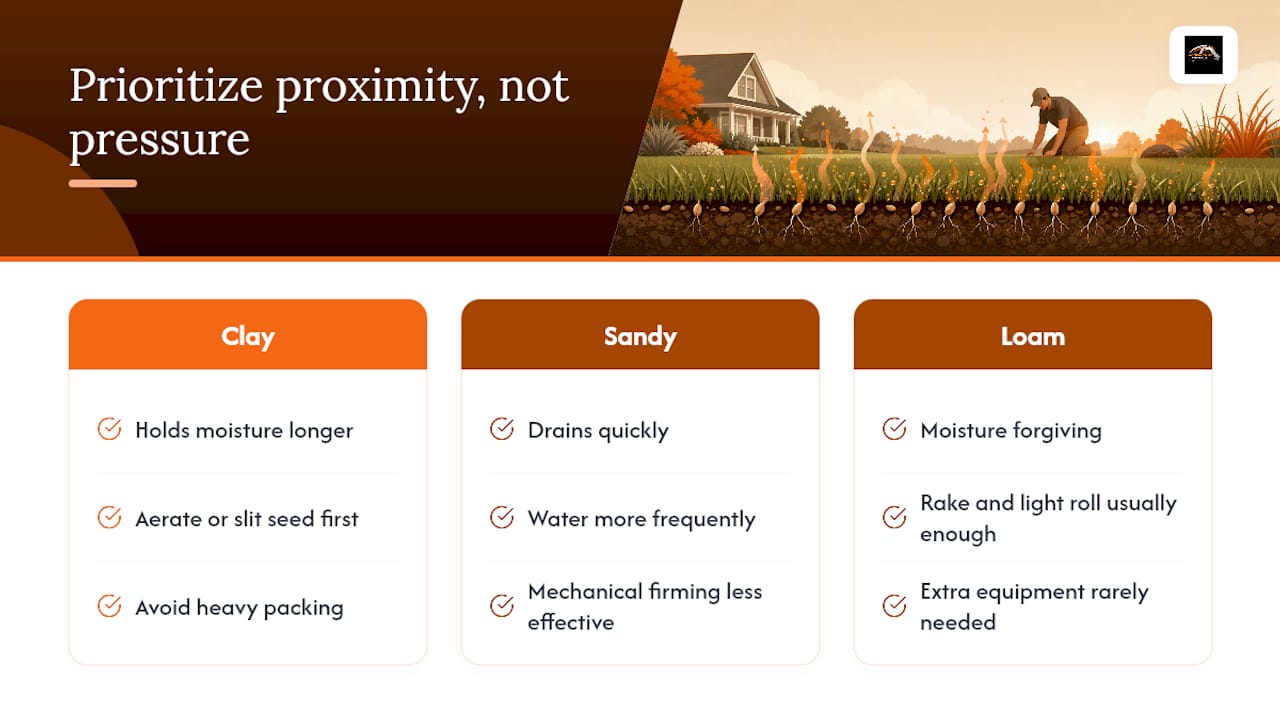
Where conventional advice really falls short is treating every soil the same. Clay holds moisture longer but resists seed penetration, so aeration matters more than rolling. Sandy soil drains fast, so watering frequency does more work than any mechanical firming. Loam is forgiving enough that basic raking and rolling usually gets the job done without extra equipment.
If you take one thing from this guide, prioritize getting seed close to moist, loosened soil over trying to jam it in. Aerate or slit seed first, water consistently, and let vapor and light rolling do the rest. Skip the instinct to overpack a fresh seedbed. That single change fixes more patchy lawns than any spreader setting ever will.
— GC Signature Outdoors LLC
Let the Pros Handle Aeration and Overseeding
If reading through slit seeder settings and matric potential has you thinking “I’d rather just have someone do this right the first time,” that’s exactly the gap a local lawn care company fills for homeowners across the KC Northland area. Our crews run the same core aerators and slit seeders described above, calibrated to your specific soil, whether that’s heavy Missouri clay or a sandier stretch near the river bottoms, so you skip the trial and error entirely.

Our lawn care services cover aeration, overseeding, and the watering schedule adjustments that follow, all scheduled around the fall window when cool-season grass takes best. DIY works fine for a small backyard patch. It’s worth calling in a crew when you’re covering a full yard, dealing with compacted clay, or you’ve tried reseeding twice already with the same bare spots showing up. Reach out through our lawn care landing page to get on the fall aeration and overseeding schedule before the best window closes.
Sources
- Overseeding a Lawn | Yard and Garden (Iowa State Extension)
- Seed–Soil contact and the role of vapor in germination (USDA-ARS research brief)
- Establishing turfgrass from seed (Purdue Extension)
- Establishing a lawn from seed (University of Nebraska Extension)
- Establishing a new lawn using seed (MSU Extension)
FAQ
How Do You Improve Seed-To-Soil Contact?
Core aerate or slit seed the area first, spread seed in two perpendicular passes, then lightly rake and roll so seed settles against bare soil instead of resting on thatch or debris.
Can You Put Seed Directly Into Soil Without Covering It?
Yes, seed can sit on prepared topsoil without deep burial, as long as the surface is loosened and raked so seed makes contact with soil particles rather than sitting on a crusted surface.
Is It Okay to Plant Grass Seed Directly on Topsoil?
Yes, as long as the topsoil is raked loose and lightly rolled after seeding so the seed presses into the surface rather than sitting exposed on top where it can dry out or wash away.
Why Is It Illegal to Replant Some Seeds You’ve Grown?
This applies specifically to certain patented or licensed crop varieties, where seed-saving agreements restrict replanting; it’s a legal and licensing issue tied to those specific varieties, not a general rule about garden or lawn seed.
Do I Need Professional Equipment to Get Good Contact?
No. Light raking, an empty water-fillable roller, or even careful foot or ATV tire pressure can firm seed into soil effectively, though a rented or professional slit seeder or aerator works faster over a full lawn.
Recommended
Ready to get started in Kansas City's Northland?
GC Signature Outdoors serves Smithville, Platte City, Kearney, Liberty, and surrounding areas.