
Apply Pre-Emergent When Soil Hits 50–55°F in Kansas City
Apply Pre-Emergent When Soil Hits 50–55°F in Kansas City
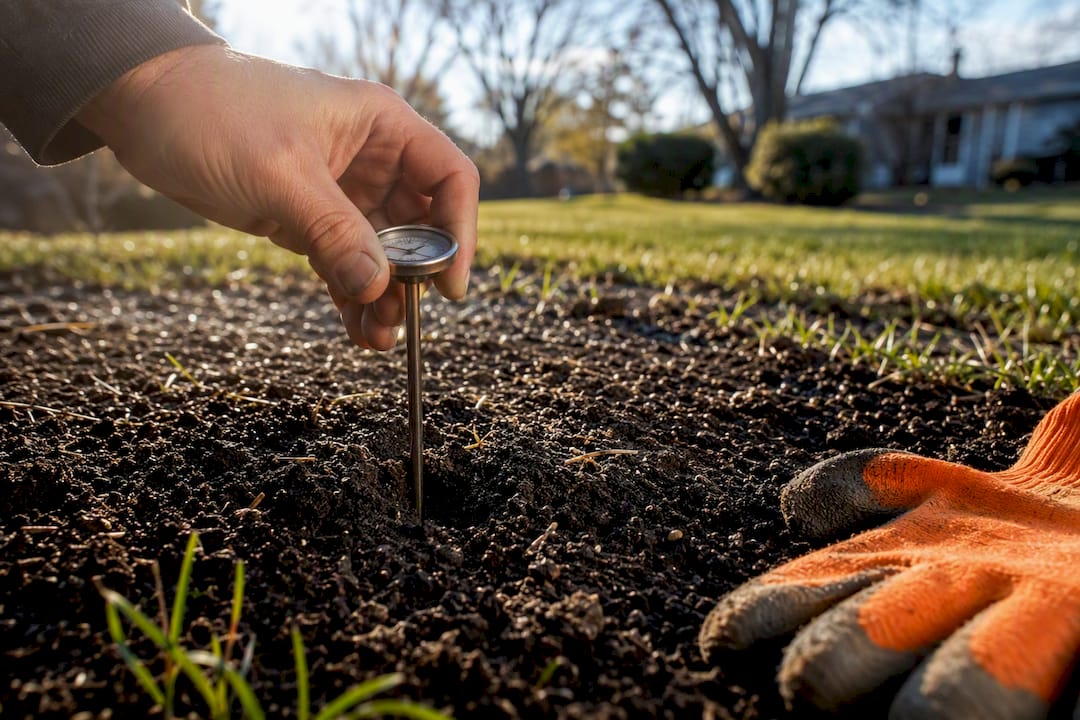
Apply pre-emergent once the top inch of soil holds steady at 50–55°F for three to five days, not on a fixed calendar date. In most North Kansas City yards, that window generally occurs sometime in late winter to early spring, according to University of Missouri Extension. If your soil hasn’t hit that mark yet, wait. Some professional lawn care services check soil temperature before every spring application for exactly this reason.
TL;DR:
- Applying pre-emergent at the right soil temperature, 50–55°F for several days, is more effective than timing by calendar date, especially with variable spring weather.
- Use a soil thermometer to confirm temperature, and watch for forsythia bloom as a rough indicator of ideal conditions in Kansas City.
- Water must activate granular pre-emergent within 24 to 48 hours; skipping this step is the main reason for product failure.
- Do not seed or overseed within 8 to 12 weeks of pre-emergent application unless you skip spring treatments completely.
- Coordinating timing with professional lawn care ensures proper soil checks, watering, and application, avoiding common homeowner mistakes.
Table of Contents
- How Do You Know the Right Day for Pre-Emergent in Kansas City?
- Step-by-Step: Applying Pre-Emergent Correctly
- Getting Your Lawn Ready Before You Spread Anything
- Do You Need Both a Spring and Fall Application?
- Planning Aeration and Overseeding Around Pre-Emergent
- How Local Field Experience Shapes Our Timing
- What Kansas City Homeowners Get Wrong About Timing
- Get Your Lawn on the Right Timing Schedule
- Sources
- FAQ
How Do You Know the Right Day for Pre-Emergent in Kansas City?
Soil temperature, not the date on your phone, decides when crabgrass and other summer annuals start germinating. The University of Missouri Extension recommends timing spring applications to when soil temperatures rise into that 50 to 55°F range in the top inch and hold there for several consecutive days, since a single warm afternoon doesn’t mean the ground has actually warmed up.
Kansas City’s spring weather makes this trickier than it sounds. A mild February can push soil temps up early, then a cold snap in March resets the clock. That’s why the “ideal” window swings anywhere from late February to mid-April depending on the year. Homeowners who apply on March 1 every single year, regardless of conditions, sometimes catch a cold spring and waste product on soil that’s still too cold for weeds to sprout, or miss a warm spring entirely and let crabgrass get a head start.
Pro Tip: A $10 soil thermometer from any hardware store beats guessing. Push it two inches into bare soil in the morning, check it again in the afternoon, and average the readings over three to five days before you commit to spreading anything.
Local extension guidance also points to a simpler, low-tech signal: forsythia bloom. When those yellow shrubs hit full bloom around the KC Northland, soil temperatures are typically in the right range for crabgrass preemergent application. It’s not a substitute for an actual thermometer reading, but it’s a decent gut check if you’re driving past a neighbor’s yard and wondering if you’re already behind.
A few practical signs to track together instead of relying on any single one:
- Soil temperature at 2 inches deep, averaged over 3 to 5 days
- Forsythia in full bloom in your neighborhood
- A stretch of daytime highs consistently above 60°F
- Last year’s crabgrass emergence date, if you tracked it
Homeowners planning a crabgrass preventer application in Kansas City should treat these as a set, not a checklist where any one box unlocks the green light.
Step-by-Step: Applying Pre-Emergent Correctly
Granular pre-emergent needs water to activate. It sits on the soil surface forming a chemical barrier, and that barrier doesn’t work until rainfall or irrigation moves it down into the top layer of soil. Liquid formulations tend to bind to soil particles faster, which is why some pros prefer them when rain is unpredictable, though both forms need moisture eventually.
Here’s the sequence that avoids the most common mistakes:
- Calibrate your spreader to the product label’s setting; guessing leads to either wasted product or gaps in coverage.
- Walk in straight, overlapping passes, slightly overlapping each pass with the wheel track of the last one to avoid stripes of unprotected turf.
- Do edge passes around driveways and beds last, since these areas are easy to double-dose without noticing.
- Water in with about half an inch of irrigation within 24 to 48 hours if rain isn’t in the forecast.
- Keep pets and kids off the lawn until it’s dry, per the product label.
Skipping the watering step is the single biggest reason pre-emergent “fails.” The product itself didn’t fail. It never got activated, and the barrier that was supposed to stop crabgrass seeds from sprouting just sat on top of dry soil doing nothing.
Pro Tip: If your sprinkler system isn’t running yet for the season, apply pre-emergent on a day with rain in the forecast within 48 hours rather than waiting for a “perfect” dry day. A missed watering window costs you more than a slightly damp application.
If you’re dealing with a large property, steep slopes, or a lawn with multiple grass types, calling in a professional crew like One Day Doors & Closets of KC removes the guesswork on both timing and coverage.
Getting Your Lawn Ready Before You Spread Anything
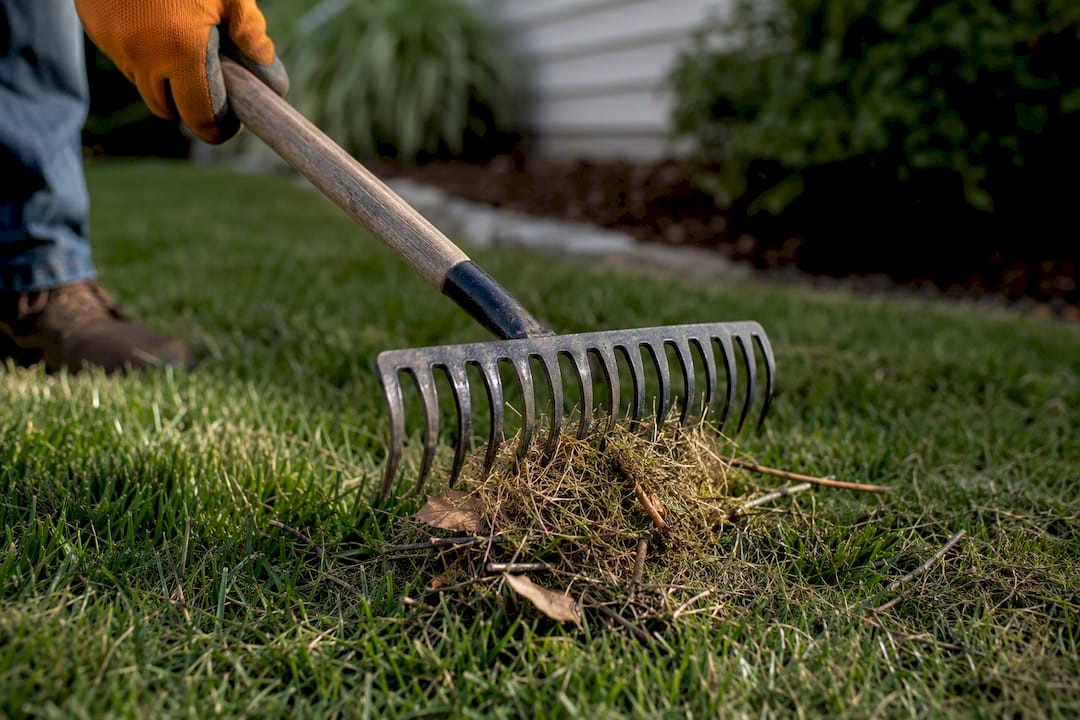
Clear leaf litter, sticks, and excess thatch before you apply. Pre-emergent needs to reach the soil surface to form its barrier, and a thick layer of debris blocks that contact the same way a rain jacket blocks the actual rain from reaching your skin.
One thing pre-emergent will not do: kill weeds that are already growing. It only stops seeds from germinating, so any dandelions or existing crabgrass already up need a separate post-emergent product. If you’re seeing established weeds, deal with those first through spot treatment or a broadleaf herbicide before laying down your pre-emergent barrier.
A few habits that reduce weed pressure even before chemicals get involved:
- Mow at 3 to 3.5 inches to shade out weed seeds that need light to germinate
- Water deeply but infrequently instead of daily light sprinkles
- Avoid scalping the lawn in early spring, which opens bare soil to invaders
- Hold off on pre-emergent entirely if you’re planning to seed that same area this season
Coordinating fertilization and weed control together, rather than treating them as separate projects, tends to produce a thicker, more competitive lawn that crowds out weeds on its own. Our fertilization and weed control program builds that sequencing in from the start.
Do You Need Both a Spring and Fall Application?
Spring pre-emergent targets summer annuals, mainly crabgrass. Fall pre-emergent targets winter annuals like Poa annua and chickweed, which germinate as temperatures drop rather than rise. If you only apply once a year, you’re leaving one entire category of weeds unaddressed.
Missouri’s unpredictable spring weather is also why some pros split the spring dose into two lighter applications spaced 30 to 45 days apart rather than one heavy treatment. A single early-season deluge can wash out a full-strength application before it’s had time to bond with the soil, and a split approach hedges against that.
- Spring window: targets crabgrass and other summer annuals
- Fall window: targets Poa annua, chickweed, and other winter annuals
- Split application: two lighter doses 30 to 45 days apart, useful when spring rainfall is erratic
Always check your product label for stated duration of control. Applying too far ahead of germination, or reapplying before the first dose has worn off, wastes money either way.
Planning Aeration and Overseeding Around Pre-Emergent
Pre-emergent doesn’t distinguish between weed seeds and grass seeds. It blocks germination across the board, which means overseeding into a lawn treated with pre-emergent will largely fail unless you wait out the label’s restriction period, commonly 8 to 12 weeks or longer.
The cleanest sequencing for most KC Northland lawns:
- Skip spring pre-emergent on any zone you plan to overseed that same season
- Aerate in early fall, then overseed immediately after, once soil temperatures cool
- Apply fall pre-emergent only after new grass seed has been mowed 3 to 4 times, giving it time to establish
Professionals sometimes reserve specific thin or bare strips for overseeding while protecting the rest of the yard with pre-emergent as usual, rather than skipping treatment on the whole property. If your fall overseeding plan is the priority this year, build your pre-emergent schedule around it, not the other way around.
How Local Field Experience Shapes Our Timing
Some lawn care companies use professional-grade equipment and a family-run crew structure to keep timing tight across properties in the Kansas City Northland area. Before any application, our crews check soil temperature readings, clear debris, and confirm an irrigation plan is in place so the product actually activates instead of sitting dry on the surface.
DIY works fine for a single small yard with time to monitor conditions daily. Larger properties, multiple treatment zones, or a spring you can’t watch closely are usually better handed to a crew already tracking soil temps across the whole Northland.
What Kansas City Homeowners Get Wrong About Timing
The mistake we see most often isn’t a bad product choice. It’s applying on the same weekend every year regardless of what the soil is actually doing, then skipping the watering step because rain “should” come eventually. Both errors are avoidable with a five-minute soil check and a two-day weather glance before spreading anything.
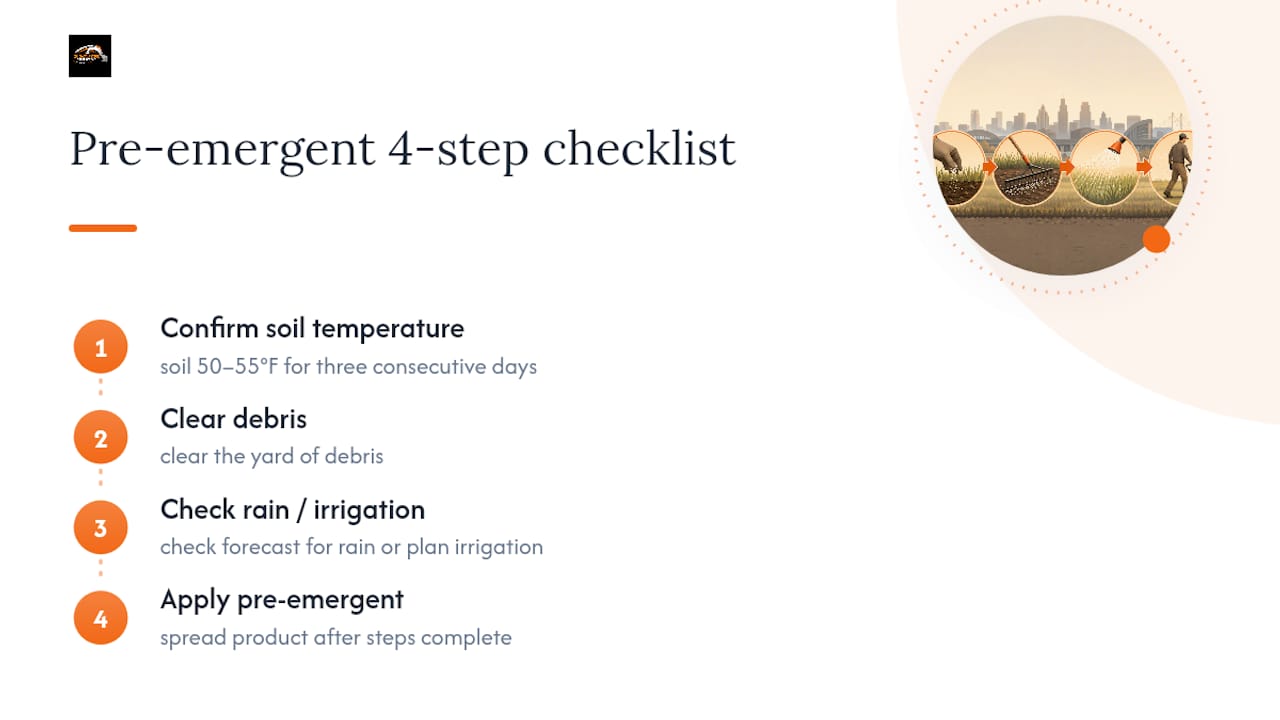
Our crew checklist stays simple: confirm soil temp for three consecutive days, clear the yard of debris, check the forecast for rain or plan irrigation, then apply. Skipping any one of those steps is usually why a homeowner calls us in June asking why crabgrass showed up anyway.
Get Your Lawn on the Right Timing Schedule
A local family-run lawn care company is the local alternative to guessing at soil temperatures on your own. As a family-run crew serving the KC Northland, we handle the soil checks, product selection, and watering-in schedule as one coordinated service instead of leaving you to time it solo between other weekend chores.

Our lawn care programs cover fertilization and weed control, aeration and overseeding, and weekly mowing, all scheduled together so a spring pre-emergent application doesn’t collide with a fall overseeding plan later in the year. That coordination matters more than most homeowners realize. Weed control and grass seed sit at cross purposes if nobody’s tracking both calendars at once. Request a localized timing check through our lawn care page and we’ll build your season around your actual soil conditions, not a generic date on a bag of product.
Sources
For homeowners who want to dig into the extension research behind these recommendations, these sources cover the soil-temperature science and product mechanics in more depth:
- Now is the time to apply spring preemergent herbicides on lawns — University of Missouri Extension
- Preemergence herbicides — North Carolina State University (Weed Science)
- Should you use pre-emergent herbicide? — Gardening Know How
FAQ
What type of grass is best for a lawn in Kansas City, MO?
Kansas City sits in a transition zone, so cool-season grasses like tall fescue and Kentucky bluegrass handle the climate best, tolerating both summer heat and winter cold better than most warm-season options. Tall fescue in particular is a common choice locally because of its drought tolerance and lower maintenance needs.
When should I put down grass seed in Kansas City?
Early fall, roughly September, is the strongest window for seeding cool-season grasses in Kansas City, since warm soil and cooler air let new grass establish before winter. If you used a spring pre-emergent, check the label for the required wait time before seeding, commonly 8 to 12 weeks.
What is 311 in Kansas City, Missouri?
The non-emergency city services line in Kansas City is used for reporting issues like potholes, code violations, or trash collection problems rather than lawn care questions. It connects residents directly to city departments instead of routing through emergency services or a general city switchboard.
When should I aerate my lawn in Kansas City?
Early fall is the best time to aerate cool-season lawns in the Kansas City area, ideally right before overseeding, since the grass recovers quickly in mild fall temperatures. Spring aeration is possible but riskier, since it can open the soil to summer weed seeds right when pre-emergent is trying to block them.
Does a local family-run lawn care company offer pre-emergent application services?
Yes, pre-emergent falls under our fertilization and weed control service, which is coordinated with aeration and overseeding scheduling for KC Northland properties. Current pricing is available directly on the site.
Recommended
Ready to get started in Kansas City's Northland?
GC Signature Outdoors serves Smithville, Platte City, Kearney, Liberty, and surrounding areas.