
Homeowners' Outdoor Kitchen Countertops: Pro Picks for Any Climate
Homeowners’ Outdoor Kitchen Countertops: Pro Picks for Any Climate
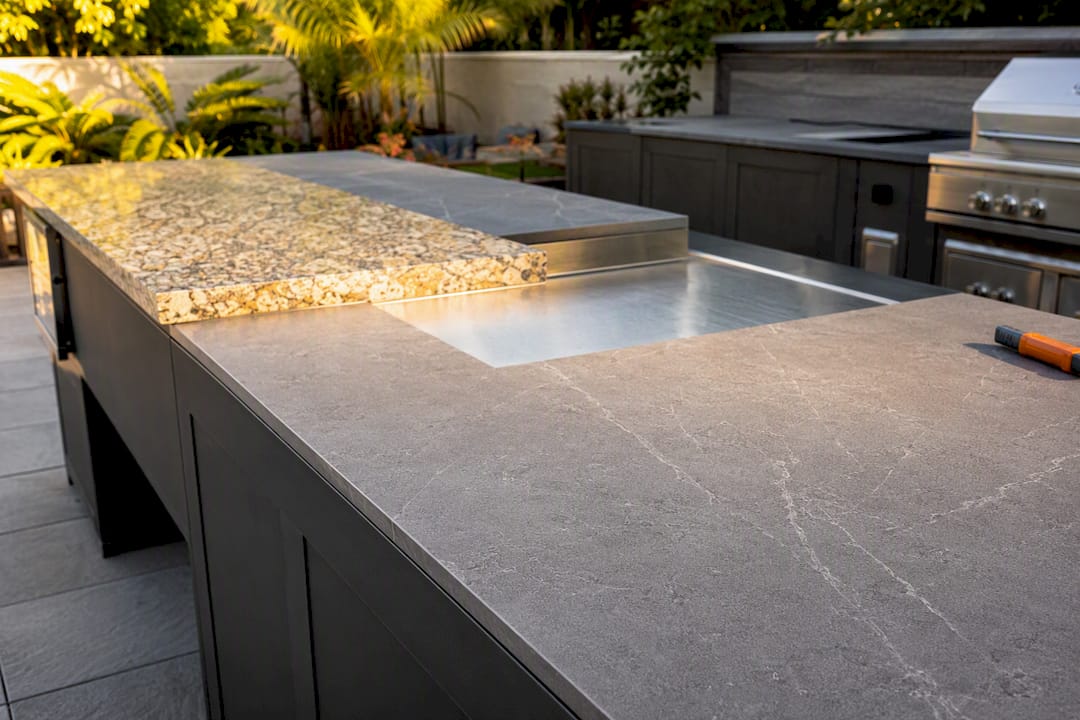
Sintered stone, honed or leathered granite, soapstone, and 316 marine-grade stainless steel handle sun, rain, and grill heat better than anything else on the market. Standard interior quartz and laminate do not belong outside at any budget. The right pick still depends on your climate and how exposed your kitchen is, but those four materials cover almost every backyard situation.
TL;DR:
- Sintered stone and porcelain are the most durable outdoor options, with near-zero water absorption and UV resistance, but require specialized installation.
- Honed or leathered granite offers a classic look and is reliable when sealed every one to two years, especially in moderate climates.
- Soapstone and stainless steel excel in heat resistance and corrosion, making them ideal for grill zones or coastal environments, but soapstone scratches easily and steel dents.
- Porous stones like quartzite and concrete need regular resealing and reinforced support structures to prevent damage in freeze-thaw climates.
- Tile is a budget-friendly choice but can fail in cold weather due to grout joint cracking unless installed under cover.
Table of Contents
- What Are the Best Outdoor Kitchen Countertops at a Glance?
- How Do These Outdoor Countertop Materials Really Compare?
- Which Countertop Material Fits Your Climate?
- How Do You Choose the Right Supplier and Confirm the Right Material?
- How Often Do Outdoor Countertops Need Maintenance?
- How Does a Professional Builder Approach Outdoor Countertop Installs?
- Our Take: Durability Beats a Trendy Finish Every Time
- Ready to Build an Outdoor Kitchen That Lasts?
- Sources
- FAQ
What Are the Best Outdoor Kitchen Countertops at a Glance?
Before you fall in love with a slab at the stone yard, match it against what your yard actually throws at it. Here’s the quick rundown:
- Sintered stone/porcelain: Best for fully exposed kitchens in any climate; near indestructible but needs a specialist fabricator.
- Granite (honed or leathered): Best for homeowners who want a classic stone look; needs resealing every year or two.
- Soapstone: Best for grill-adjacent zones since it shrugs off heat; scratches show up over time.
- 316 stainless steel: Best for coastal and salt-air properties; can dent and shows fingerprints.
- Quartzite (natural): Best for a granite alternative with more heat tolerance; still porous and needs sealing.
- Concrete: Best for custom shapes and integrated sinks; prone to hairline cracking without proper reinforcement.
- Tile: Best for tight budgets and DIY installs; grout lines are a weak point in freezing climates.
How Do These Outdoor Countertop Materials Really Compare?
The material you choose determines whether your kitchen looks the same in ten years or needs a rebuild in three. Here’s what separates the winners from the mistakes.
Sintered stone and large-format porcelain are close to the ideal outdoor surface. They’re manufactured under extreme heat and pressure, which leaves them with near-zero water absorption and strong UV resistance, so they never fade, stain, or need sealing. The catch is fabrication. These panels require diamond tooling and specialized handling systems, so you need a fabricator who has actually installed them outdoors before, not someone learning on your project.
Granite earns its reputation as the safe, familiar choice. Choose a honed or leathered finish over polished, since a matte surface hides scratches and water spots better under direct sun. It’s reliable when sealed roughly every one to two years, and landscape architects generally steer clients toward low-vein slabs, since heavy veining often signals fillers that react poorly to temperature swings.
Soapstone is nonporous and barely needs sealing, and it tolerates heat and resists staining better than most natural stone. The trade-off is softness. It scratches more easily than granite, so it fits best in a prep zone rather than a high-traffic bar top.
Stainless steel comes in two relevant grades. Grade 304 works fine inland, but 316 marine-grade steel resists corrosion far better near salt air, which matters if you’re within a few miles of the coast.
Quartzite is a natural stone, quarried and heat-formed, and it should never be confused with engineered quartz, which is a resin-bound product built for indoor kitchens. Standard indoor quartz breaks down under sustained UV exposure, with the resin yellowing and warping. A newer category of UV-inhibited engineered stone exists specifically for outdoor use, but only when the manufacturer states that in writing.
Concrete and tile both trade durability for customization or cost. Concrete lets you pour any shape and integrate a sink seamlessly, but it needs steel reinforcement and a proper cure to avoid cracking. Tile is the cheapest entry point, but grout joints are the most common failure point in cold climates.
| Material | Best trait | Main weakness | Reseal needed |
|---|---|---|---|
| Sintered/porcelain | UV and stain immune | Specialist install only | No |
| Granite (honed/leathered) | Classic look, heat tolerant | Porous | Yes, 1–2 years |
| Soapstone | Nonporous, heat safe | Scratches | Rarely |
| 316 stainless | Corrosion resistant | Dents, shows prints | No |
| Quartzite | Natural heat tolerance | Porous | Yes |
| Concrete | Fully custom | Cracking risk | Yes, annually |
| Tile | Low cost | Grout failure | Grout only |
Every slab counter, regardless of material, needs a substrate rated for its weight. Stone and sintered panels are heavy, so the frame and support structure need to be engineered for it, not improvised from leftover lumber.
Pro Tip: Ask your fabricator whether they use exterior-rated adhesive and grout, not the same products used on an indoor kitchen island. Interior-grade sealants break down fast in freeze-thaw cycles.
Which Countertop Material Fits Your Climate?
Your zip code should influence this decision as much as your aesthetic preferences do.
- Hot, sunny regions: Stick to UV-stable materials in lighter tones. Dark stone and dark sintered panels absorb heat and can get uncomfortably hot to the touch by midafternoon.
- Humid or coastal areas: Favor nonporous surfaces and 316 stainless. Porous stone in salt air soaks up moisture and can develop staining or efflorescence faster than inland installs.
- Freeze-thaw climates: Avoid grout-heavy tile installs. Continuous nonporous slabs with proper substrate support hold up far better through repeated freezing and thawing.
- Covered vs. fully exposed: Concrete and standard granite can work under a roof structure with less sealing frequency, but tile and softer natural stones should stay under cover if you live anywhere that sees hard freezes.
How Do You Choose the Right Supplier and Confirm the Right Material?
Getting the material right on paper doesn’t help if the fabricator cuts corners on the install. Before you sign anything, work through this checklist.
- Ask for outdoor-rating documentation. Any engineered product, including UV-inhibited engineered stone, should come with written test data or a warranty that names outdoor exposure directly.
- Confirm the resin chemistry on any engineered surface. If a supplier can’t explain how their product resists UV degradation, walk away.
- Ask about fabrication experience with large-format panels if you’re going with sintered stone or porcelain. Not every shop owns the tooling.
- Verify substrate and frame weight capacity before ordering a slab. A heavy stone top on an undersized frame is a structural problem waiting to happen.
- Ask how seams will be handled. Fewer seams generally means fewer failure points, especially in freeze-thaw zones.
Pro Tip: Bring photos of your kitchen footprint and a rough sketch of appliance placement to your first meeting. Suppliers quote faster and more accurately when they can see the layout, not just hear a description.
How Often Do Outdoor Countertops Need Maintenance?
Maintenance is where the material choice really pays off or costs you.
- Granite: Reseal every 1 to 2 years to keep it stain resistant.
- Concrete: Reseal annually, since it’s more porous than stone.
- Sintered stone and porcelain: No resealing, ever. Wipe with soap and water.
- Soapstone and quartzite: Minimal sealing needed; wipe spills promptly to avoid dark staining.
- Stainless steel: Rinse off salt residue regularly in coastal zones to prevent pitting.
Nonporous materials shrug off wine, oil, and grease without staining, while porous stone needs a quick wipe before liquids sit for more than a few minutes. Avoid setting a cast iron pan straight off the grill onto any stone surface. Sudden thermal shock can crack even durable slabs, and dark surfaces in direct sun benefit from a midday cover if you’re not using them.
How Does a Professional Builder Approach Outdoor Countertop Installs?
Material choice is only half the job. The other half is the frame underneath it, the drainage around it, and how it ties into your grill, sink, and fridge cutouts. GC Signature Outdoors LLC builds outdoor kitchens and outdoor living spaces across the KC Northland area, and the projects that hold up longest always start with a properly engineered substrate, not just a nice slab on top.
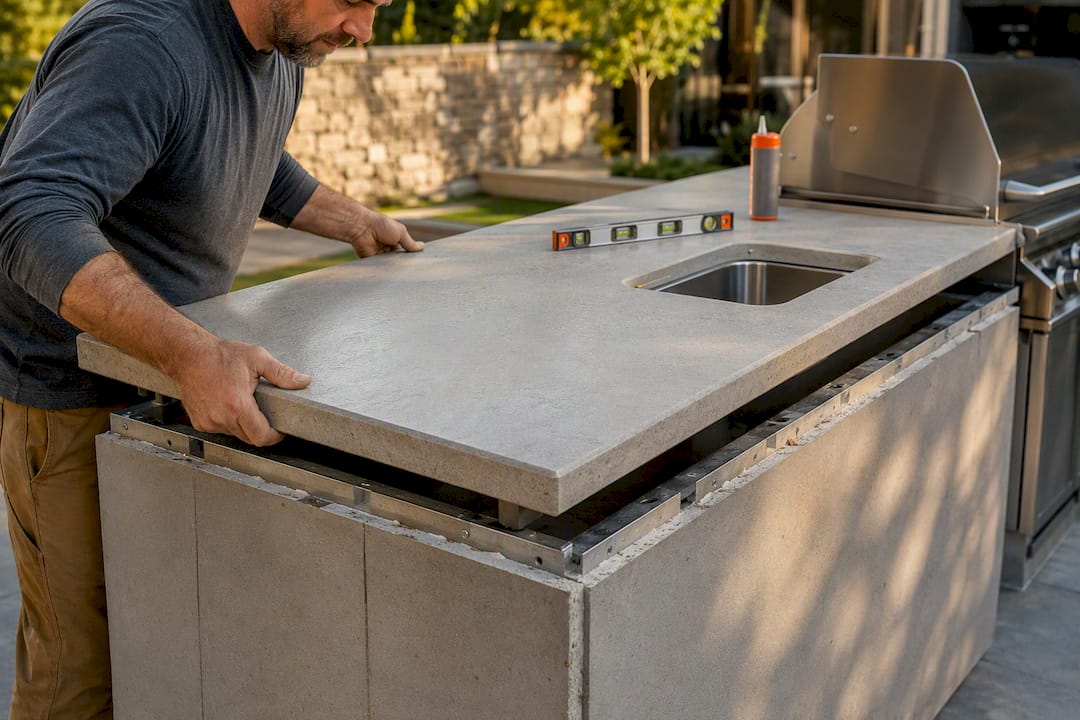
Professional installation matters most with heavy stone or sintered panels, integrated sinks, and any freeze-thaw detailing around seams. Before a consultation, have your kitchen footprint, sun exposure, and material preferences ready to go.
Our Take: Durability Beats a Trendy Finish Every Time
We’ve seen too many homeowners chase a countertop that looked stunning in a showroom and then watch it fade, crack, or stain within two summers. Durability should drive the decision, not the finish that photographs best. A honed granite or sintered slab that still looks sharp in year eight beats a polished showpiece that needs replacing by year three. If you’re planning a full outdoor living space around your kitchen, build the whole structure to last, not just the countertop.
— GC Signature Outdoors LLC
Ready to Build an Outdoor Kitchen That Lasts?
Professional outdoor living contractors handle the important details most homeowners underestimate: getting the substrate, drainage, and seams right before the slab ever goes on. Experienced providers design and build complete outdoor living spaces, including paver patios, stone seating, and fully integrated outdoor kitchens with suitable countertop materials for various exposures and climates.

If you’re ready to move past research and into planning, request a site visit and bring your kitchen footprint, sun exposure notes, and any material preferences you’ve landed on. Our design-build outdoor living team will walk the space, talk through frame and substrate needs, and give you a real plan for a kitchen built to hold up season after season. Reach out today to schedule your consultation and get started.
Sources
- Best Countertop Materials For Outdoor Kitchens: 9 Picks
- Your Guide to the Top Outdoor Kitchen Countertop Materials
- What are the best countertops for an outdoor kitchen? | Homes & Gardens
- Outdoor kitchen countertops options | HGTV
FAQ
What Is the Best Countertop for an Outside Kitchen?
Sintered stone or large-format porcelain generally performs best outdoors thanks to near-zero water absorption and strong UV resistance, though honed granite is a solid runner-up if you want a natural stone look.
What Is the Cheapest Countertop for an Outdoor Kitchen?
Tile is usually the most affordable option and works well on a tight budget, but grout joints make it a poor fit for freeze-thaw climates unless the kitchen stays covered.
What Is the Best Surface for an Outdoor Kitchen Near the Coast?
316 marine-grade stainless steel resists salt-air corrosion far better than standard 304 steel, making it the safer choice within a few miles of the ocean.
What Are Some Good Waterproof Outdoor Countertops?
Sintered stone, porcelain, and soapstone are all effectively nonporous and shed water without staining, which is why they need little to no resealing compared to granite or concrete.
Recommended
Ready to get started in Kansas City's Northland?
GC Signature Outdoors serves Smithville, Platte City, Kearney, Liberty, and surrounding areas.