
Built-In Grill vs Freestanding: KC Northland Guide
Built-In Grill vs Freestanding: KC Northland Guide
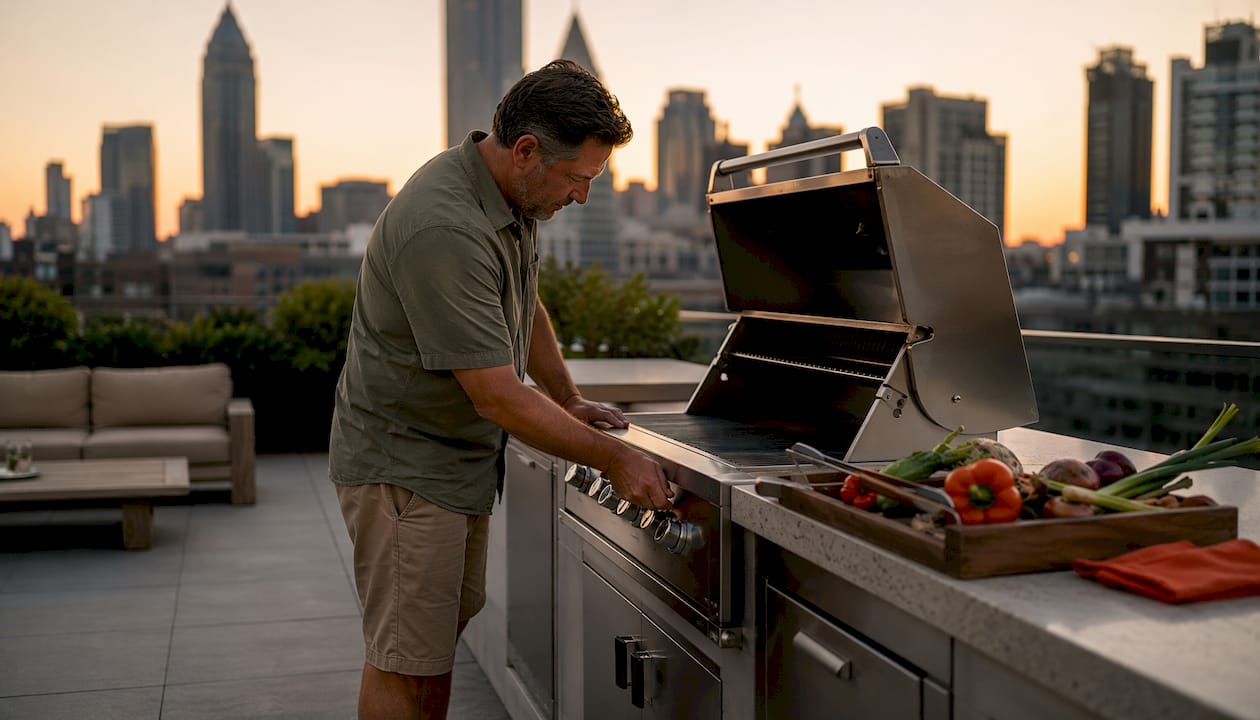
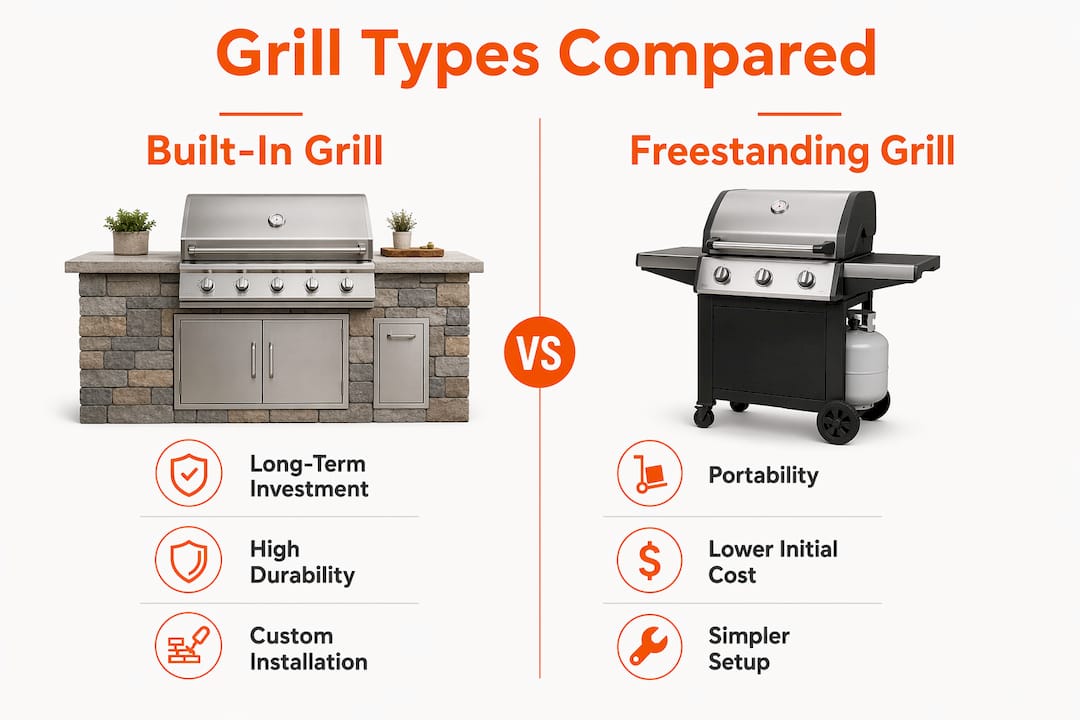
If you entertain regularly and plan to stay in your home for years, a built-in grill is the stronger investment. If you rent, move often, or just want to grill on weekends without a construction project, a freestanding unit gets you there faster and cheaper. That’s the short version. The longer version depends on your site, your budget, and whether you’re ready to pull a permit.
Here’s how the two options stack up for KC Northland homeowners:
| Factor | Built-In Grill | Freestanding Grill |
|---|---|---|
| Best for | Frequent entertainers, long-term homeowners | Renters, small patios, budget buyers |
| Cost range | Built-in grill heads start around $1,500–$5,000, with full island projects commonly reaching $8,000–$20,000 or more depending on materials and complexity | Freestanding grills typically run $400–$4,000 for the unit |
| Permanence | Fixed; requires planning to change | Portable; move or store anytime |
| Installation complexity | Site prep, gas rough-in, permits likely required | Minimal; connect fuel and cook |
| Maintenance | Island surface + grill; easier with good design | Grill only; cover when not in use |
| Resale appeal | Boosts buyer appeal; premium amenity | Little to no appraisal impact |
| Safety/permits | IRC clearances, gas line inspection, local permit | Standard placement clearances only |
GC Signature Outdoors handles design, permitting, and structural builds for outdoor living projects across Smithville, Platte City, and Kearney.
Table of Contents
- What does built-in grill installation actually involve?
- How do durability and warranties differ?
- What upgrade and customization options exist for built-in grills?
- How do you store and optimize space with a freestanding grill?
- GC Signature Outdoors builds outdoor kitchens KC Northland homeowners actually use
- FAQ
- Key Takeaways
What does built-in grill installation actually involve?
A built-in install is an engineered project, not an appliance swap. The sequence matters.
Site prep comes first: a level, non-combustible base capable of supporting 200–400+ pounds of grill and island weight. Metal studs with cement board, masonry, or stone are standard framing choices. Combustible wood framing requires insulating liners.
Ventilation and clearances are governed by the manufacturer’s manual and local code. Common guidance calls for 18–24 inches from combustible walls, with larger setbacks under roofs or overhangs. A 1–2 inch air gap around the grill body prevents heat buildup inside the island cavity.
Gas rough-in is where DIY projects most often fail. Lines must be sized for BTU demand, run inside framed bays or conduit, and terminate with an accessible shutoff. Most inspectors expect unthreaded pipe near the appliance for wrench access. Skipping this step is a common cause of costly rework when the inspector shows up.
Permits for permanent gas appliances are standard in most KC Northland jurisdictions. Check with your local building department before any hardscape or utility work begins.
How do durability and warranties differ?
Built-in grill heads made from 304 stainless steel can have a long lifespan. Freestanding carts generally have a shorter functional lifespan before deterioration affects usability.
Warranty terms follow the same split. Converting a freestanding grill into a built-in surround usually voids the manufacturer’s warranty because the unit was never tested for built-in thermal and ventilation conditions. If you’re planning an island, buy a purpose-built grill head from the start.
Pro Tip: Ask your contractor to verify the exact cutout dimensions before the island is framed. A replacement grill that doesn’t match the original opening means either a new island section or an expensive trim kit.
What upgrade and customization options exist for built-in grills?
Built-in grills are designed around an island system, which makes adding components straightforward when the island is planned correctly. Side burners, power burners, refrigeration drawers, smoker boxes, rotisserie kits, and lighting can all be integrated into the same run of cabinetry. The key constraint is cutout compatibility: future upgrades need to match the original opening dimensions or require a trim kit.
Natural gas connection is the other upgrade worth planning for upfront. It eliminates propane tank management and lowers long-term fuel costs. Running a gas line during initial construction costs far less than retrofitting one later. The same logic applies to GFCI outlets if you plan to add a refrigerator or lighting down the road.
For homeowners weighing a full kitchen retrofit versus a simpler upgrade, the cabinet painting vs. replacement decision framework applies here too: the cost of retrofitting an existing space is almost always higher than building it right the first time.
How do you store and optimize space with a freestanding grill?
Freestanding grills earn their keep on smaller KC Northland patios precisely because they move. Roll the grill to the corner when you’re hosting a party, pull it out when you’re cooking, and cover it when a storm rolls through. That flexibility is genuinely useful for homeowners who haven’t committed to a permanent outdoor kitchen layout yet.
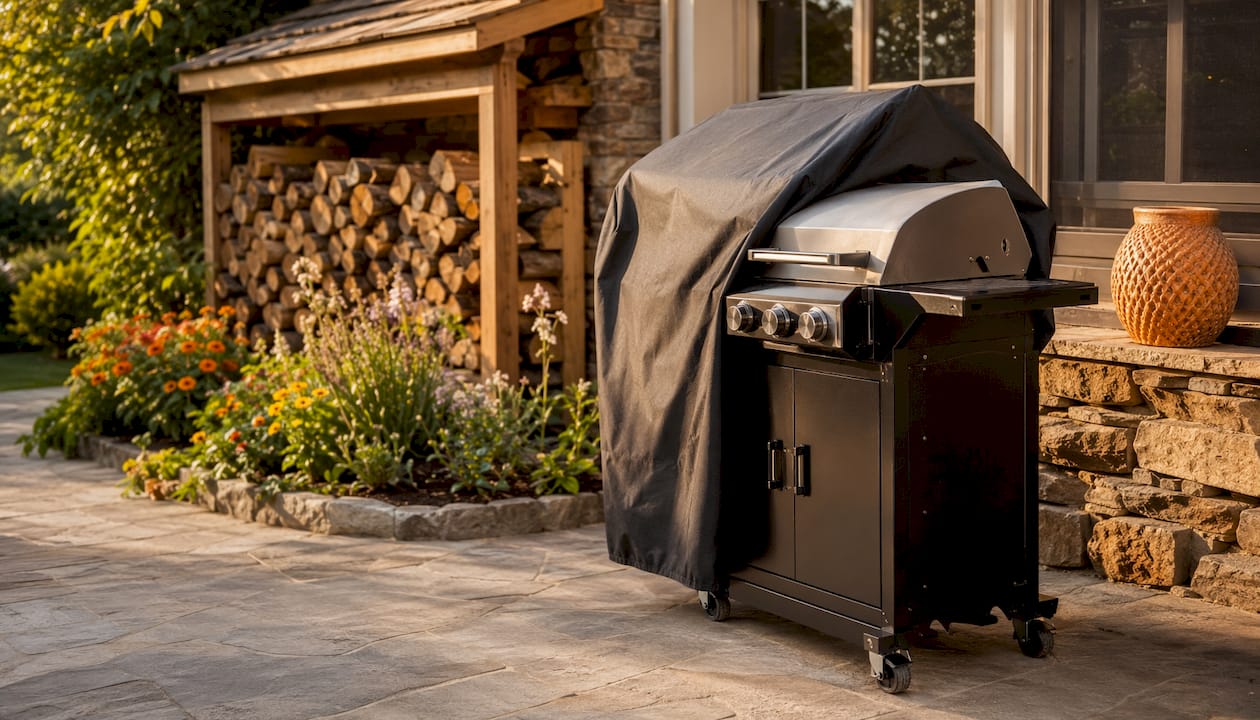
Storage comes down to a few practical choices. A fitted grill cover extends the lifespan of the cart and burners significantly. A folding prep table or side cart adds counter space without a permanent footprint. If you’re working with a tight patio, positioning the grill near an exterior door shortens the trip from kitchen to grill and makes daily use more realistic.
The one thing freestanding grills can’t replicate is integrated storage. Built-in islands offer drawers, doors, and dedicated spaces for tools, propane tanks, and accessories. For a freestanding setup, a small outdoor storage cabinet or a cart with enclosed shelving fills that gap without construction.
GC Signature Outdoors builds outdoor kitchens KC Northland homeowners actually use
Choosing a built-in grill is the easy part. Getting the gas line, structural base, clearances, and permit handled correctly is where most projects go sideways without the right contractor.

Sgclandscape’s GC Signature Outdoors team designs and builds complete outdoor living spaces in Smithville, Platte City, Kearney, and surrounding KC Northland neighborhoods. That means one crew handles the concrete base, the island framing, the paver surround, and the utility rough-in, so you’re not coordinating three separate contractors. The company follows manufacturer installation manuals and works with local building departments on permits and inspections. Browse the project portfolio to see finished outdoor kitchens in the area, then request an on-site design consultation to get a quote specific to your yard and site conditions.
FAQ
What permits do I need for a built-in grill in KC Northland?
Most permanent gas appliance installations require a building permit and gas line inspection from your local building department. Check with Smithville, Platte City, or Kearney city offices before starting any utility or hardscape work.
How much does a built-in grill installation cost compared to freestanding?
Freestanding grills typically run $400–$4,000 for the unit. Built-in grill heads start around $1,500–$5,000, with full island projects commonly reaching $8,000–$20,000 or more depending on materials and complexity.
Can I convert my freestanding grill into a built-in?
Converting a freestanding grill into a built-in surround usually voids the manufacturer’s warranty, since the unit was not tested for built-in thermal and ventilation conditions. Use a purpose-built grill head when planning an island.
What clearances does a built-in grill require?
Common guidance calls for a moderate clearance distance from combustible walls, with larger setbacks under roofs or overhangs. Always follow the manufacturer’s manual and your local building code, as requirements vary by jurisdiction.
How long does a built-in grill last compared to a freestanding model?
Built-in grill heads in 304 stainless steel typically last 15–20+ years. Freestanding grill carts usually see 3–10 years before cart deterioration becomes the limiting factor, even when the burner components remain functional.
Key Takeaways
For KC Northland homeowners who entertain regularly and plan to stay put, a built-in grill integrated into a properly permitted outdoor kitchen delivers better durability, resale appeal, and daily usability than any freestanding alternative.
| Point | Details |
|---|---|
| Cost gap is significant | Freestanding grills typically cost less upfront; built-in island projects require a significantly larger investment. |
| Durability favors built-ins | Built-in grill heads are more durable and longer-lasting compared to freestanding grill carts. |
| Permits are standard | Permanent gas appliances require a building permit and inspection in most KC Northland jurisdictions. |
| Warranty risk with conversions | Converting a freestanding grill to built-in typically voids the manufacturer’s warranty. |
| Sgclandscape handles the full build | GC Signature Outdoors manages design, permits, structural work, and utility rough-in for outdoor kitchens in Smithville, Platte City, and Kearney. |
Recommended
Ready to get started in Kansas City's Northland?
GC Signature Outdoors serves Smithville, Platte City, Kearney, Liberty, and surrounding areas.