
Fix Dull Mower Blades, Protect Lawn, Save 22% Fuel for KC Homeowners
Fix Dull Mower Blades, Protect Lawn, Save 22% Fuel for KC Homeowners
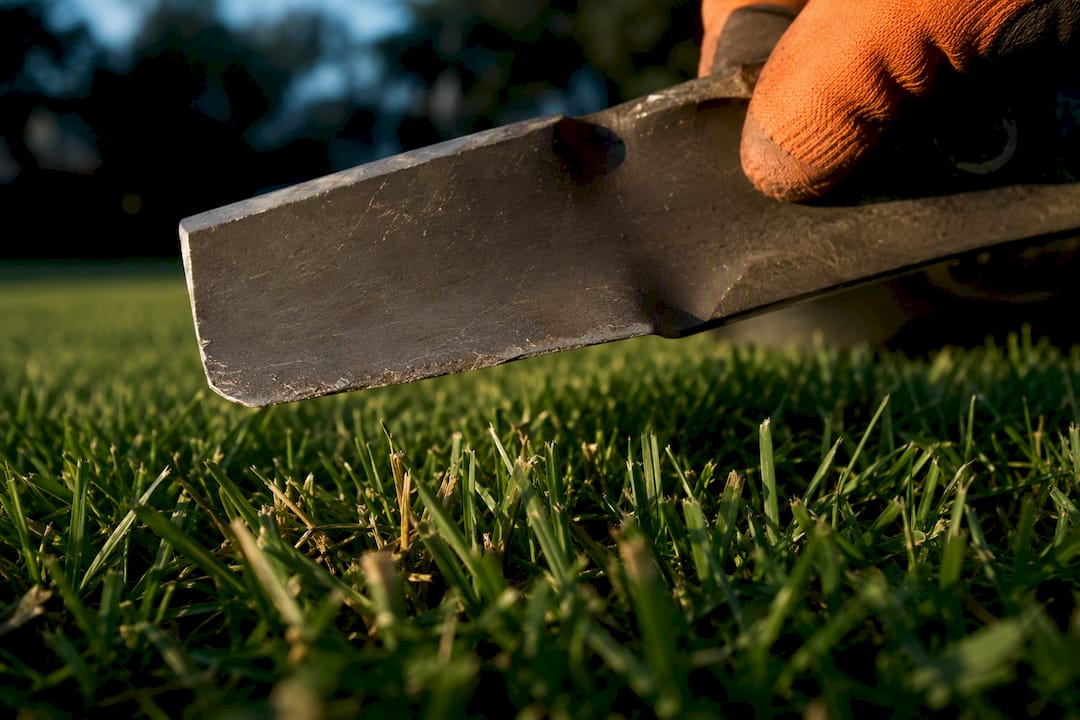
If your grass looks torn, whitish-brown, or ragged a day after mowing, your blade is almost certainly dull. Shut off the mower, disconnect the spark plug or pull the battery, then flip it up to check the edge for rounding, nicks, or a bent profile. If the metal is just rounded or lightly nicked, sharpen it. If it’s bent, cracked, or missing chunks, replace it.
TL;DR:
- Sharpen blades if the edge is rounded or has minor nicks, but replace them if they are bent, cracked, or missing chunks of metal.
- A dull blade causes grass tips to tear, increasing disease risk and reducing turf resilience, while also increasing mower fuel consumption by over 20 percent.
- Check and balance the blade after sharpening to prevent damaging vibrations that can wear out bearings and the mower deck.
- Inspect blades regularly, especially after hitting debris or every 10 mowing hours, and replace or sharpen as needed to maintain cut quality.
- Professional servicing ensures proper balancing and mounting torque, which DIY sharpening often fails to achieve and prolongs mower lifespan.
Table of Contents
- How to Tell a Mower Blade Is Dull
- What Dull Blades Do to Your Lawn and Your Mower
- When to Sharpen, When to Replace
- Step-by-Step Guide to Sharpening a Mower Blade
- Safety, Overheating, and Why Balance Matters
- How Often Should You Inspect and Sharpen Blades?
- GC Signature Outdoors’ Take: When to Call a Pro
- Skip the Sharpening, Keep the Sharp Cut
- Sources
- FAQ
How to Tell a Mower Blade Is Dull
Your lawn tells you before your blade does. Look closely at the grass a day after mowing.
- Ragged, torn tips instead of clean cuts, often with a whitish-brown or gray tint as the shredded ends dry out
- Clumping or uneven height across the yard, even on a flat pass
- The mower working harder than usual, bogging down in thicker patches
- Shorter run time or more frequent refueling for the same size yard
Pull the mower deck up (with the engine off and spark plug disconnected) and run a finger carefully along the blade edge. A sharp blade has a clean, defined edge. A dull one feels rounded, like a butter knife. Small nicks from rocks or debris are common and usually fine to sharpen out. A blade that’s visibly bent, twisted, or missing a chunk of metal is a different problem entirely, and sharpening won’t fix it.
What Dull Blades Do to Your Lawn and Your Mower
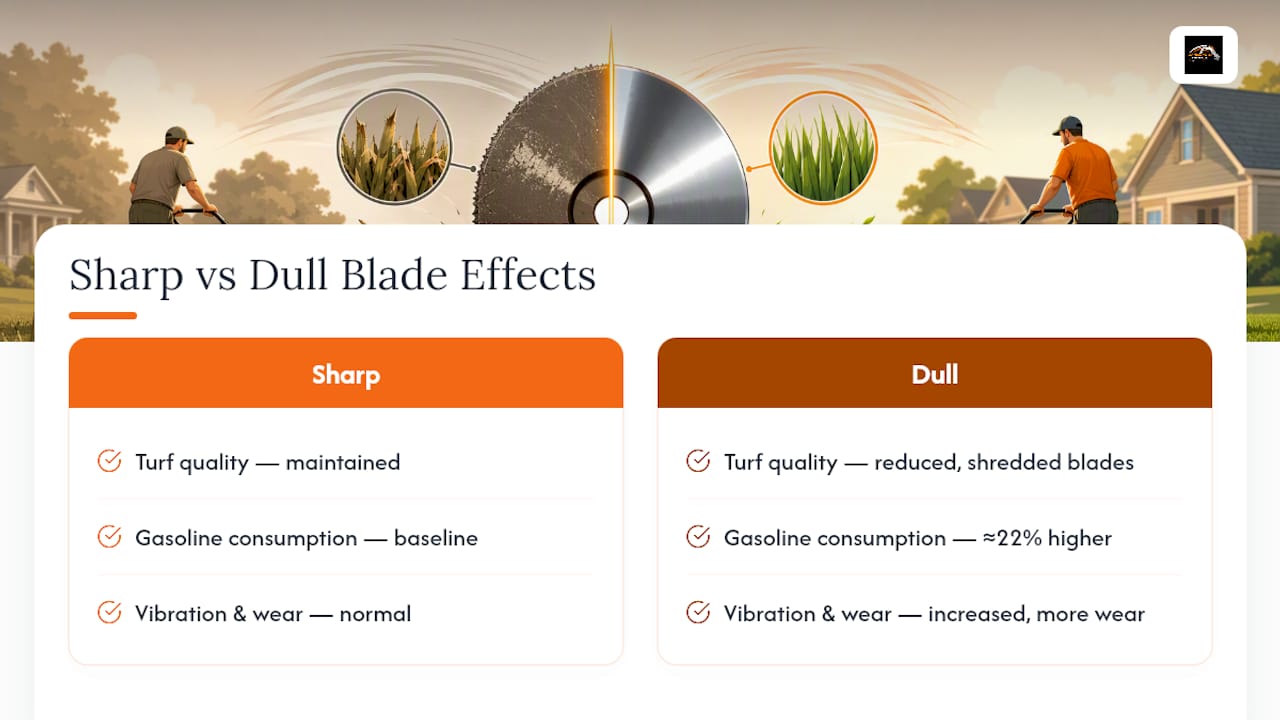
A dull blade doesn’t cut grass. It tears it. That distinction shows up fast: torn leaf tips dry out, turn pale, then brown, and become easy entry points for fungal disease, according to Purdue Turfgrass. Grass that gets shredded week after week weakens at the root, losing some of its natural resilience against drought stress, foot traffic, and weed pressure.
The mower pays a price too. A 1983 Agronomy Journal field study found that mowing repeatedly with a dull rotary blade reduced turf quality and pushed gasoline consumption up roughly 22 percent compared to sharp-blade treatments. That’s real fuel burned fighting grass instead of cutting it, plus extra vibration and wear working through the deck and bearings.
When to Sharpen, When to Replace
Not every dull blade needs a trip to the trash. The decision comes down to what shape the metal is actually in.
- Sharpen it if the edge is rounded or has minor nicks, but the blade itself is straight, flat, and free of cracks
- Replace it if the blade is bent, twisted, cracked, missing a section of metal, or fails a balance check even after sharpening
- Consult a professional if you’re not confident identifying hairline cracks or if the blade has struck something hard (a rock, a stump, a sprinkler head) more than once
Always use the manufacturer’s approved replacement blade for your model. A universal blade that doesn’t match your deck’s specs can throw off balance and cutting height even when it’s brand new.
Pro Tip: Keep a spare, pre-sharpened blade on hand during peak mowing season. Swap it in during a five-minute break and sharpen the dull one later, instead of losing a whole afternoon to maintenance.
Step-by-Step Guide to Sharpening a Mower Blade
Sharpening a mower blade takes about 20 minutes once you’ve done it a couple of times. Here’s the sequence that keeps you safe and gets a clean edge.
- Disconnect the spark plug wire or remove the battery. Never skip this. A mower blade can still spin from a stray pull on the cord.
- Brace the blade with a block of wood wedged against the deck, then loosen the center bolt with a socket wrench.
- Mark the blade with a paint dot or marker on the side facing down, so you reinstall it the same way.
- Clean off caked grass and debris so you can see the edge clearly.
- Sharpen along the original bevel, typically 30 to 45 degrees, using a hand file for light touch-ups or a bench grinder for heavier damage. Make the same number of passes on each side.
- Cool the metal in water every few passes on a grinder to avoid overheating the steel.
- Check balance using a blade balancer or a screwdriver through the center hole; a heavy side will dip.
- File a bit more off the heavy side and retest until the blade hangs level.
- Reinstall with the mark facing the same direction, tighten the center bolt to the torque listed in your mower manual, and test mow for smooth operation.
| Sharpening Method | Best For | Watch Out For |
|---|---|---|
| Hand file | Light rounding, minor dullness | Slower, but zero risk of overheating |
| Bench grinder | Nicks, chips, heavier damage | Overheating and losing the blade’s temper |
| Angle grinder | Field touch-ups, quick edges | Harder to keep an even bevel |
Pro Tip: If the blade edge turns blue or straw-colored while grinding, stop. That discoloration means the steel’s temper is likely gone, and the edge will dull again almost immediately no matter how sharp you make it.
Safety, Overheating, and Why Balance Matters
Grinding a blade too hard, too fast, is the most common mistake DIYers make. If the edge discolors, you’ve probably softened the steel and ruined its ability to hold an edge, per Purdue Turfgrass. Short passes with water cooling in between solve this.
Balance matters just as much as sharpness. An unevenly sharpened blade spins slightly off-center, and that vibration travels straight into the spindle, bearings, and deck, according to Illinois Extension.
- Recheck the blade adapter and mounting hardware for cracks or wear before reinstalling
- Replace any bolts that look stripped, rusted, or bent
- Never skip the balance test, even for a “quick touch-up” sharpening job
- Tighten the center bolt to the torque spec in your owner’s manual, not just “snug”
How Often Should You Inspect and Sharpen Blades?
A quick visual check after most mows catches problems early. A more thorough inspection, pulling the blade and running a finger along the edge, should happen after roughly every 10 hours of mowing time, based on University of Maryland Extension guidance.
- Inspect closely at the start of the mowing season and again in late summer
- Sharpen as often as needed throughout the growing season, especially if you mow frequently over a large yard
- Add an extra check any time you hit a rock, root, or sprinkler head, or after mowing sandy or debris-heavy ground
GC Signature Outdoors’ Take: When to Call a Pro
Sharpening a blade at home works fine for a straight, lightly worn edge and a steady hand. Where DIY tends to fall short is balance. A blade that’s off by even a gram can send vibration through the deck for weeks before anyone notices the bearing wear.
A professional service uses balancing tools and torque specs on every mowing visit, which keeps cutting quality consistent and mower wear low. If your blade is bent, cracked, has repeatedly struck something hard, or you simply don’t have the grinder and balancer sitting in the garage, that’s the point where a professional visit saves more time than it costs. It’s also worth pairing sharp-blade habits with proper mowing height since the two work together to protect turf.
— GC Signature Outdoors LLC
Skip the Sharpening, Keep the Sharp Cut
GC Signature Outdoors LLC is the practical alternative to spending your Saturday morning with a file and a bench grinder. Every mowing visit, whether it’s a one-time cut or a recurring weekly service, runs on professional-grade equipment with blades kept sharp and balanced as part of the job, not an afterthought squeezed in between yard work.

That matters more than most homeowners realize. A blade that’s sharpened but poorly balanced can do more harm to your mower than one that’s simply dull, and getting the balance right takes tools most garages don’t have. Skipping the guesswork means your lawn gets clean, even cuts every visit, and your mower deck avoids the vibration damage that shortens its life. If you’re in Smithville, Platte City, Kearney, or the surrounding KC Northland area, get a quote on weekly mowing and let a crew that already owns the balancer handle it.
Sources
- Sharpen mower blades | Purdue Turfgrass
- Lawn problems not caused by pests or diseases | University of Maryland Extension
- Mower maintenance | Illinois Extension
- Mower blade sharpness effects on turf | Agronomy Journal (1983)
FAQ
What Happens if Lawn Mower Blades Are Dull?
A dull blade tears grass instead of slicing it cleanly, leaving ragged tips that dry out and turn brown or gray. This increases disease risk, weakens turf resilience, and forces the mower’s engine to work harder, which one field study linked to roughly 22% higher fuel use versus a sharp blade.
What Are the Symptoms of a Dull Mower Blade?
Look for ragged or frayed grass tips, a whitish-brown cast over the lawn a day after mowing, and clumping in patches that should be even. On the mower itself, a dull blade often feels rounded to the touch instead of having a clean edge, and the deck may vibrate more than usual.
How Do You Sharpen a Dull Lawn Mower Blade?
Disconnect the spark plug or battery, remove the blade, and mark its orientation before sharpening along the original bevel, typically 30 to 45 degrees, using a file or bench grinder. Check balance with a blade balancer or screwdriver test before reinstalling and torquing the bolt to your mower manual’s spec, following the process Illinois Extension outlines.
Is a Dull Blade Bad for Grass?
Yes. A dull blade shreds grass blades rather than cutting them, and those torn tips are more vulnerable to fungal disease and moisture loss. Repeated mowing with a dull blade over a season measurably reduces turf quality, according to peer-reviewed field research.
How Often Should I Sharpen My Mower Blade?
Plan on inspecting the blade after roughly every 10 hours of mowing and sharpening up to four times across a full season for a heavily used yard. Homeowners who prefer to skip the maintenance entirely can add blade care into a recurring mowing service instead.
Recommended
Ready to get started in Kansas City's Northland?
GC Signature Outdoors serves Smithville, Platte City, Kearney, Liberty, and surrounding areas.