
Mulch vs Rock: Which Ground Cover Wins for Your Yard?
Mulch vs Rock: Which Ground Cover Wins for Your Yard?
TL;DR:
- Organic mulch is preferred for planted beds because it improves soil health and retains moisture. Rock is better suited for drainage zones and ornamental areas where longevity is prioritized over plant impact. Proper installation and maintenance are essential for both materials to prevent issues like weed growth and structural problems.
For most planted beds, trees, and shrubs, organic mulch is the better choice. It improves soil health, retains moisture, moderates root-zone temperature, and suppresses weeds when applied at 2–3 inches deep. Rock earns its place in drainage swales, high-traffic pathways, and ornamental-only zones where you never plan to replant.
Here is the quick breakdown before we go deeper:
- Mulch wins for: planted beds, tree rings, perennial gardens, new plantings needing soil improvement
- Rock wins for: dry drainage areas, paths, foundation edges needing superior drainage, xeriscape zones
- The catch with rock: it is not maintenance-free, and converting a bed to rock is difficult to reverse
- The catch with mulch: plan to top it up every 1–3 years depending on the material
Table of Contents
- How mulch vs rock compares across every decision dimension
- What makes organic mulch so good for planted beds
- Where rock and gravel actually shine
- Which material fits which part of your yard
- How to install and maintain both materials correctly
- Why horticulturists almost always recommend organic mulch for planted beds
- Key Takeaways
- What we see homeowners get wrong (and what pros do differently)
- GC Signature Outdoors LLC serves KC Northland homeowners who want it done right
- Useful sources
- FAQ
How mulch vs rock compares across every decision dimension
| Dimension | Organic Mulch | Rock / Stone |
|---|---|---|
| Recommended uses | Planted beds, tree rings, vegetable and perennial gardens | Pathways, drainage swales, ornamental-only beds, xeriscape |
| Plant and soil impact | Adds organic matter, feeds soil microbes, improves structure over time | No soil benefit; does not improve structure or nutrient content |
| Weed control | Good when applied correctly at 2–3 inches; coarser texture performs better | Moderate initially; silt accumulation over time creates a seedbed for weeds |
| Moisture retention | High; reduces evaporation and can reduce irrigation frequency | Low; rock dries out quickly and increases surface evaporation |
| Heat retention / plant stress | Insulates roots; keeps soil cooler in summer | Absorbs and radiates heat; can stress roots in hot climates |
| Maintenance effort | Annual top-up; occasional raking | Low short-term; weed removal and debris clearing increase over years |
| Upfront vs lifetime cost | Lower upfront; recurring replenishment cost | Higher upfront; longer-lasting but costly to remove later |
| Aesthetics / permanence | Natural look; color fades seasonally | Bold, permanent look; wide variety of colors and textures |
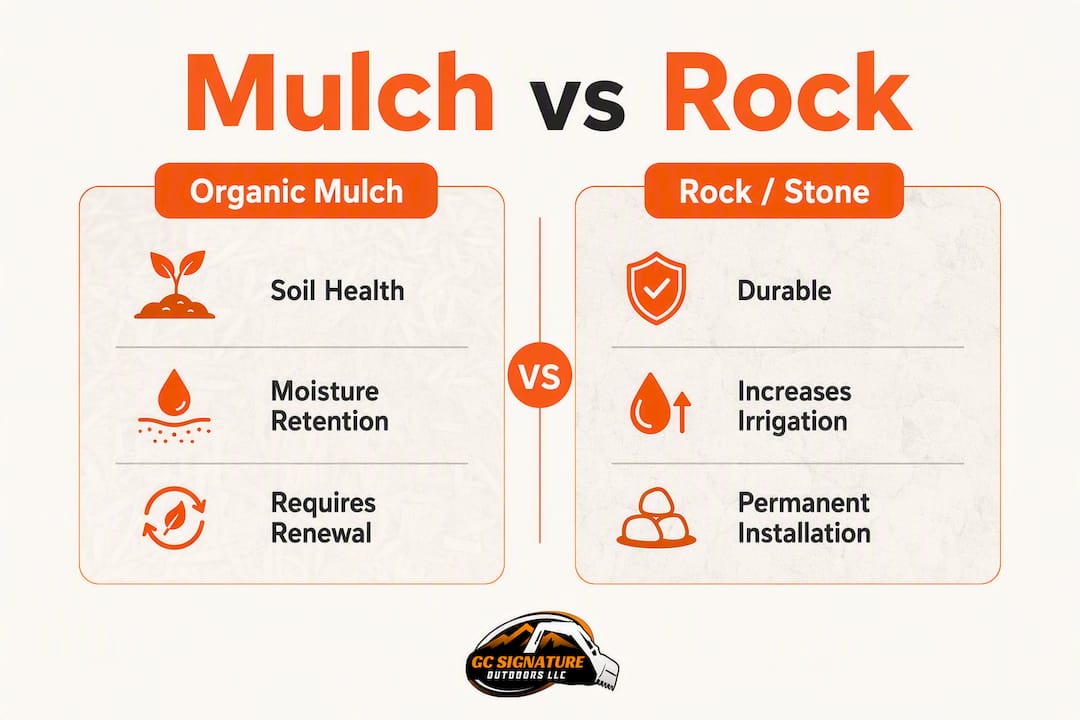
For planted beds, the decisive factor is soil health. Organic mulches mimic natural litterfall, feeding soil microbes and cycling nutrients back into the root zone over years. Rock does none of that.
Two climate notes worth keeping in mind:
- In hot, arid climates (think desert Southwest), rock can work well for drought-tolerant species that evolved in rocky soil, but it will stress moisture-dependent ornamentals.
- In the KC Northland’s freeze-thaw climate, organic mulch provides meaningful insulation in winter; rock amplifies soil temperature swings in both directions.
What makes organic mulch so good for planted beds
The benefits of mulch go well beyond keeping beds tidy. Wood chips, shredded bark, composted bark, and leaf mulch all decompose over time, feeding the microbial communities that make soil productive. That is the core reason horticulturists favor it for planted beds.
Pros of organic mulch:
- Adds organic matter and improves soil structure with each season
- Retains soil moisture and can reduce how often you need to water
- Moderates soil temperature, keeping roots cooler in summer and warmer in early spring
- Suppresses annual weeds when applied at the right depth and texture
- Reduces soil erosion from heavy rain
- Biodegrades cleanly with no plastic waste
Cons of organic mulch:
- Requires replenishment every 1–3 years as it breaks down
- Fine-textured mulches can actually wick moisture away from soil if they are finer than the soil beneath them; coarser mulch is always the better choice for moisture retention
- Color fades, especially dyed products, within one season
- Some homeowners worry about pests; fresh wood chips can attract certain insects, though this is rarely a serious problem in well-maintained beds
- Nitrogen tie-up is a common concern but mostly a myth for surface-applied mulch; it only matters if you till mulch into the soil
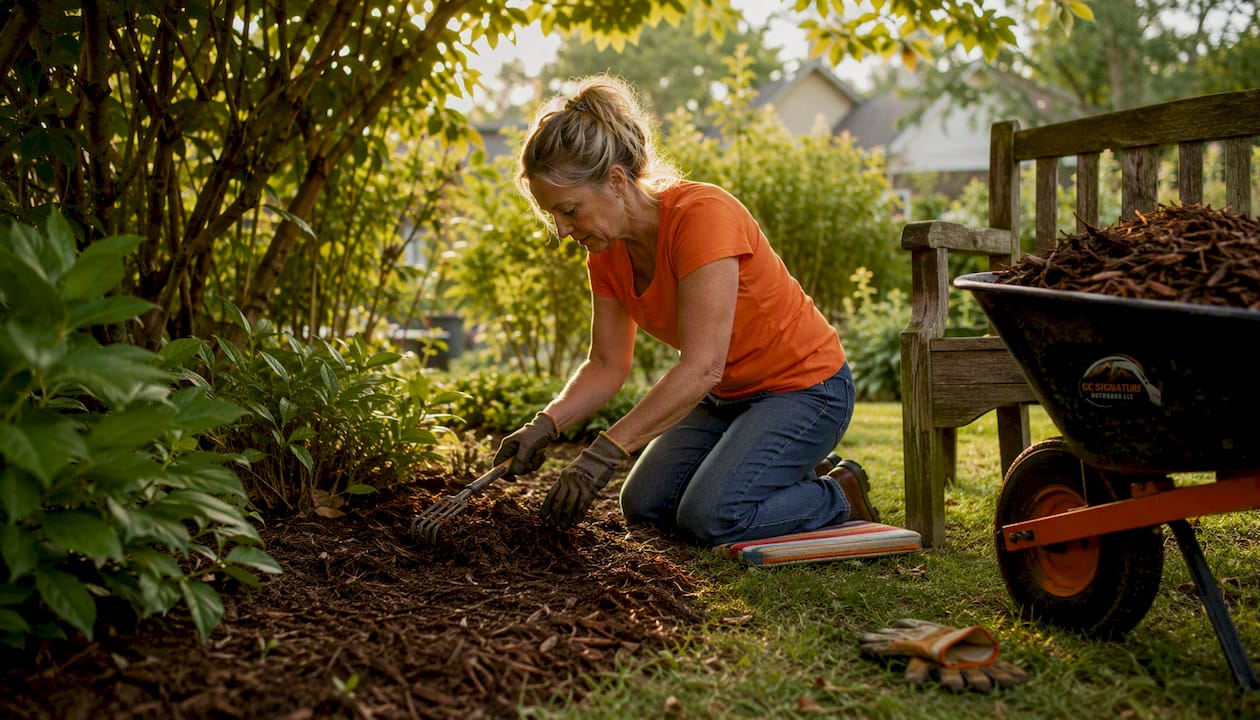
Pro Tip: Apply coarse organic mulch at a moderate depth of 2–3 inches as recommended by experts, and keep it pulled back 2–3 inches from trunk collars and plant stems. Piling mulch against trunks, the classic “mulch volcano,” traps moisture against bark and invites rot and disease.
University extension guidance consistently recommends 2–3 inches as the target depth for trees, shrubs, and ornamental beds. Deeper than 3 inches can impair water movement and cause decay at the base of plants. Shallower than 2 inches and you lose most of the weed-suppression and moisture benefits.
Where rock and gravel actually shine
Rock is not the villain of this comparison. Gravel, river rock, crushed stone, and decorative boulders all have legitimate uses. The problem is when homeowners use them in the wrong places.
Pros of rock and stone:
- Permanent; does not decompose or need annual replenishment
- Excellent for drainage areas and slopes where mulch would wash away
- Fire-resistant, which matters in wildfire-prone regions or near structures
- Wide aesthetic variety, from fine pea gravel to large river rock
- Works well in xeriscape designs with drought-tolerant plants
Cons of rock and stone:
- Provides zero soil benefit; plants in rock beds depend entirely on existing soil quality
- Absorbs and radiates heat, which can stress roots in summer, particularly in the Midwest’s hot July and August
- Landscape fabric underneath restricts air and water movement, degrades into frayed plastic over time, and makes future bed rework extremely difficult
- Wind-blown debris collects between rocks and creates a seedbed; over time, weeds become harder to pull because roots intertwine with rock and fabric
- Removal is labor-intensive and often requires equipment
Pro Tip: If you are installing rock in a bed, skip the cheap woven plastic sheeting and use a quality woven geotextile sparingly, or skip fabric altogether and rely on rock depth for weed suppression. Plan for the long game: once rock goes down, replanting that bed is a major project.
Rock also tends to increase irrigation needs for any plants growing nearby. The heat it radiates dries out the surrounding soil faster than bare ground would.
Which material fits which part of your yard
Matching the right material to the right location is where most homeowners go wrong. Here is a straightforward map:
Use organic mulch for:
- Tree rings and the drip-line zone around established trees
- Ornamental planting beds with shrubs, perennials, or annuals
- Vegetable and herb gardens (use straw or leaf mulch here)
- New plantings that need soil improvement to establish well
- Any bed where you expect to add, move, or replace plants
Use rock or gravel for:
- Dry drainage swales and areas with standing-water problems
- High-traffic paths and edges along driveways
- Foundation beds directly against the house where superior drainage matters and you are not planting moisture-sensitive species
- Ornamental rock gardens with drought-tolerant or native species suited to rocky soil
- Areas where hardscape elements like retaining walls anchor the design and rock is a natural visual extension
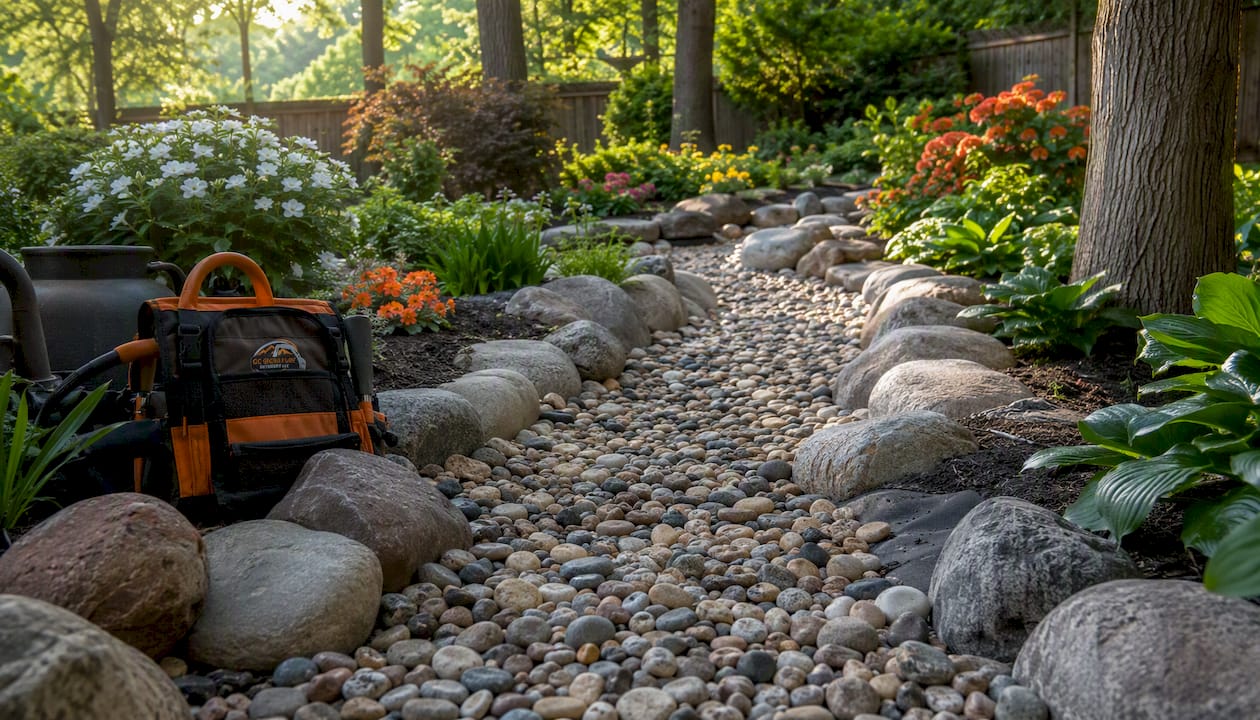
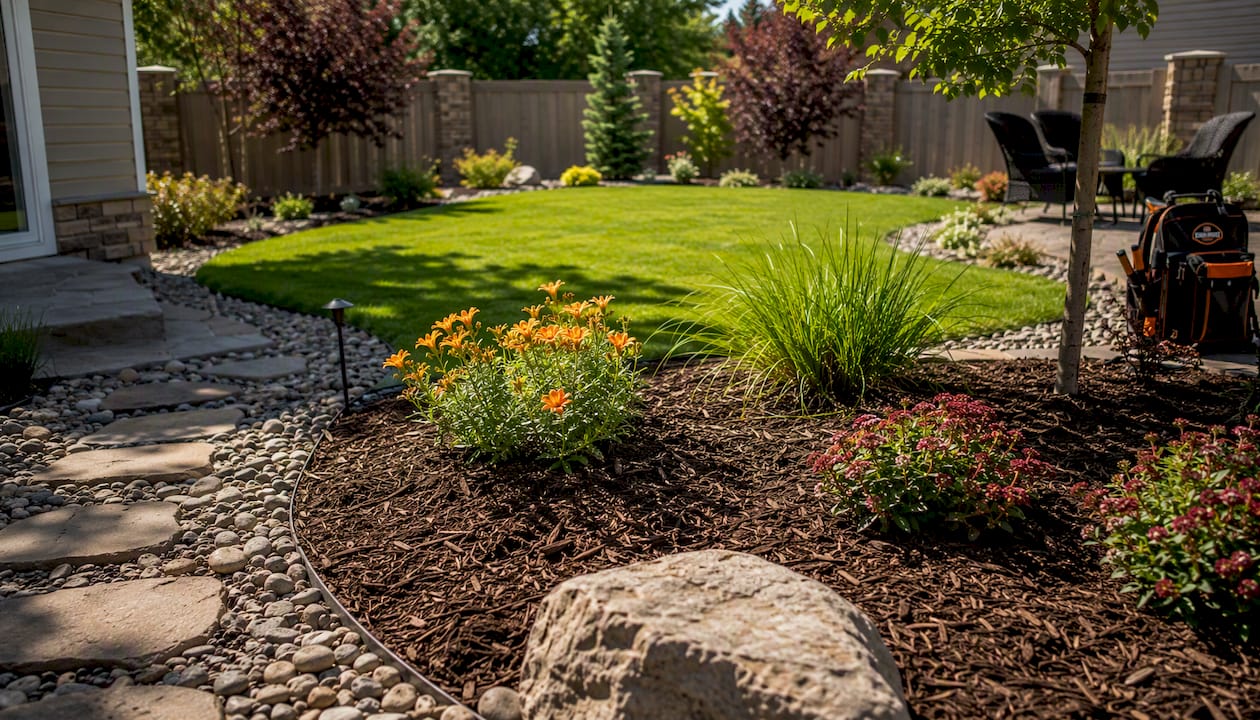
Mixed approaches work well: use rock for pathway edges and structural zones, mulch for all planted areas. This gives you the permanence of stone where it counts and the soil benefits of organic mulch where plants actually live. The key is treating these as separate zones with a clean edge between them.
One decision worth weighing carefully: rock is effectively permanent for most homeowners. Converting a bed back from rock is labor-intensive and costly, often requiring equipment. If there is any chance you will want to replant that area in the next five to ten years, stay with mulch.
How to install and maintain both materials correctly
Getting the installation right matters more than which material you choose. Most long-term problems, weeds coming through fabric, mulch volcanoes, rock beds that look worse after three years, trace back to shortcuts at installation.
Mulch installation checklist:
- Pull existing weeds by hand or treat before laying mulch
- Loosen compacted soil if needed, especially for new beds
- Apply 2–3 inches of coarse organic mulch evenly across the bed
- Pull mulch back 2–3 inches from all trunk collars and plant stems
- Install a clean bed edge (steel or aluminum edging holds best) to keep mulch contained
- Plan to top up every 1–2 years for shredded bark; every 2–3 years for larger wood chips
Rock installation checklist:
- Remove existing mulch completely before laying rock
- Grade the area for positive drainage away from structures
- Use a woven geotextile if needed, but understand it will complicate future rework
- Apply 2–3 inches for decorative beds; use 3–4 inches only for pathways where rock is used as a walking surface
- Install edge restraint to keep rock from migrating into lawn or beds
- Budget for periodic raking to level rock displaced by foot traffic or wind
Pro Tip: For rock beds near the house, check drainage direction before you lay anything. Rock does not absorb water the way mulch does, so if the grade pitches toward your foundation, you will push water problems indoors. Grade first, then rock.
Maintenance rhythms differ significantly. Mulch beds need a light rake in spring to break up any matted layers, a weed check, and a fresh top-up layer every year or two. Rock beds need periodic raking, and as years pass, you will spend more time on weed control as organic debris accumulates between stones. Tracking weed control costs over a five-year period often surprises homeowners who assumed rock was the low-maintenance choice.
Why horticulturists almost always recommend organic mulch for planted beds
The science here is not complicated, but it is often overlooked. Organic mulch mimics what happens on a forest floor: leaves and woody debris fall, decompose, and feed the soil ecosystem. That cycle is what keeps trees and shrubs healthy without fertilizer inputs.
When you replace organic mulch with rock, you cut off that cycle entirely. The soil beneath rock beds gradually loses organic matter, microbial activity declines, and plants become more dependent on supplemental fertilizer and irrigation. Organic mulches recycle nutrients and improve soil structure over time in a way no inorganic material can replicate.
The long-term weed picture with rock is also worse than most homeowners expect. Rock beds accumulate wind-blown soil and organic debris that settles between stones and creates a seedbed. Weed roots intertwine with rock and fabric, making removal harder each year. Many homeowners end up relying on herbicides in rock beds, which adds cost and chemical inputs they were trying to avoid.
Moisture is another factor. Mulched trees can often reduce irrigation frequency compared to unmulched trees in similar conditions. Rock does the opposite: it radiates heat and dries the soil surface faster.
Pro Tip: Soil improvement from organic mulch takes years, not weeks. If you are starting with compacted or poor soil, commit to a 3–5 year mulch program before you judge the results. The payoff is real, but it is not instant.
Key Takeaways
Organic mulch is the right default for planted beds because it improves soil health, retains moisture, and moderates temperature; rock belongs in drainage areas, pathways, and ornamental-only zones where permanence matters more than plant health.
| Point | Details |
|---|---|
| Mulch depth matters | Apply organic mulch at 2–3 inches; deeper than 3 inches impairs water movement and can cause decay. |
| Rock is not maintenance-free | Debris accumulates between stones over time, creating weed problems that often exceed mulch bed maintenance. |
| Fabric causes long-term problems | Landscape fabric under rock restricts air and water to roots and is difficult to remove once covered. |
| Rock decisions are hard to reverse | Converting a rock bed back to planted beds is labor-intensive; treat it as a near-permanent change. |
| GC Signature Outdoors LLC | Handles mulch installation, bed edging, and full landscape rework for homeowners in the KC Northland area. |
What we see homeowners get wrong (and what pros do differently)
The most common mistake is the mulch volcano: piling mulch deep against a tree trunk because it “looks full.” It traps moisture against the bark, invites fungal disease, and slowly kills the tree. The fix is simple, pull mulch back from the trunk and keep it at 2–3 inches.
The second most common mistake is laying landscape fabric under rock and expecting it to eliminate weeds forever. Within a few years, that fabric degrades, frays, and makes the bed nearly impossible to rework without heavy equipment. Homeowners who call GC Signature Outdoors LLC for a rock-bed rework often discover the fabric has become the biggest obstacle.
A few things a professional checks before recommending a material:
- Existing soil drainage and whether the grade directs water toward or away from the structure
- Root collar condition on established trees (buried collars are a red flag before any mulch goes down)
- Plant types in the bed and whether they evolved in rocky or organic-rich soil
- Whether the homeowner plans to add or change plants in the next few years
For a single tree ring or a small bed refresh, DIY is completely reasonable. For a full-yard rock conversion, a large bed rework, or any project involving grading and drainage, the scale and reversibility of the decision warrant a professional site visit. Getting it wrong on a large rock installation is expensive to fix.
GC Signature Outdoors LLC serves KC Northland homeowners who want it done right
Choosing the right material is half the job. The other half is installation that holds up through Missouri’s freeze-thaw winters and hot summers. GC Signature Outdoors LLC handles professional mulch installation and bed edging for homeowners across Smithville, Platte City, Kearney, and the surrounding KC Northland area, using the right depth, the right edge, and the right material for each specific bed.

For homeowners considering a larger rework, including converting rock beds back to planted areas or designing a mixed hardscape-and-mulch layout, GC Signature Outdoors LLC offers landscape design and full installation services that cover everything from drainage grading to plant selection. Before committing to any irreversible change, a site visit from the GC Signature Outdoors LLC team gives you a clear picture of what your yard actually needs. Browse the before-and-after portfolio or reach out to schedule a consult.
Useful sources
For readers who want to go deeper on any of the claims in this article:
- Mulches | MU Extension: the best single source for organic vs inorganic mulch comparisons, fabric guidance, and recommended depths. Covers soil biology and long-term maintenance.
- Mulches for Landscapes | UC ANR: authoritative on moisture retention, mulch texture selection, and irrigation effects on trees.
- Rock mulch: a solution or a problem? | K-State Research and Extension: honest assessment of long-term weed and heat problems in rock beds.
- Organic Mulches | University of Illinois Extension: practical guide covering mulch functions, weed control, and soil temperature moderation.
- Mulch Installation Cost Guide | GC Signature Outdoors LLC: local context on material and labor considerations for KC Northland homeowners.
- Lawn Care & Landscaping Blog | GC Signature Outdoors LLC: additional local guides on seasonal maintenance, weed control, and landscape planning.
FAQ
Is it better to put down rock or mulch in planted beds?
Organic mulch is better for planted beds because it improves soil health, retains moisture, and keeps root zones cooler. Rock is the stronger choice for drainage areas, pathways, and ornamental-only zones where you do not plan to replant.
What are the downsides of mulch?
Organic mulch breaks down and needs replenishment every 1–3 years, and fine-textured mulches can wick moisture away from soil if they are finer than the soil beneath them. Piling mulch too deep or against plant stems also causes rot and disease.
Is mulch or gravel better for weed control?
Coarse organic mulch applied at 2–3 inches controls weeds effectively and is easier to maintain long-term. Gravel controls weeds initially, but wind-blown debris accumulates between stones over time and creates a seedbed that makes weeds progressively harder to remove.
Is it better to use rock or mulch up against your house?
Rock is often preferred directly against a foundation because it drains faster and does not hold moisture against siding. Make sure the grade directs water away from the structure regardless of which material you use, and avoid landscape fabric that can trap water and degrade over time.
Recommended
Ready to get started in Kansas City's Northland?
GC Signature Outdoors serves Smithville, Platte City, Kearney, Liberty, and surrounding areas.