
Save 25% on Fertilizer: Grass Clippings Mulch for KC Northland
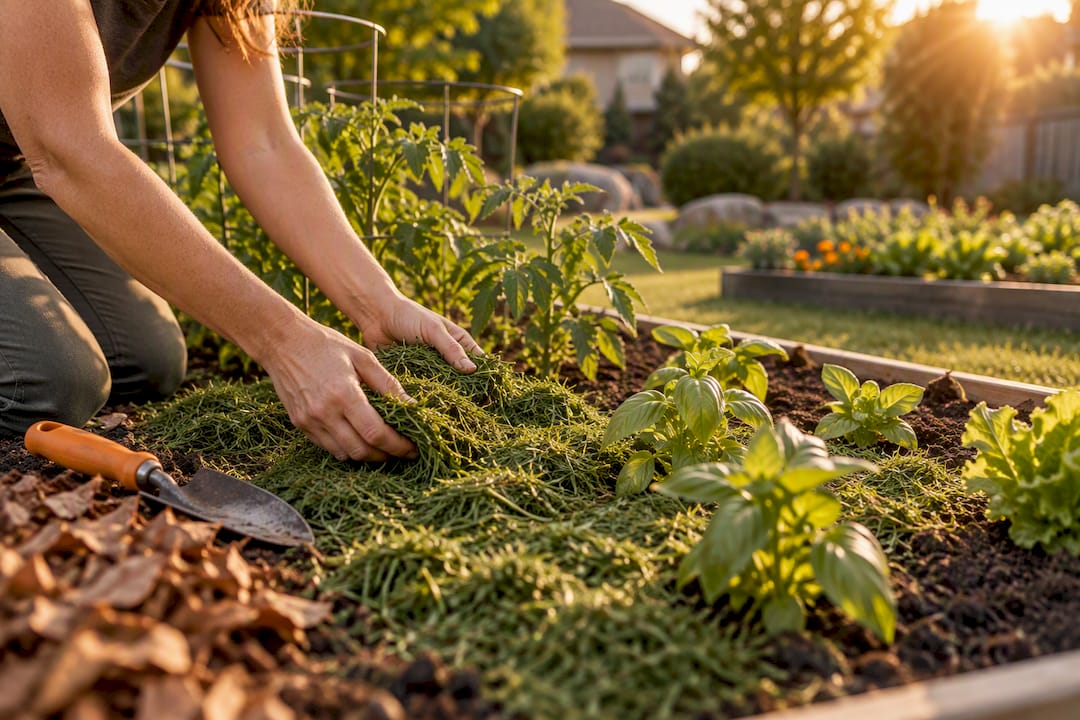
Save 25% on Fertilizer: Grass Clippings Mulch for KC Northland
Yes, grass clippings make effective garden mulch, and they cost nothing since you already mow. The one rule that separates a healthy bed from a smelly, matted mess: apply thin, dry layers, and never use clippings from a lawn treated with herbicide until enough mowings have passed. Get those two things right and clippings rival almost anything you’d buy in bags.
TL;DR:
- Grass clippings can supply up to 25% of a lawn’s annual fertilizer needs, primarily providing nitrogen, potassium, and phosphorus.
- To prevent matting and odor, dry clippings thoroughly before applying in thin, layered amounts, and maintain a 2 to 3 inch gap around plant stems.
- Herbicide-treated lawns pose a risk of chemical carryover, requiring a waiting period of at least three mowings or thorough composting before mulching.
- Mixing grass clippings with coarse carbon materials like leaves or straw optimizes airflow and reduces decomposition odor issues.
- Quick decomposition within two weeks makes grass mulch ideal for seasonal use but unsuitable as long-term bed fill without composting first.
Table of Contents
- What Grass Clippings Mulch Actually Does for Your Garden
- How to Collect, Dry, and Apply Grass Clippings as Mulch
- Herbicide Risk and How to Vet Your Clippings Before Using Them
- Mixing Clippings With Carbon Materials to Stop Matting
- Composting Grass Clippings Instead of Mulching Directly
- Fixing the Most Common Grass Mulch Mistakes
- What We’ve Learned Installing Mulch Across the KC Northland
- A Straightforward Way to Get Mulch Done Right the First Time
- Sources
- FAQ
What Grass Clippings Mulch Actually Does for Your Garden
Fresh clippings aren’t just leftover yard waste. They’re a slow-release fertilizer you’re already producing for free. Clippings run roughly 4% nitrogen, 2% potassium, and 1% phosphorus, and returning them to soil can cover up to 25% of a lawn’s annual fertilizer needs, according to Missouri Extension. That’s a real dent in your fertilizer bill, not a marginal gain.
Beyond nutrients, a clipping layer does three practical jobs in a garden bed:
- Suppresses weed germination by blocking light to the soil surface
- Holds soil moisture longer between waterings, especially through summer heat
- Moderates soil temperature swings that stress shallow-rooted vegetables
The trade-off is speed. Clippings break down fast, often within a couple of weeks, so they need refreshing far more often than bark or wood-chip mulch. They also mat into a slick, slimy layer if you pile them on wet or thick, and any grass gone to seed can hitchhike weeds straight into your beds. For a small vegetable row or a new perennial bed, that fast turnover is actually a plus, since the nitrogen release lines up with active growing seasons. For long-term ornamental beds where you want mulch to last all year, a coarser material still holds the advantage.
How to Collect, Dry, and Apply Grass Clippings as Mulch
Getting this right is mostly about patience and thin layers, not special equipment.
- Collect with the right mower setting. Use a bagging attachment or a mower with a collection chute, and avoid mowing when the grass is wet. Cut so you remove no more than one third of the blade height in a single pass. That keeps clipping length manageable and reduces the chance of thick, rope-like clumps.
- Dry the clippings before they touch a bed. Spread them thin across a tarp, driveway, or unused patch of lawn and let them sit until they’re no longer soggy to the touch, usually a day in warm weather. Skipping this step is the single biggest cause of matting, since wet clippings clump into an airtight mat that blocks water and smells sour within days.
- Apply in small increments. Lay down a quarter inch to one inch of dried clippings at a time. Let that layer settle and dry further before adding more, per Colorado State University Extension guidance for vegetable gardens. Around tender seedlings or delicate crops, hand place the clippings rather than dumping and spreading with a rake.
- Leave breathing room at the stem. Keep a 2 to 3 inch bare ring around every plant stem or trunk. Piling clippings against the stem traps moisture against the plant tissue and invites rot.
- Refresh weekly, and stop before you hit the depth ceiling. Grass mulch compresses and decomposes quickly, so plan on topping it up every week or two during the growing season. Never let total mulch depth exceed 3 to 4 inches, the point where the bottom layer stops getting oxygen and starts rotting anaerobically, according to Missouri Extension.
Herbicide Risk and How to Vet Your Clippings Before Using Them
The single biggest risk with grass clippings mulch isn’t decomposition, it’s chemical carryover. Some broadleaf herbicides persist in clipped grass long enough to damage sensitive garden plants, especially tomatoes and other vegetables. If your lawn has been treated recently, read the herbicide label before doing anything with the clippings. General guidance from Purdue Turf suggests waiting through three mowings before using clippings as mulch, though actual persistence varies by product, so the label is the final word, not a rule of thumb.
Disease and weed contamination are the second concern. Clippings from a lawn with active fungal disease or grass that’s gone to seed can introduce both problems straight into your beds.
Run through this quick checklist before you spread anything:
- Has the lawn been treated with herbicide in the last several mowings? If yes, hold off or check the label.
- Does the lawn have visible disease, bare patches, or seed heads on the grass blades? If yes, skip it or compost first.
- Are the clippings wet, clumped, or already smelling sour? If yes, spread them to dry or discard the batch.
When in doubt on any of these, composting the clippings first is the safer move. Heat and time neutralize most of these risks before the material ever touches your garden.
Mixing Clippings With Carbon Materials to Stop Matting
Pure grass clippings mat for a simple reason: they’re almost all water and soft green tissue with no structure to hold air pockets open. Once compressed, oxygen can’t get to the bottom layer, and that’s when you get the slimy, foul-smelling mess most people associate with grass mulch gone wrong.
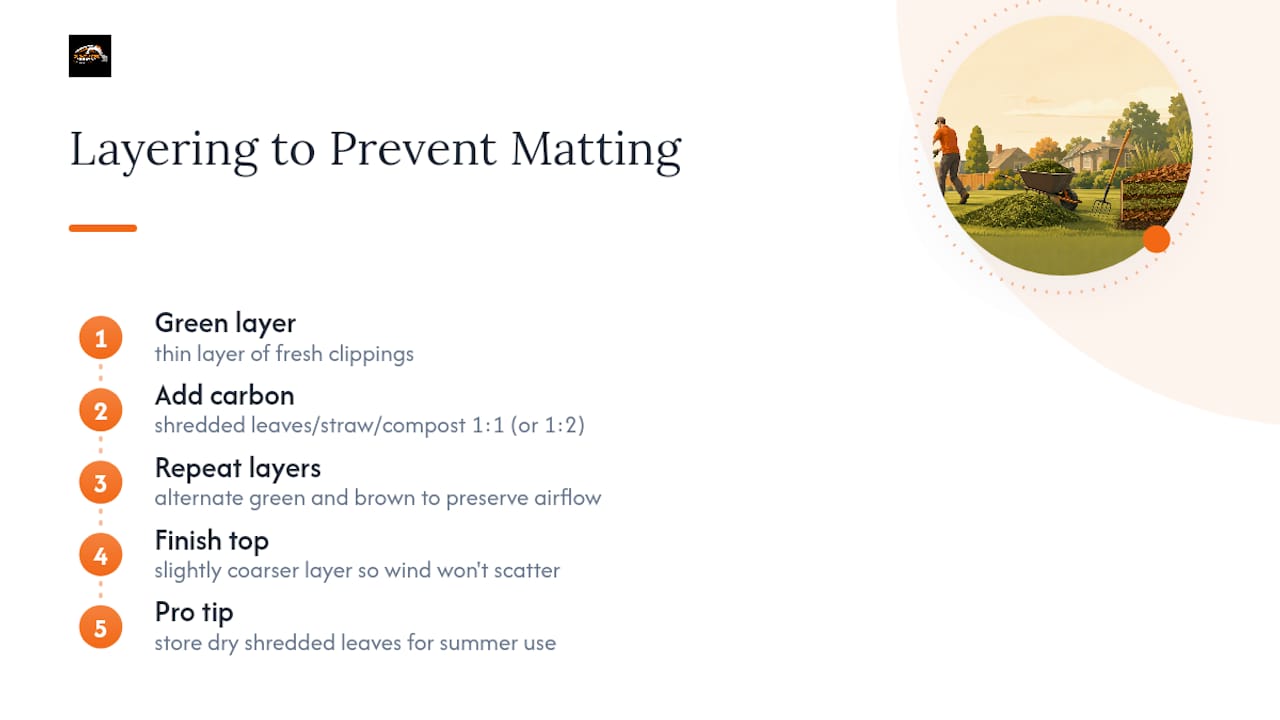
The fix is alternating thin green layers with a coarser carbon material, like shredded leaves, straw, or finished compost. A rough starting ratio is one part clippings to one part leaves, shifting to two parts clippings if you’ve got a heavy mowing week and leaves are scarce. Colorado State University Extension notes that alternating layers both speeds drying and preserves airflow, which cuts the odor problem at the source.
This is essentially a lasagna method applied to mulch: green layer, brown layer, green layer, finished with a slightly coarser top layer so wind doesn’t scatter loose clippings across the yard.
Pro Tip: Keep a bag of shredded fall leaves stored dry over winter. Come summer, you’ll have the carbon material on hand exactly when your mower is producing clippings faster than you can use them.
Composting Grass Clippings Instead of Mulching Directly
Composting first isn’t extra work for its own sake. It solves three problems mulching directly can’t: it reduces herbicide carryover risk over time, it kills weed seed viability through sustained heat, and it produces a stable, finished amendment instead of a fast-decomposing surface layer.
Composting works best when you:
- Mix clippings with high-carbon material like dry leaves or shredded cardboard rather than piling grass alone
- Avoid thick single-material piles, which compact and go anaerobic the same way a too-thick mulch layer does
- Turn or aerate the pile on a regular schedule to keep oxygen moving through it
Compost your clippings when you’re dealing with large volumes your beds can’t absorb fast enough, when you’re unsure about herbicide history or disease, or when you want a stable amendment to mix into raised beds rather than a surface mulch that needs weekly attention.
Fixing the Most Common Grass Mulch Mistakes
Most grass clippings mulch failures trace back to one of three habits.
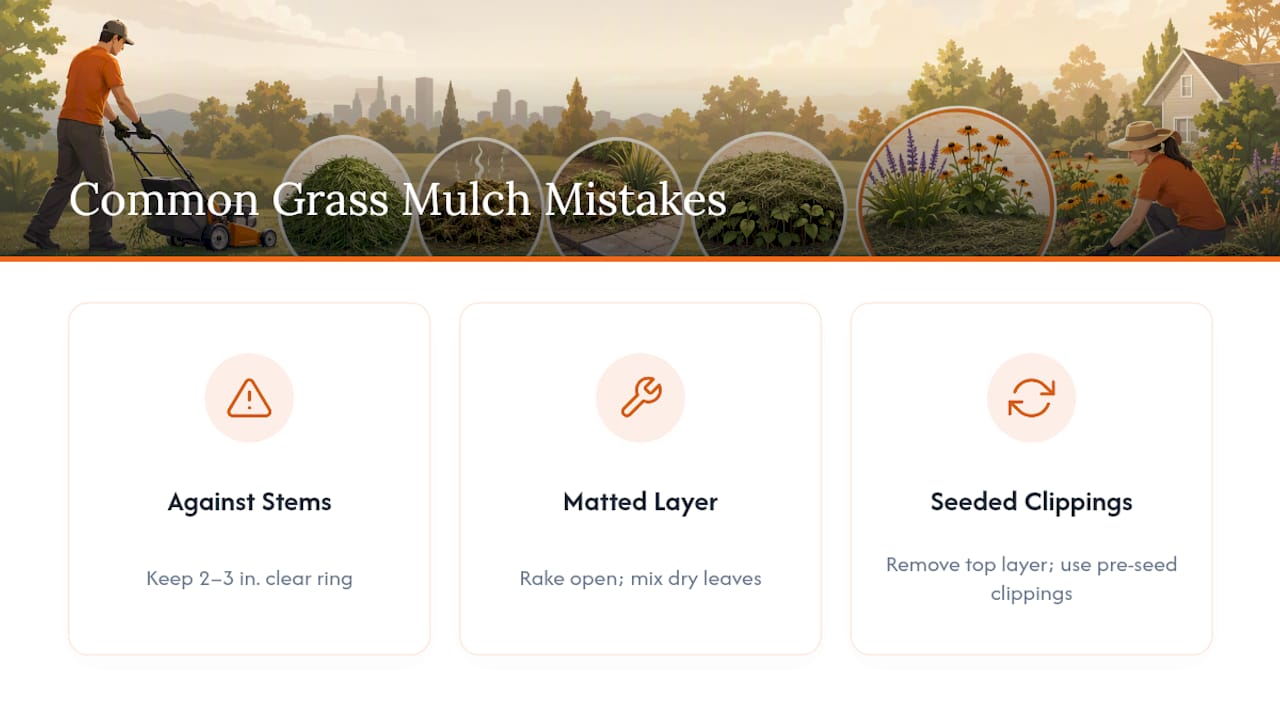
Volcano mulching, piling mulch up against a trunk or stem, is the most damaging. Keep a 2 to 3 inch clear ring at every stem, since mulch against plant tissue traps moisture and invites collar rot, a warning University of Vermont Extension repeats for a good reason.
Sour smell or a slick, matted surface means the layer went on too wet or too thick. Rake it open, mix in dry leaves or compost to restore airflow, and if it’s already anaerobic and slimy, pull it off the bed entirely rather than trying to salvage it in place.
Weed seeds sprouting through your mulch usually means the clippings came from grass that had gone to seed. Remove the top layer, reapply with clippings from a mowed-before-seeding lawn, or compost the questionable batch instead of risking it again.
What We’ve Learned Installing Mulch Across the KC Northland
After years of managing lawns and beds, our experience shows the same pattern on many properties: homeowners either apply clippings too thick and too wet, or they give up on refreshing them because the schedule feels like a chore. Both are fixable with the steps above.
Where a crew genuinely earns its keep is on large bed installations, beds that keep matting no matter what you try, or yards generating more clippings than one household can dry and layer weekly. Professionals control depth and mix by habit, not guesswork. If you’d rather hand that part off, our mulch installation and refresh service covers it.
— GC Signature Outdoors LLC
A Straightforward Way to Get Mulch Done Right the First Time
Reading the steps above is one thing. Spending a Saturday drying tarps of clippings and hand placing them around every tomato plant is another. Professional outdoor services can help homeowners avoid trial and error, handling depth, mix, and timing consistently to prevent matted, smelly beds.

We’re a family-run crew, not a call center dispatching whoever’s available, and that shows up in the consistency of the work. If your beds need a proper refresh or your yard is producing more clippings than you can manage, our mulch installation and bed edging service covers collection, mixing, and correct depth in one visit. Pair it with our weekly mowing service if you’d rather have properly sized clippings ready for mulch every time we cut. Reach out through our site to get a project started this season.
Sources
The application depth and nitrogen figures above come from Missouri Extension’s mulching guide and herbicide guidance from Purdue Turf, both direct sources on lawn clipping reuse.
- Grass clippings, compost and mulch: questions and answers | MU Extension
- Grass clippings and herbicides | Purdue Turf
- Mulches for the vegetable garden | CSU Extension
FAQ
Is Grass Clippings Mulch a Good Choice for Vegetable Gardens?
Yes, grass clippings work well around vegetables when applied thin and dry, since they suppress weeds and add nitrogen as they break down. Apply no more than a quarter inch to one inch per layer and keep a 2 to 3 inch clear ring around each plant stem, following guidance from Colorado State University Extension.
What Are the Downsides of Mulching With Grass Clippings?
The main downsides are fast decomposition, which means frequent refreshing, and matting into a slimy, smelly layer if applied wet or too thick. There’s also a risk of introducing weed seeds or herbicide residue if the source lawn wasn’t checked first.
How Long Do Mulched Grass Clippings Take to Decompose?
Grass clippings typically break down within a couple of weeks under normal garden conditions, much faster than wood chips or bark mulch. That speed is why extension guidance recommends refreshing the layer regularly rather than applying it once and forgetting it.
Is It a Good Idea to Fill Raised Beds With Grass Clippings?
Grass clippings work better as a surface mulch than as fill material in raised beds, since a thick mass of clippings alone compacts and decomposes anaerobically. If you want to use large volumes in a raised bed, compost the clippings first with a carbon material to create a stable amendment instead.
Do I Need to Worry About Herbicides in My Grass Clippings?
Yes, if your lawn was treated with a broadleaf herbicide recently, since some products persist through several mowings. Check the herbicide label directly, and when in doubt, common guidance suggests waiting three mowings before using those clippings as mulch, per Purdue Turf.
Recommended
Ready to get started in Kansas City's Northland?
GC Signature Outdoors serves Smithville, Platte City, Kearney, Liberty, and surrounding areas.