
Yes, You Can Put a Fire Pit on a Patio (Here's How)
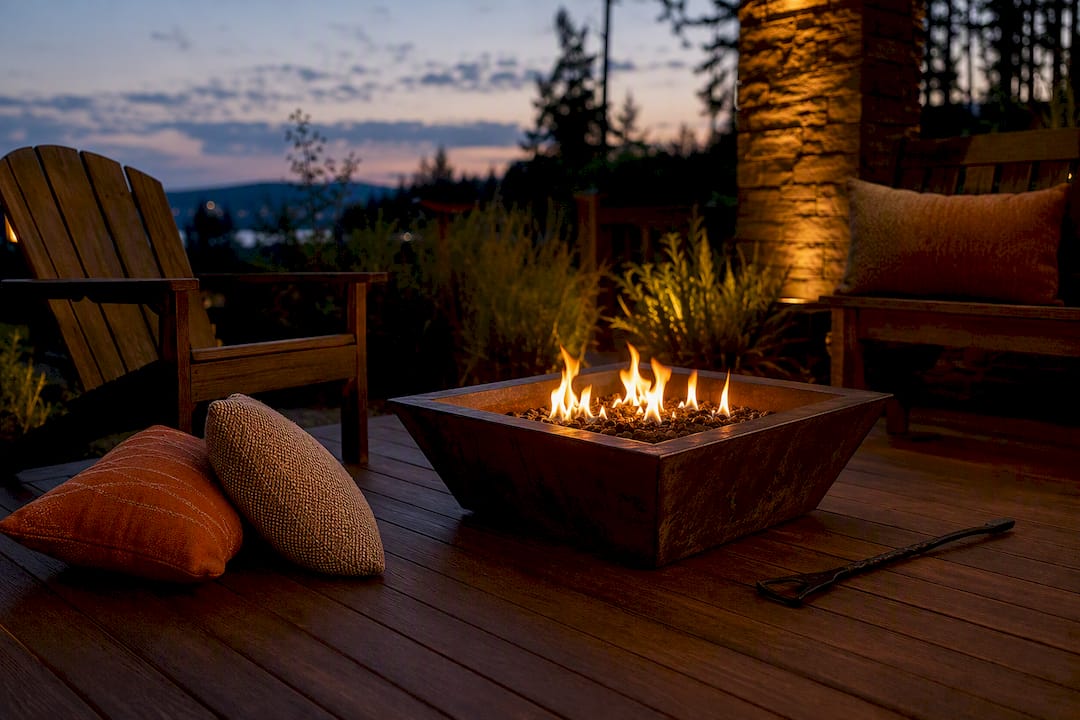
Yes, You Can Put a Fire Pit on a Patio (Here’s How)
You can put a fire pit on a patio, and for most homeowners, the patio is actually the best spot on the property for one. It’s already flat, already hardscaped, and already close to the house for easy access. But the yes comes with real conditions: the fuel type matters, the patio surface matters, and clearance distances aren’t optional.
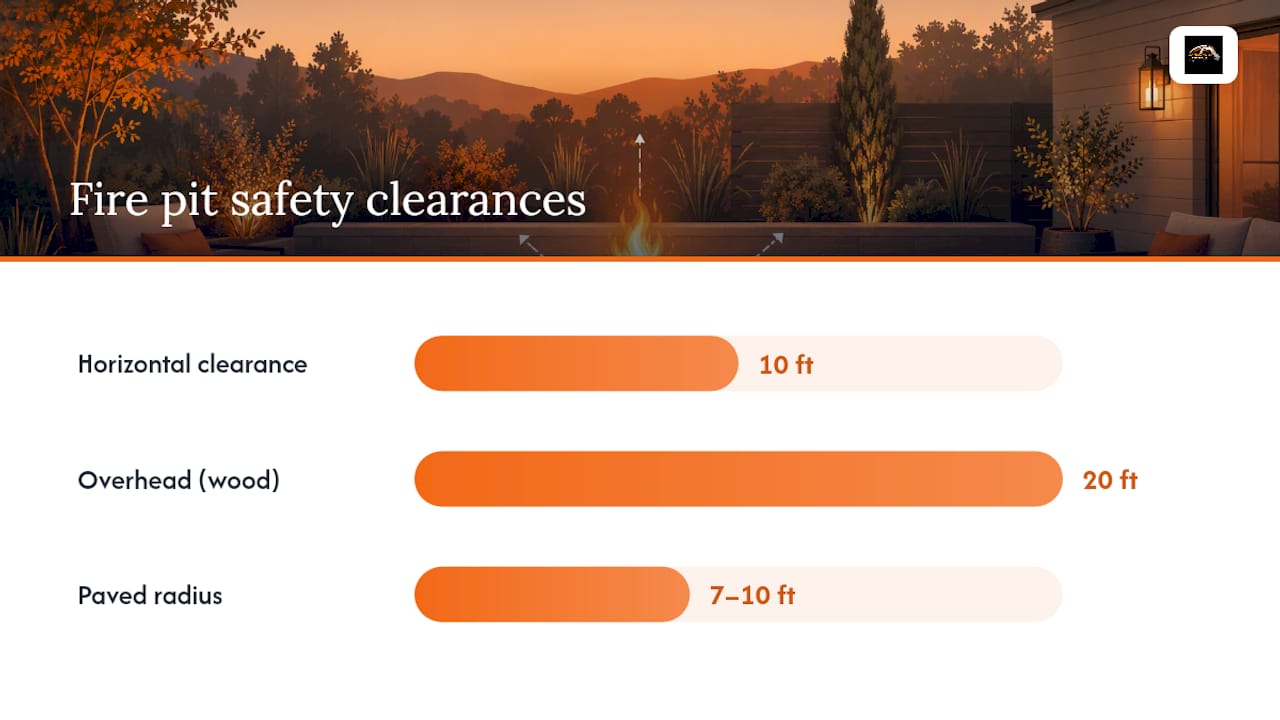
Keep three rules in front of you before you buy or build anything. First, keep at least 10 feet of horizontal clearance from your house or any other structure, per FEMA’s outdoor fire safety guidance. Second, wood-burning fires need roughly 20 feet of overhead clearance from branches, eaves, or a patio cover. Third, build on a noncombustible, level surface with at least a 7 to 10 foot paved radius around the fire itself.
Do: choose concrete pavers or natural flagstone as your base surface, use a metal fire ring or steel insert to contain heat, and keep a hose or extinguisher within reach every time you light it.
Don’t: place any fire pit directly on asphalt, composite decking, or thin polished tile, skip the overhead clearance check just because it’s a gas unit, or assume your homeowners association has no opinion on this.
Key Takeaways
A safe fire pit on a patio requires 10 feet of clearance from structures, a noncombustible paved base, and fuel-appropriate overhead clearance before the first fire ever gets lit.
| Point | Details |
|---|---|
| Clearance comes first | Keep 10 feet from structures and 20 feet overhead for wood-burning fire pits. |
| Match fuel to your patio | Propane and natural gas produce fewer embers and need less clearance than wood. |
| Pavers and flagstone win | Concrete pavers and natural flagstone hold up best under a fire pit’s radiant heat. |
| Check codes before building | Call your building department and fire marshal before installing anything permanent. |
| Call a pro for gas or grading | GC Signature Outdoors LLC handles permanent gas hookups, drainage fixes, and full patio integration. |
Where to Verify Local Fire Pit Rules
Check FEMA’s outdoor fire guidance and NFPA’s wildfire prevention tips, then call your local building department for permit specifics.
Table of Contents
- Which Fire Pit Types Work Best on a Patio?
- How Do You Build a DIY Fire Pit on Pavers or Concrete?
- What Should Go Under a Fire Pit on Concrete or Pavers?
- Clearances, Permits, and Wildfire Rules You Can’t Skip
- Materials and Tools You’ll Need for a Patio Fire Pit Build
- How Do You Maintain a Fire Pit Patio Over Time?
- When Should You Hire a Professional for a Patio Fire Pit?
- Ready to Build a Permanent Fire Pit Patio?
- Sources
- FAQ
Which Fire Pit Types Work Best on a Patio?
The fuel type you choose changes almost everything else about your patio fire pit setup, from how close you can put furniture to whether you’ll need a professional at all.
Wood-burning pits deliver the classic crackle and the biggest flames, but they also throw embers and demand the most clearance. On a paver or concrete patio, a wood-burning ring needs that full 20 foot overhead clearance and a wider buffer from cushions, umbrellas, and anything else that can catch a spark.
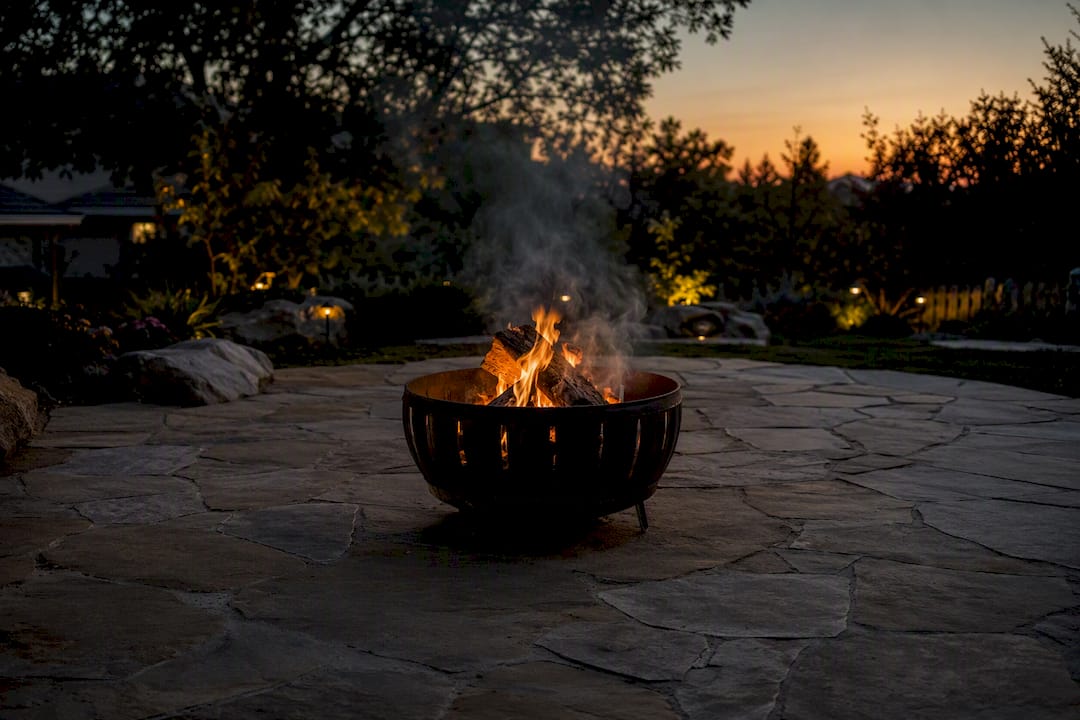
Propane fire pits are the most patio-friendly option for most homeowners. They produce far fewer embers than wood, so ember-related clearance concerns drop significantly, and the tank sits hidden inside the base. You can move a propane unit if you ever change your patio layout.
Natural gas fire pits burn cleaner and never need a refill, but they’re permanent by nature. Running a gas line means trenching, running a supply line, and usually pulling a permit, which pushes this option toward a professional install rather than a weekend project.
Fire-pit tables double as patio furniture and work well on smaller patios where floor space is tight. Most run on propane, which keeps the ember risk low and lets you place them closer to seating.
Portable metal bowls are the cheapest entry point and the easiest to test out before committing to something permanent. They’re wood-burning by default, though, so the same overhead and lateral clearance rules apply even though the unit itself is small.
Chimineas direct flame and smoke upward through a chimney opening, which reduces spark drift compared to an open ring, but they still burn wood and still need real clearance from anything overhead.
Each type interacts differently with the patio surface underneath it. Concrete pavers and flagstone handle radiant heat well across the board, while gravel patios need a steel ring or fire pad to keep loose stone from scattering.
Pro Tip: If you’re not sure how much you’ll actually use a fire pit, start with a portable propane bowl for a season. You’ll learn your real clearance needs and seating preferences before pouring a single paver for a permanent build.
How Do You Build a DIY Fire Pit on Pavers or Concrete?
A weekend DIY fire pit on an existing patio comes down to five steps, and skipping the prep work is where most backyard builds go wrong.
- Pick the location first. Measure 10 feet from your house, garage, or fence line, and check for at least 20 feet of clear space overhead if you’re going wood-burning.
- Mark the footprint. A typical DIY ring runs 36 to 44 inches across; add a paver apron around it so your total noncombustible radius hits 7 to 10 feet.
- Prep the base. If you’re building directly on existing pavers or concrete, confirm the surface is flat and free of cracks. If you’re excavating a new footprint next to the patio, dig 6 to 8 inches down, add compacted gravel, then a 1 inch layer of sand for leveling.
- Install the ring or insert. Set a steel fire ring or a masonry block ring on the compacted base, checking level as you go with a 4 foot level.
- Finish the edge. Lay your paver or flagstone apron around the ring, tamping each piece into the sand bed, and fill the joints with polymeric sand to lock everything in place.
Before you strike the first match, run through this checklist:
- Confirm 10 feet minimum clearance from any structure.
- Confirm 20 feet overhead clearance for wood fires.
- Set a spark screen over the ring before lighting.
- Keep a garden hose or fire extinguisher within arm’s reach.
- Clear furniture and cushions at least 3 feet back.
A portable bowl setup on an existing patio can be done in an afternoon. A built-in ring with a paver apron typically takes a full weekend for a DIYer working solo, closer to two days if you’re excavating new ground rather than building on existing hardscape. A permanent gas-fed fire pit with a poured base runs longer, often three to five days once you factor in curing time for any new concrete work.
What Should Go Under a Fire Pit on Concrete or Pavers?
Placing a fire pit directly on bare concrete or pavers without any barrier is one of the more common mistakes homeowners make, and it can lead to cracking or discoloration over time from concentrated heat.
- Do use a steel fire ring or pit insert to lift the direct flame off the paved surface.
- Do add a paver apron rated for heat exposure, with concrete pavers and natural flagstone recommended as the most reliable base materials.
- Do consider a fireproof mat or raised pedestal bowl if you don’t want to alter your existing patio surface at all.
- Don’t set any fire pit directly on asphalt or composite decking, both of which can soften, warp, or ignite near sustained heat.
- Don’t build directly on thin polished tile or natural stone with a glossy finish, since rapid heating and cooling can cause thermal shock and spalling.
Loose gravel patios need their own fix: a metal fire pad or steel ring keeps embers from scattering into dry stone and surrounding mulch beds.
Clearances, Permits, and Wildfire Rules You Can’t Skip
The clearance numbers aren’t suggestions, and most local codes echo them directly. Keep your fire pit at least 10 feet from your home, deck, or any other structure, with a paved noncombustible radius of 7 to 10 feet around the fire itself, according to fire pit design and placement guidance. Wood-burning setups need roughly 20 feet of overhead clearance from branches, eaves, or a covered patio structure, and combustible furniture should stay at least 3 feet from the flame.
Before you build, make two calls. Contact your local building department to ask whether a permit is required for a permanent fire pit, particularly if it involves gas lines or a poured foundation. Then call your fire marshal’s office or check your city’s website for any burn restrictions specific to residential fire pits, since some municipalities regulate wood-burning units differently than gas.
Wildfire conditions change this equation fast. NFPA’s wildfire prevention guidance recommends checking local burn bans before every use during dry, high-fire-risk periods, not just once at the start of the season.
Pro Tip: Bookmark your county’s burn restriction page and check it the same day you plan to light your fire pit. Conditions can shift from “no restrictions” to “burn ban in effect” within 24 hours during a dry stretch.
A 10 foot minimum clearance and a 20 foot overhead allowance for wood fires are the two numbers worth writing down before you break ground.
Materials and Tools You’ll Need for a Patio Fire Pit Build
A basic patio fire pit build calls for a fairly short shopping list, but the quality of a few key items makes a real difference in how long the finished project lasts.
Materials: a steel fire ring or metal insert, concrete pavers or flagstone for the apron, crushed gravel for the compacted base, leveling sand, polymeric sand for joints, plastic paver edging, and a spark screen sized to your ring.
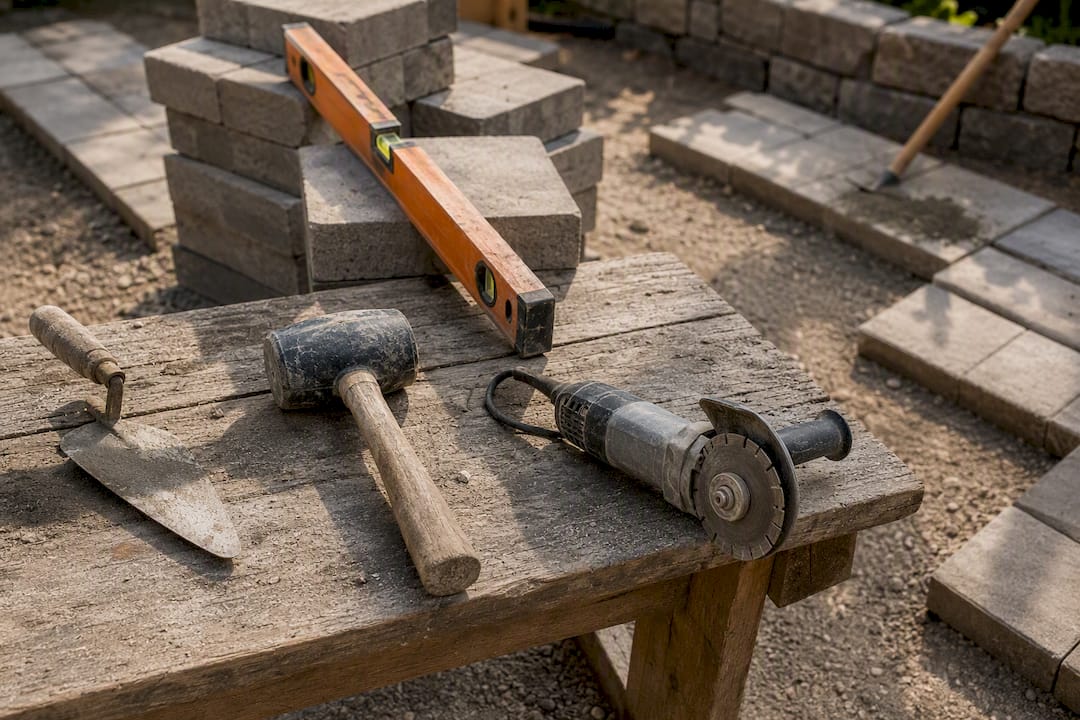
Tools: a shovel, a hand tamper (or a rented plate compactor for larger footprints), a 4 foot level, a rubber mallet, and a masonry saw or angle grinder with a diamond blade for cutting pavers to fit the curve.
Rent the plate compactor rather than buying one; you’ll use it once or twice a year at most. When picking pavers, favor a rough or textured finish over polished stone, since texture holds up better under repeated heat cycling. If you’re buying a steel fire ring, look for at least 1/8 inch wall thickness. Thinner rings warp faster under sustained heat.
How Do You Maintain a Fire Pit Patio Over Time?
Ash and heat both take a toll on paver joints and mortar over a season of regular use, so a little upkeep goes a long way toward protecting the surface underneath.
- Clean out ash after each use once it’s fully cooled, ideally within 24 to 48 hours.
- Inspect paver joints and mortar lines for cracking every few months, especially after freeze-thaw cycles.
- Reseal concrete pavers on the schedule your paver manufacturer recommends, generally every two to three years.
- Keep furniture and cushions 3 to 5 feet back from the flame during every use.
- Use a spark screen on wood-burning pits and keep an extinguisher or hose nearby at all times.
- Cover the fire pit in the off-season to protect metal components from moisture and rust.
When Should You Hire a Professional for a Patio Fire Pit?
A DIY build works fine for a portable bowl or a simple paver-ring setup. Hire a professional once the project involves a permanent natural gas hookup, since that requires a licensed plumber and a utility locate before any digging starts. Complex patio integration, drainage corrections, or grading issues around an existing hardscape also call for experienced hands.
A contractor typically handles the site survey, pulls any required permits, manages the gas plumbing and utility locates, builds a proper compacted sub-base with drainage, and finishes the surrounding hardscape to match your existing patio.
Before signing anything, ask a contractor whether the quote includes permit fees, what base preparation they use, and how they handle drainage around the finished fire pit. A detailed written quote should itemize materials, labor, and any subcontracted gas work separately.
Pro Tip: If your patio already slopes toward the house, get that graded correctly before a fire pit goes in. Fixing drainage after a permanent build is far more expensive than fixing it before.
A Note From the Field
The most common patio pitfall we see isn’t the fire pit itself, it’s homeowners building on a base that was never properly compacted, which leads to settling and cracked pavers within a year. One recent Northland project involved re-grading a sloped patio before setting a paver apron around a gas fire pit, and the difference in long-term stability was obvious.
Pro Tip: A portable propane bowl gives you flexibility if your outdoor plans might change. A built-in gas fire pit gives you permanence and a finished look, but you’re committing to that layout for good.
Ready to Build a Permanent Fire Pit Patio?
If a DIY ring and paver apron sound like more project than you want to take on, or your patio needs grading, drainage work, or a gas line before a fire pit makes sense, that’s exactly the kind of build GC Signature Outdoors LLC handles for homeowners across the KC Northland area. Where a weekend DIY project stalls out on uneven ground or a sloped patio, our crews correct the base, manage permits, and build a code-compliant fire pit integrated into your existing hardscape from the start.

We design and build permanent fire pits and paver patios as part of full outdoor living spaces, from the compacted sub-base up through the finished stone seating around the fire. If you’re comparing pavers against poured concrete for your patio project, our pavers versus concrete guide breaks down which holds up better for Kansas City weather. Ready to see what a professional install looks like for your yard? Request a quote for your outdoor living project and we’ll walk your patio with you before any work begins.
Sources
- Outdoor Fire Safety
- Wildfire Prevention Tips for Fire Pits and Outdoor Fires
- Paving for Fire Pit — Best Materials, Heat Safety & Installation Guide (2026)
- Fire Pit Design, Placement, and Construction for Outdoor Living Spaces
FAQ
Can I Put a Fire Pit on a Patio?
Yes, as long as you maintain at least 10 feet of clearance from structures, use a noncombustible surface like concrete pavers or flagstone, and match your overhead clearance to your fuel type.
Will a Fire Pit Damage a Concrete Patio?
Direct, sustained heat can crack or discolor bare concrete over time, which is why a steel fire ring or insert should sit between the flame and the paved surface rather than directly on it.
Can You Put a Fire Pit Directly on Pavers?
Not without protection. Concrete pavers handle radiant heat well as a surrounding apron, but the fire itself should sit inside a metal ring or insert rather than touching the pavers directly.
What Should You Put Under a Fire Pit on a Concrete Patio?
A steel fire ring or pit insert, paired with a heat-rated paver apron or fireproof mat, protects the concrete underneath from cracking and discoloration.
When Should I Hire a Contractor Instead of Building One Myself?
Hire a professional for any permanent natural gas hookup, complex drainage or grading correction, or full patio integration, since those jobs require permits, utility locates, and licensed plumbing work.
Recommended
Ready to get started in Kansas City's Northland?
GC Signature Outdoors serves Smithville, Platte City, Kearney, Liberty, and surrounding areas.